EN
ZH
JA
Copyright © 2025 X-Basic PLANNING Ltd.
archive

Yancheng Old Street House Regeneration Movement

During Japanese Rule, under the development of the Takao Harbor construction plan, an area once underwater was filled to create new land, and the widespread salt lakes and marshes were transformed into orderly city blocks after urban planning. The port districts of Hamasen and Yancheng boomed with the arrival of modern infrastructure—wharves, railways, and a flood of businesses and capital. In the 1920s, Yancheng served as the entertainment district for the commercial port, boasting theaters, restaurants, cafés, and department stores that catered to every leisure need. This flourishing scene continued well into the post-war era. It was not until the 1970s, with the eastward shift of Kaohsiung’s political and economic center, that it gradually began to decline.

Although Yancheng is no longer the bustling ‘sakariba’ (vibrant commercial and entertainment center) it once was, the old houses and streets still retain shadows of the golden years. With restoration and refurbishment, the spirit of the district can be revived. Based on this concept, this year X-Basic Planning and our collaborative team General-Basic participated in the ‘Old Street House Regeneration Movement’ launched by the Cultural Affairs Bureau of Kaohsiung City Government, implementing facade improvement projects for 22 buildings that are over half a century old in Yancheng and surrounding areas. We restore building facades by removing non-original materials, relocating utilities like wiring and AC units, improving weather resistance of the old house, and adding accent lighting. We hope to outline the historical context of the port city’s development between the old and new urban districts through the continuation and restoration of spatial narratives.
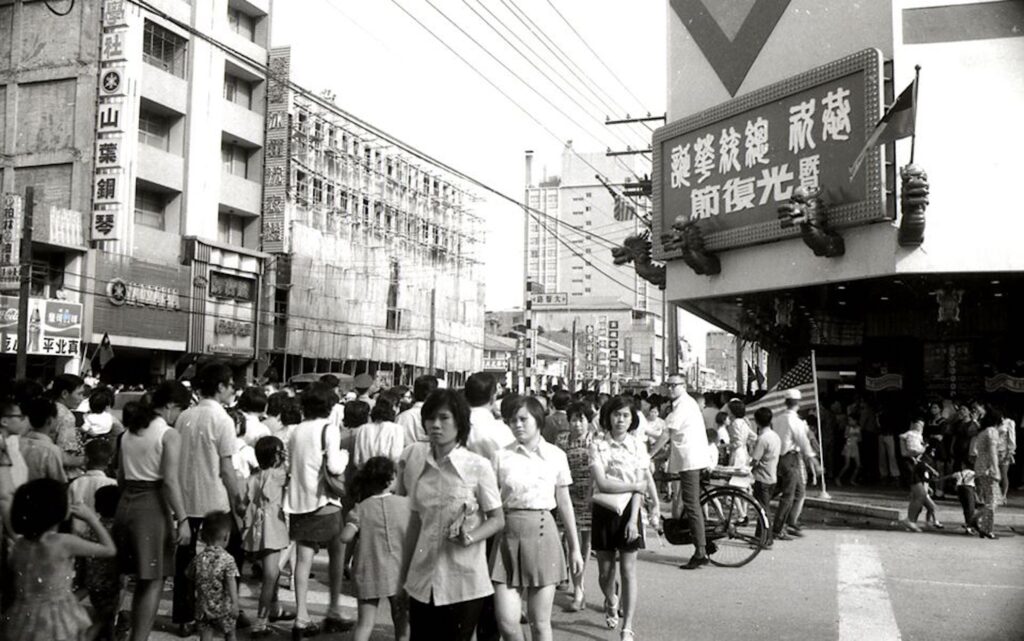
The bustling streets of Yancheng in the early 1970s. (Image source/Photographer Chung, Ching-hsi, taken in 1973)

Revitalizing Old Houses from the Outside In
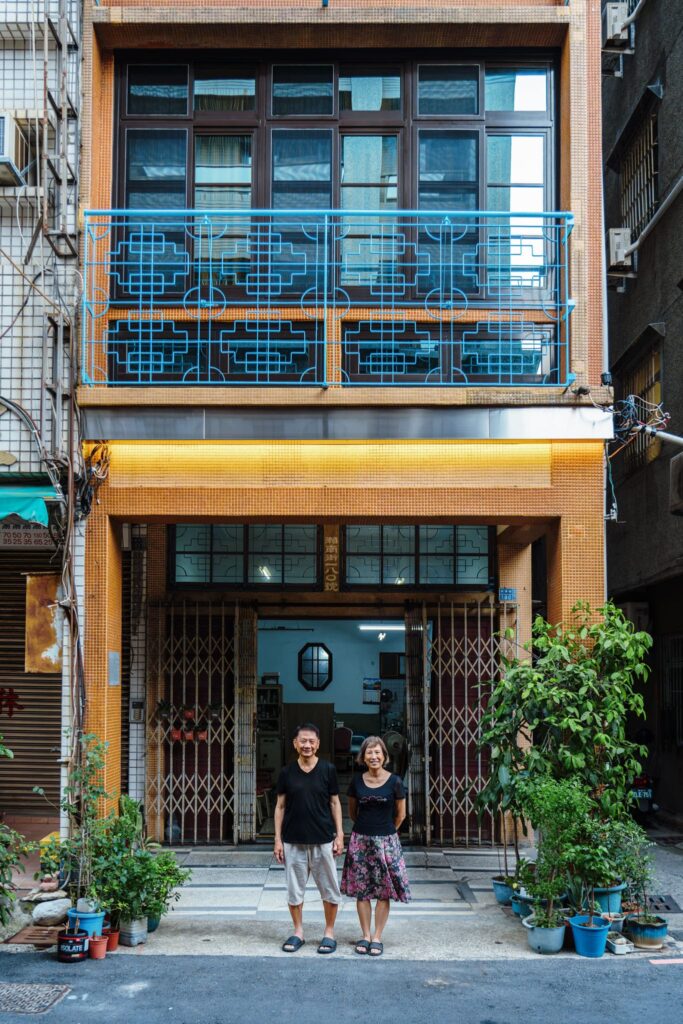
The 60-year-old house on Lainan Street is the first completed location in the ‘Old Street House Revitalization Movement.’ (Image source: Kaohsiung City Bureau of Cultural Affairs, filmed by ARZ FILMS)

In the early stages of the ‘Old Street House Regeneration Movement’, a team led by President Chen, Chi-jen of Kaohsiung University contacted numerous homeowners, ultimately selecting demonstration sites including an old house on Lainan Street, two connected buildings on Xinle Street, eight connected buildings on Zhongshan First Road, and the International Shopping Mall (formerly known as Kaohsiung Ginza). These old buildings, used as residences, shops, or vacant houses, carry the past stories of the Yancheng area, but have lost their luster over the years and face difficulties in repair and maintenance due to the traditional methods used in their construction and material acquisition issues. This project began with exterior renovation to illuminate several forgotten corners of the old city district.

Like the 2023 ‘Balcony Renovation’ project held by X-Basic Planning in Taipei, this old house regeneration action uses subtle urban design interventions—small-scale facade improvements—to help communities rediscover the charm of their old houses. To minimize disruption to homeowners’ daily lives, the renovation team must complete the facade improvement work within a limited timeframe, yet they spare no effort in refining details and removing dust, striving to restore the original material textures and decorative vocabulary of the buildings.

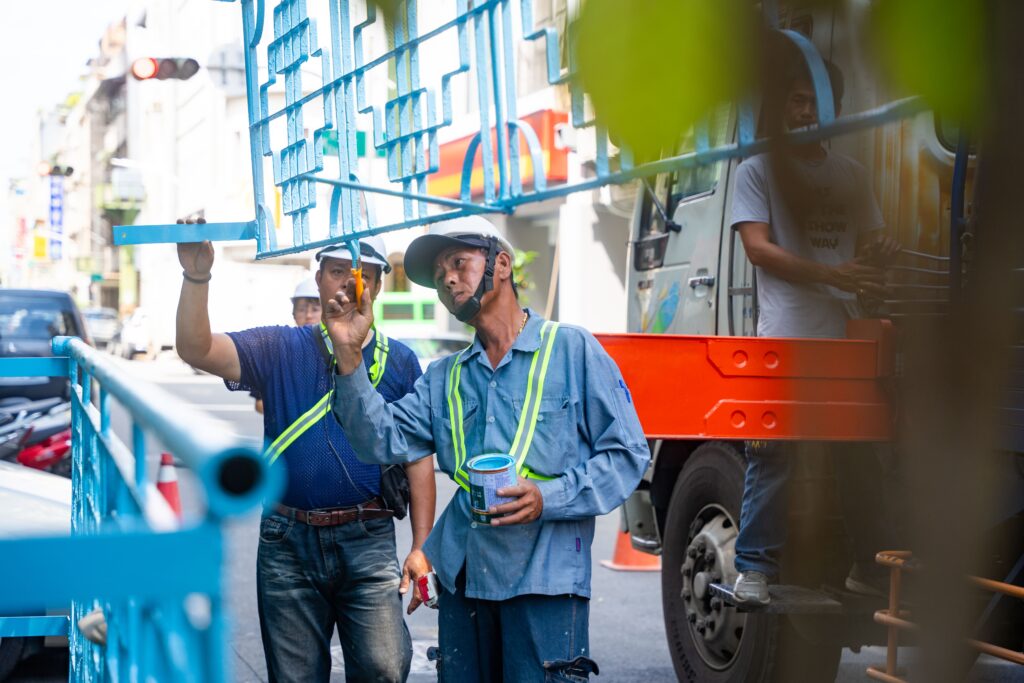
Take the first completed ‘Lainan Street Old House’ as an example. This home that carries many important memories for the owner Mr. Li and has witnessed the couple’s daily life, has gradually developed various symptoms of building aging over its 60 years: inevitable damage to the mosaic wall tiles, peeling paint on the wrought iron railings, and the delicate small-grid wooden windows that were replaced with modern aluminum windows for functional considerations. During the construction period, while cleaning, repairing, and waterproofing the exterior walls, team members also visited the site multiple times to carefully compare the dimensions and color codes of the cleaned walls and railings, in order to select the most suitable facing tiles and paint. They also followed the original wooden window’s partition design to custom-make dark brown aluminum airtight windows for this project.

The renovated house on Street old still harmoniously coexists with surrounding buildings. The striking contrast between the warm-colored facing tiles and the sky-blue wrought iron railings makes this old apartment the most eye-catching building in the neighborhood at first glance. Although the traditional dry goods trading company that settled here 20 years ago is no longer in operation, and family members who once lived together on Lainan Street have gone their separate ways, the restored old house has revived past memories vividly, leaving a footnote for the area’s vibrant commercial history.
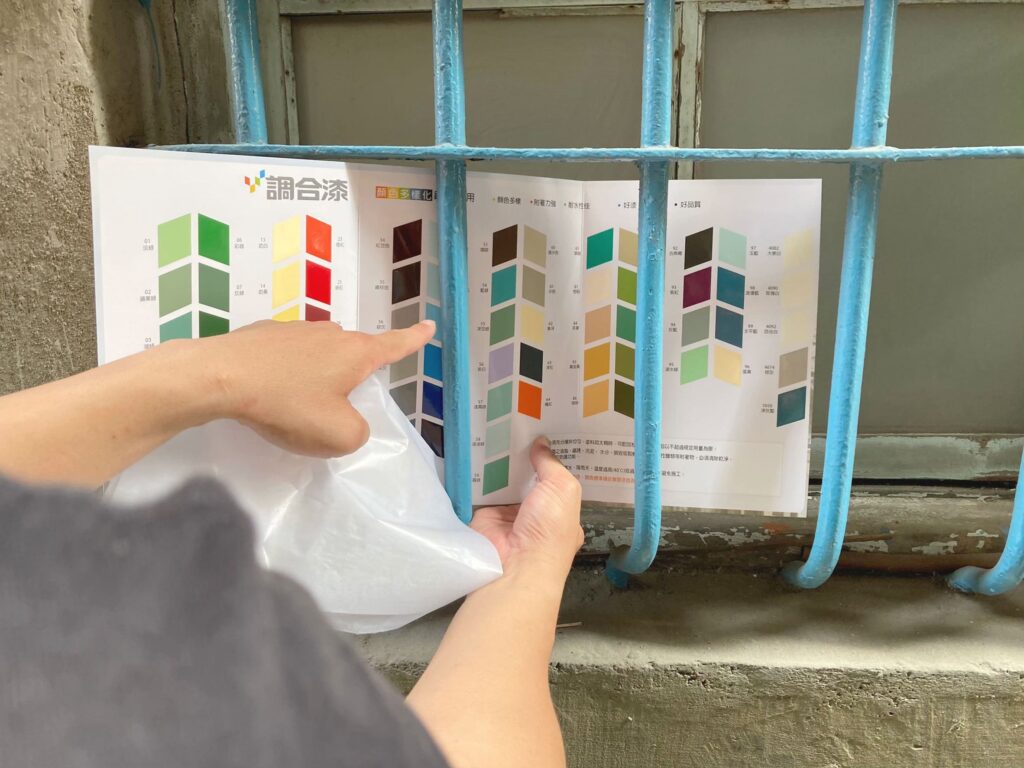
The team frequently brings catalogs and color samples to the site to identify the most suitable decorative materials for the old house.
Iron flower railings being suspended during installation, with the restoration team reinforcing the ironwork with paint. (Image source: Kaohsiung City Government Cultural Bureau, photographed by ARZ FILMS)

Similarly, the ‘Xinle Street semi-detached house,’ which was once used as a shop, was the original home of a well-known duck meat restaurant in Kaohsiung. After subsequent generations moved away, it became a warehouse and food preparation space. The signboard frame and canvas awning installed in front of the house concealed its original elegant character, while the pebbledashing columns in the arcade were buried under layers of paint. The team removed the added facade structures, replaced the existing iron windows with weather-resistant wooden windows, and carefully preserved the window pattern craftsmanship on one side. Additionally, they referenced the original pebbledash texture and, after removing the paint, selected stones with similar color and grain size along with mixed paint to redefine the arcade space based on the original contour lines.

The carefully cleaned and repaired red brick wall reveals several conspicuous damages under the wall-washing lights at night. According to the family memories passed down by the owner, Mr. Wu, these indentations are very likely damage caused by bomb fragments left from American bombing during World War II. For this reason, the renovation team deliberately preserved the uneven wall surface, allowing the architectural space to record the tumultuous history this land has experienced.
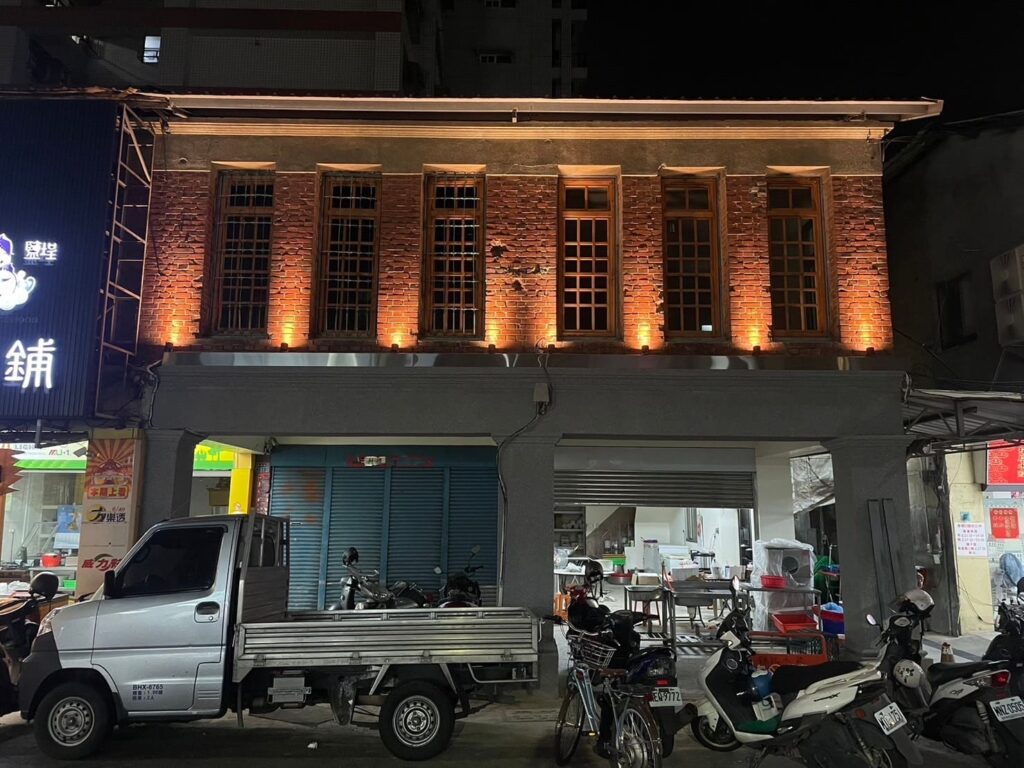
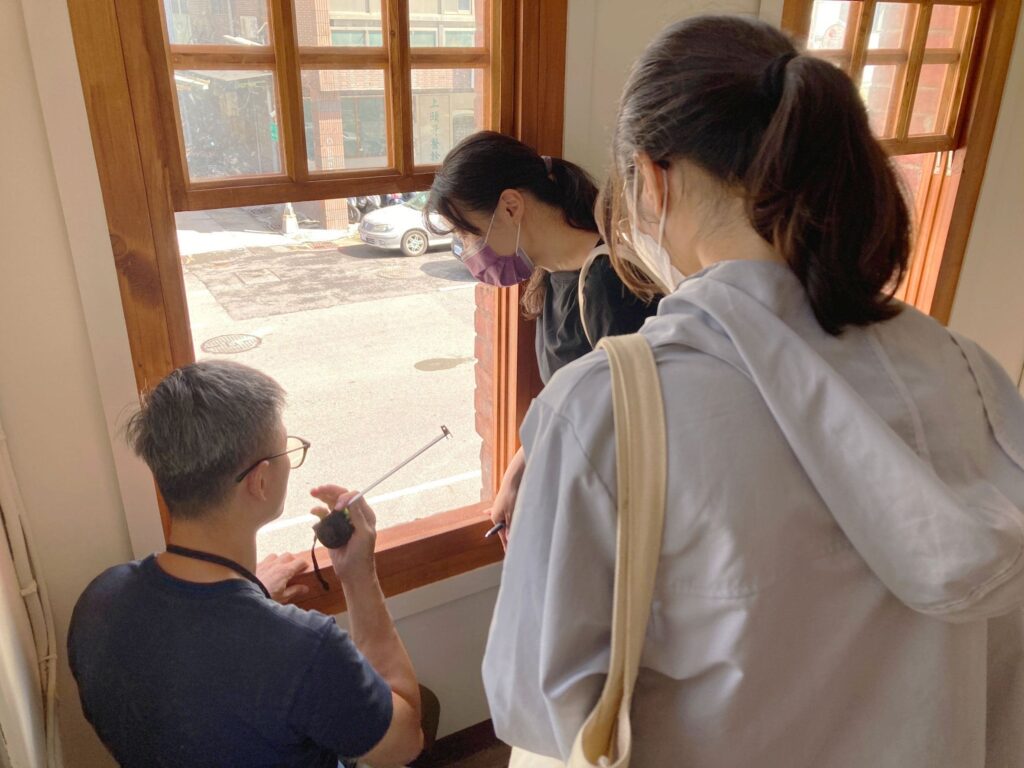
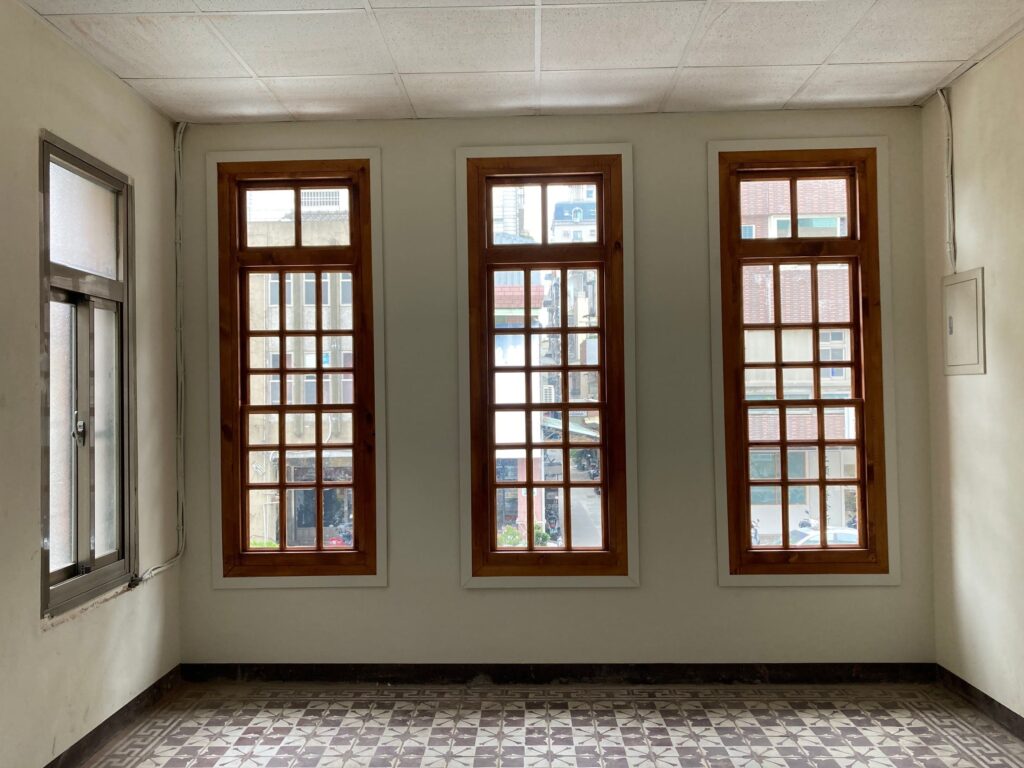
The restored wooden window frames add layers of historical texture to the neighborhood landscape framed within. In the image, Kuo Yi-no (far left), Senior Manager of Design Department II at Xiaoben Team, and Liu Liang-yu, Specialist of the Old House Planning Department, along with other team members are conducting the final inspection.

Restoring the City Block, Reviving Its Former Glory
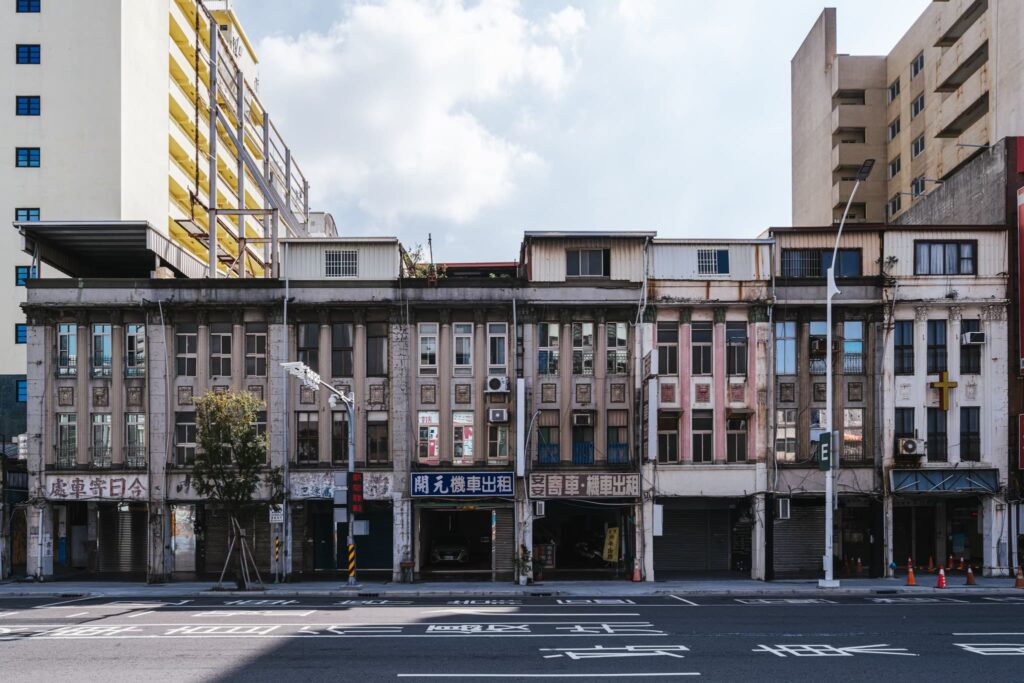
The eight connected buildings on Zhongshan First Road before restoration, featuring diverse facade styles. (Image source: Kaohsiung City Government Cultural Bureau, photographed by ARZ FILMS)

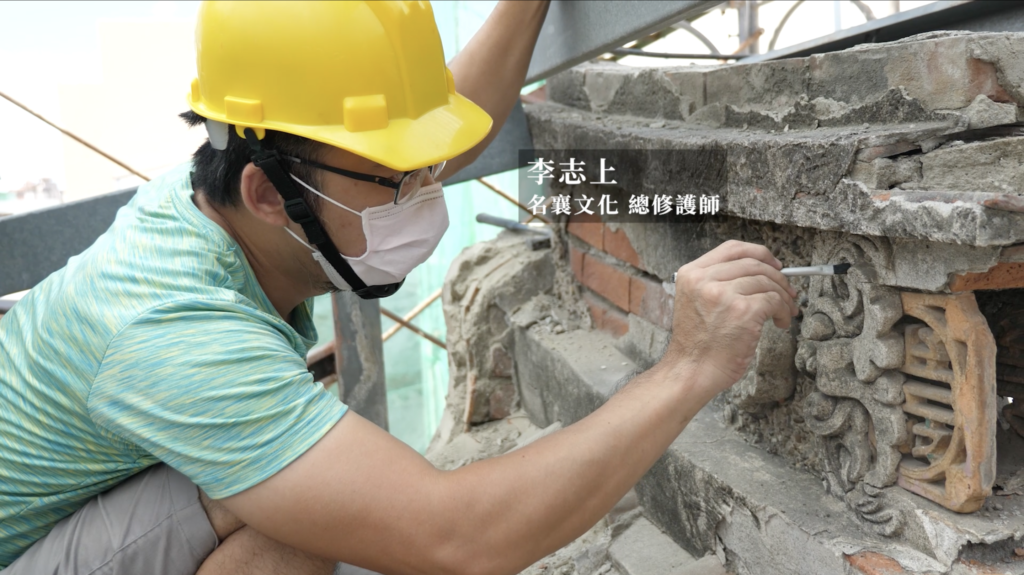
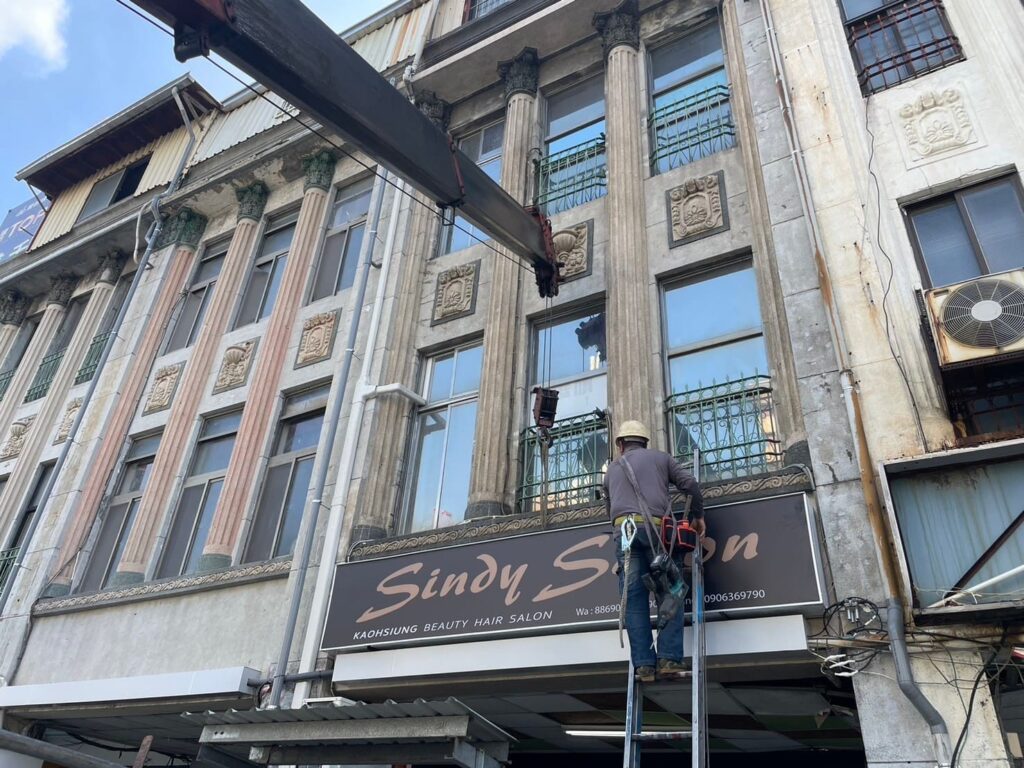
The ‘Eight Connected Buildings on Zhongshan First Road,’ located in front of Kaohsiung Station, capture the eyes of travelers from north and south, shaping people’s first impression of the city. This year, seven apartments joined the “Old Street House Revival,” ranging from residences to a motorcycle rental shop, a hair salon, and vacant units—each façade reflecting over half a century of distinct character. Following the removal of signage and utility reorganization, cultural heritage cleaning specialists were brought in to restore the facade’s clay decorative carvings using paint removal techniques. To meet contemporary needs, the renovation project also installed new signboards, replaced air conditioners, relocated outdoor units beneath the arcade, and applied galvanized expanded metal to maintain overall visual aesthetics.
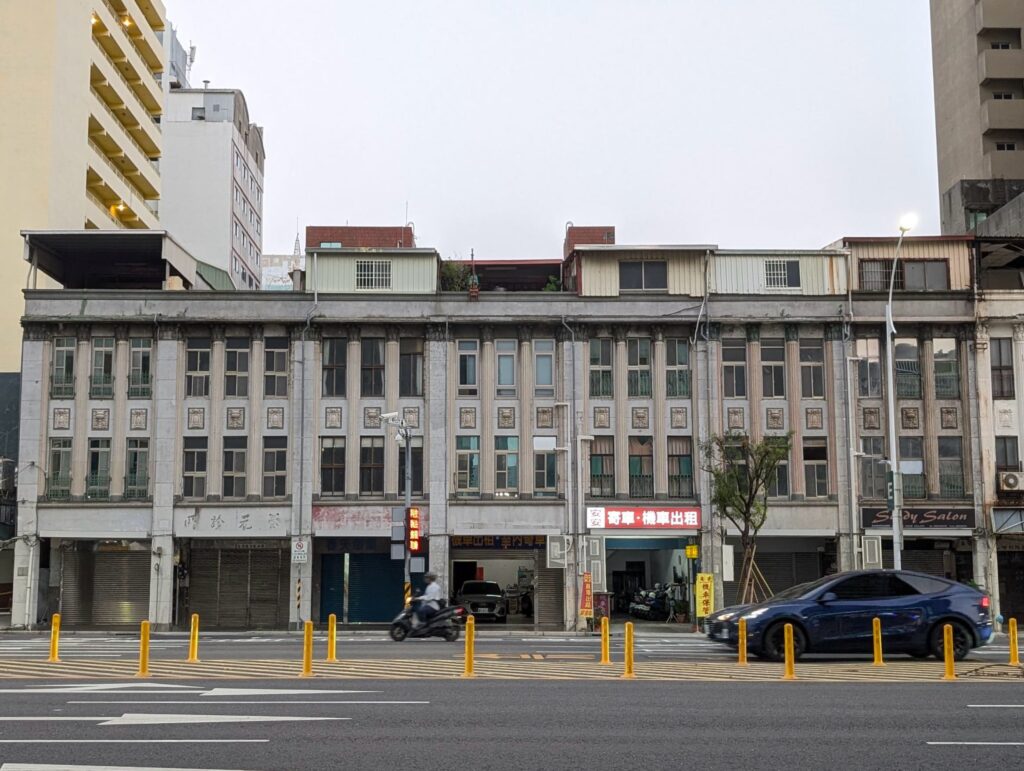
The old street house revitalization movement restored the neat facade of this row of old apartments while preserving the unique characteristics each household accumulated over time.

Interestingly, considering that the hair salon in the old apartment primarily serves migrant worker communities, the team reached a consensus with the owner during the signage update to redesign it in languages commonly used by the customers. The eight connected buildings, which demonstrate the living trajectories of generations, are a concrete representation of local development. After the facade improvement, they will continue to reflect the port city’s inclusive spirit where the new and old coexist harmoniously.
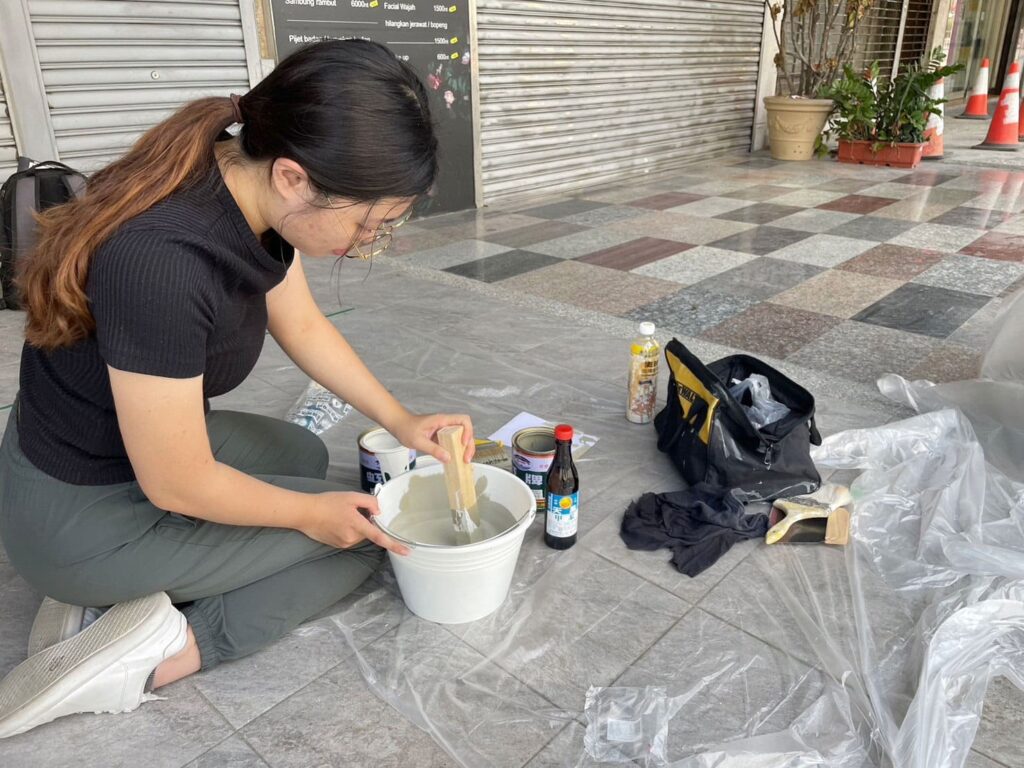
Design Department II colleague Yu Pin-jun is preparing color-matched mixed paint for the pebble-dash wall surface.
During the old street house revitalization movement, the team adorned the eight connected buildings on Zhongshan First Road with newly designed signage.

Besides row houses and apartment-style old buildings, ‘Kaohsiung Ginza,’ built in 1936 with Tokyo’s Ginza shopping district as its blueprint, is also one of the improvement cases in this project. This area, Kaohsiung’s original department store street, was once a hub for imported goods and trendy venues like bars and cafes. After suffering severe damage in WWII, the building regained its commercial life in the 1950s thanks to the Korean War and the arrival of US troops. Now called ‘International Plaza,’ it prospered and expanded in 1963 in response to the growing trend of arcade streets, adopting the era’s popular arcade-style design. With the shift in urban development, however, the International Plaza’s modern sheen faded, leaving behind an empty atrium and connecting corridors as the sole testament to its vibrant past.
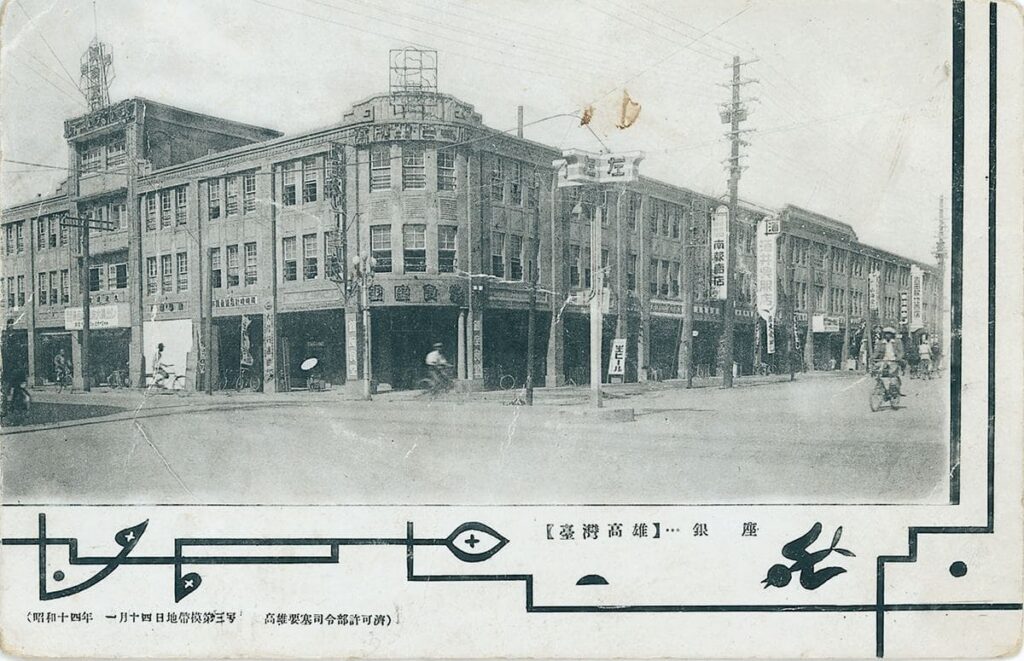
Historical image of Kaohsiung Ginza preserved in the form of a picture postcard during the Japanese colonial period.

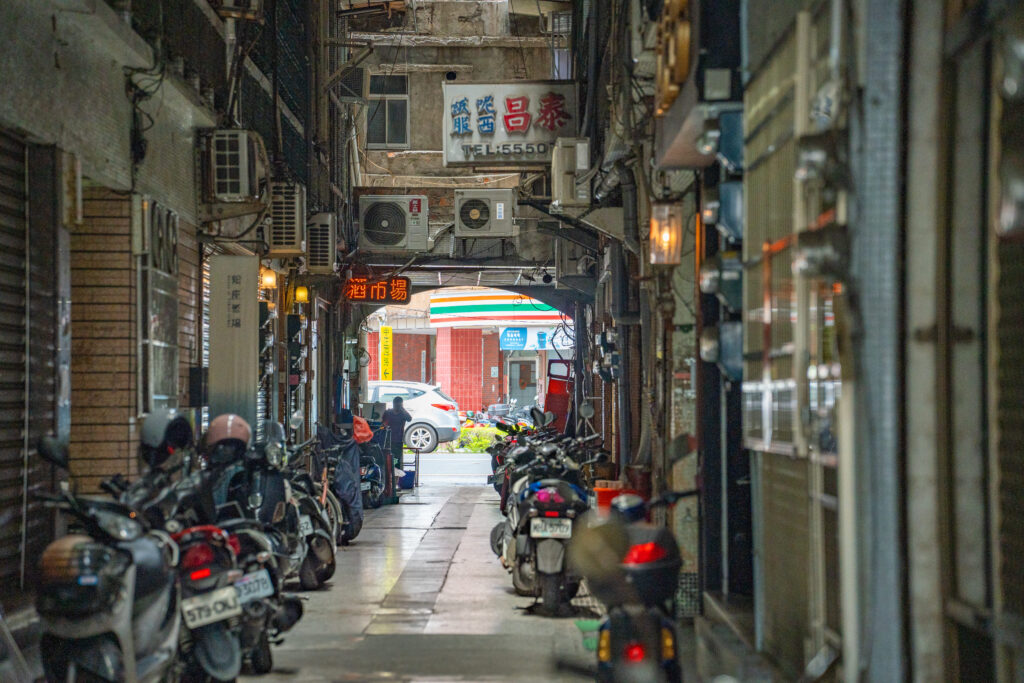
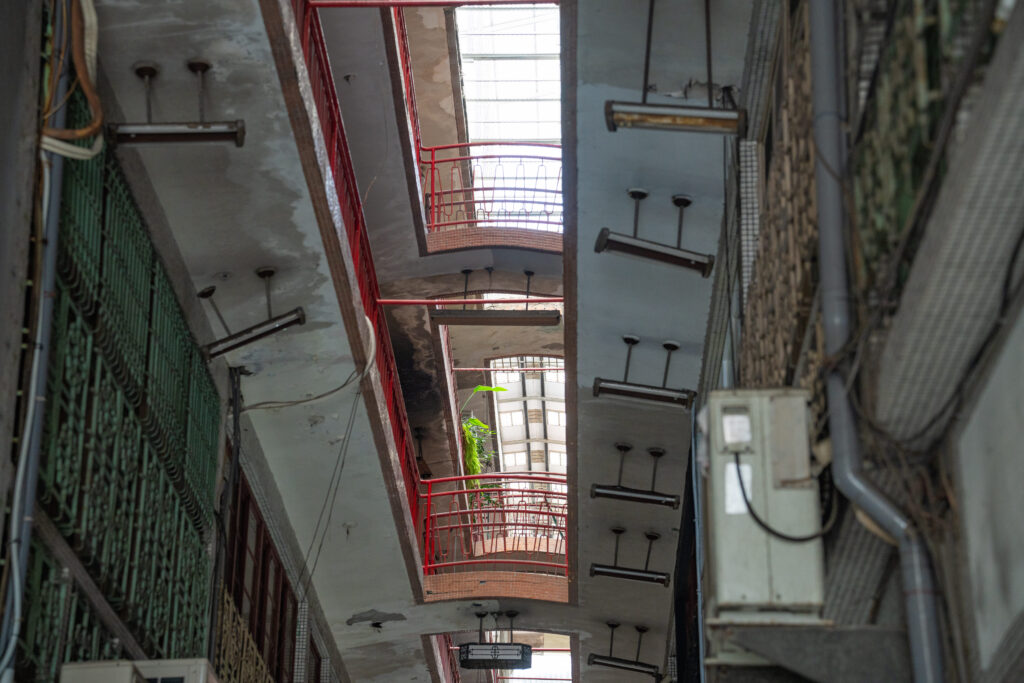
Accompanying Yancheng District through the hustle and quiet times of the International Market. (Image source: Kaohsiung City Government Bureau of Cultural Affairs, filmed by ARZ FILMS)

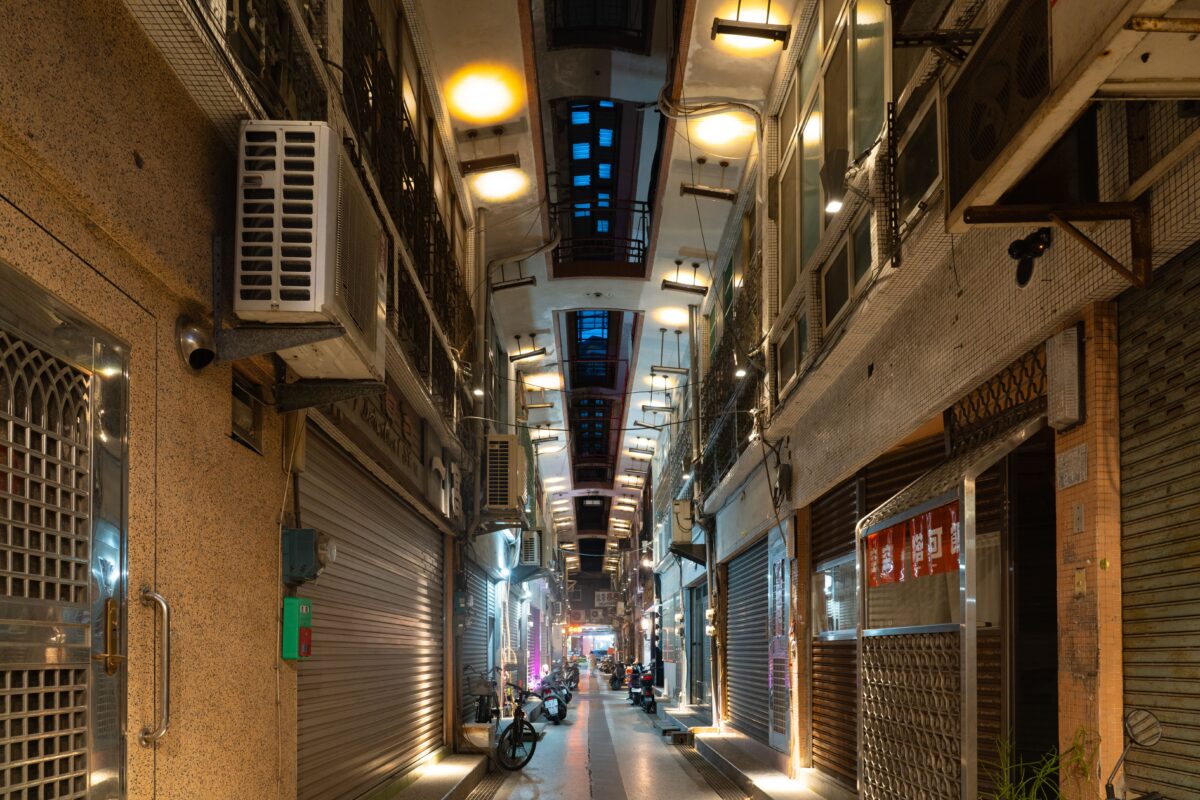
Like most old buildings that have gone from prosperity to dereliction, Kaohsiung Ginza faces issues such as complicated property rights and vacant houses. The team therefore chose to intervene with a small yet significant ‘lighting plan,’ attempting to awaken public memory of this commercial street by literally illuminating its entrances and passageways. The team added new spotlights while keeping the old fluorescent lights, creating a conscious contrast between eras for visitors. Specially designed lampshades ensure the new additions don’t disrupt the facade, maintaining the space’s historic ambiance.

The ongoing ‘Old Street and Old House Revitalization Movement’ is gradually renewing the face of Yancheng, one subtle facade and interior adjustment at a time. As the planning, design, and implementation team for this project, we hope to realize our long-held vision for the regeneration of old buildings through a series of practical actions. When city blocks can embrace diverse architectural styles and showcase the aesthetic trends of each era, local development patterns will naturally integrate into contemporary life, becoming fertile ground that nourishes cultural foundations.
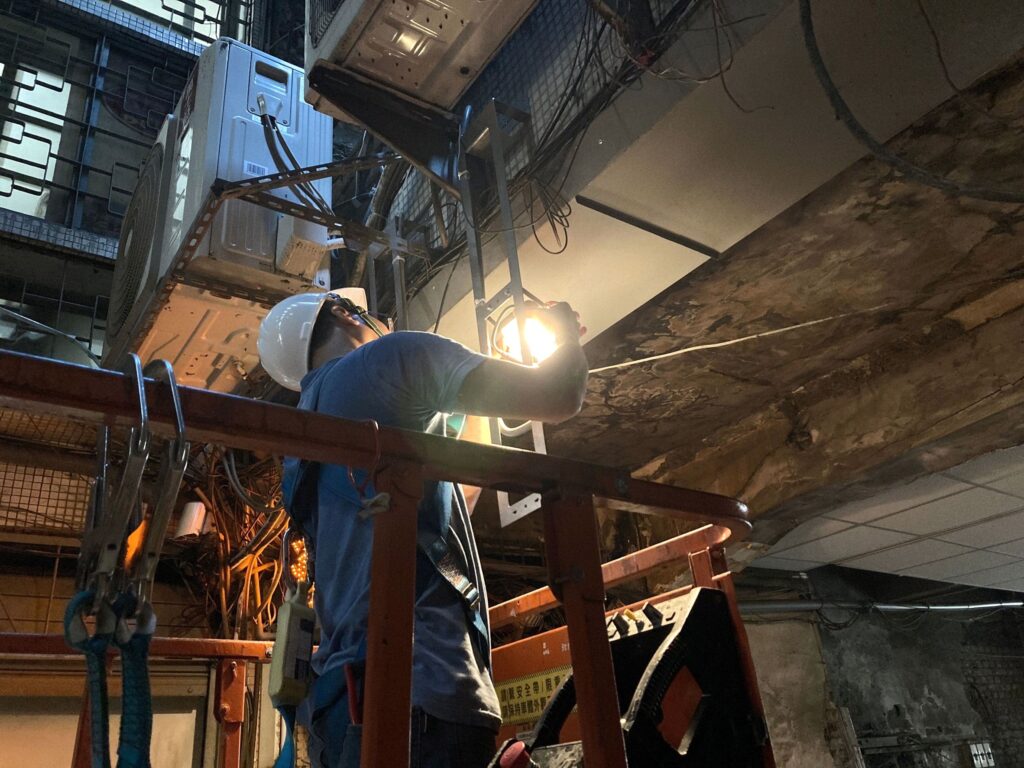
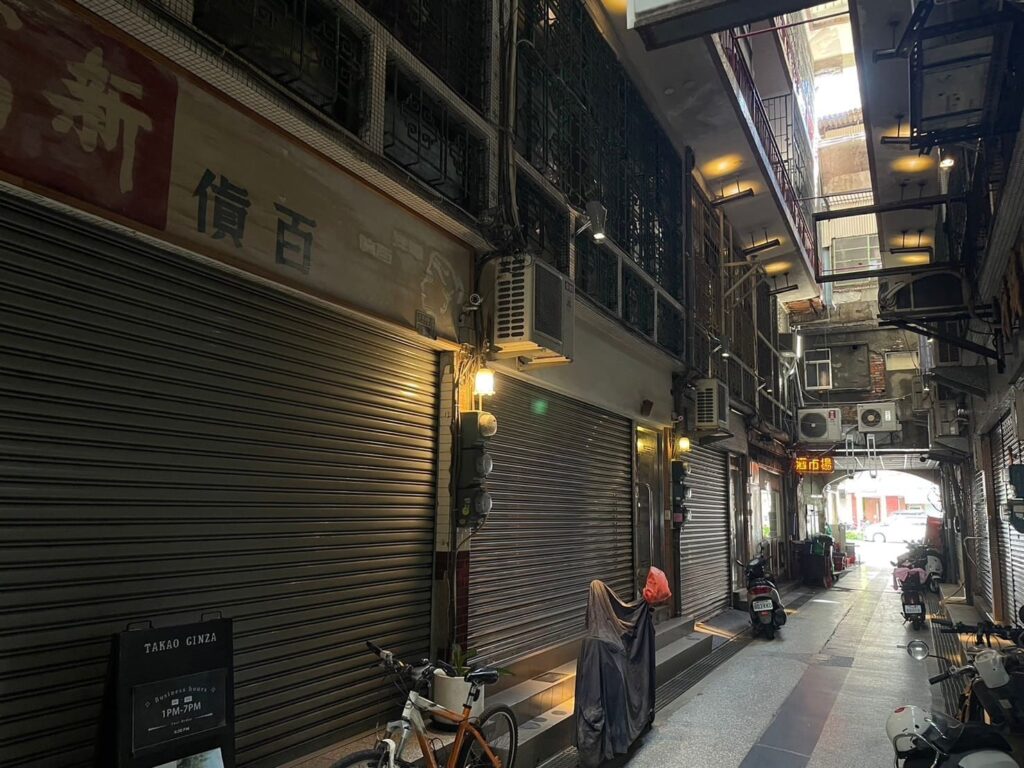
The old street house revitalization movement has illuminated the passage spaces of Kaohsiung’s Ginza.
Changbin Chung-yung Warehouse- Agricultural Products Cold Chain Logistics System

The Chung-yung Warehouse in Changbin Township was once a space for storing fertilizers for the farmers’ association. With the assistance of X-Basic Planning and Wei-Fong Construction, it has gained new life, transforming into a key node in the “cold chain logistics system.” This time, while working to ensure continual of its historical context as an agricultural storage space, the team has looked further ahead, focusing on the future development of local industries, creating possibilities for locally abundant fruits and vegetables to be processed into specialty products. We hope that in the future, the Chung-yung Warehouse will not only serve as a transit station for storage and transportation but also become a base for establishing Changbin’s local brand, allowing the old warehouse, with its transformed new persona, to continue creating local value and uniqueness.

Changbin Township is known throughout Taiwan for its rich agricultural products such as Pa-hsien rice and roselle, but due to its remote geographical location and insufficient cold storage space, agricultural products suffer spoilage and losses during storage and transportation.

To solve this problem, at the end of 2023, X-Basic Planning and Wei-Fong Construction assisted the Changbin Township Farmers’ Association in transforming the Chung-yung Warehouse, which originally stored fertilizers and grains, into a “cold chain warehouse.”

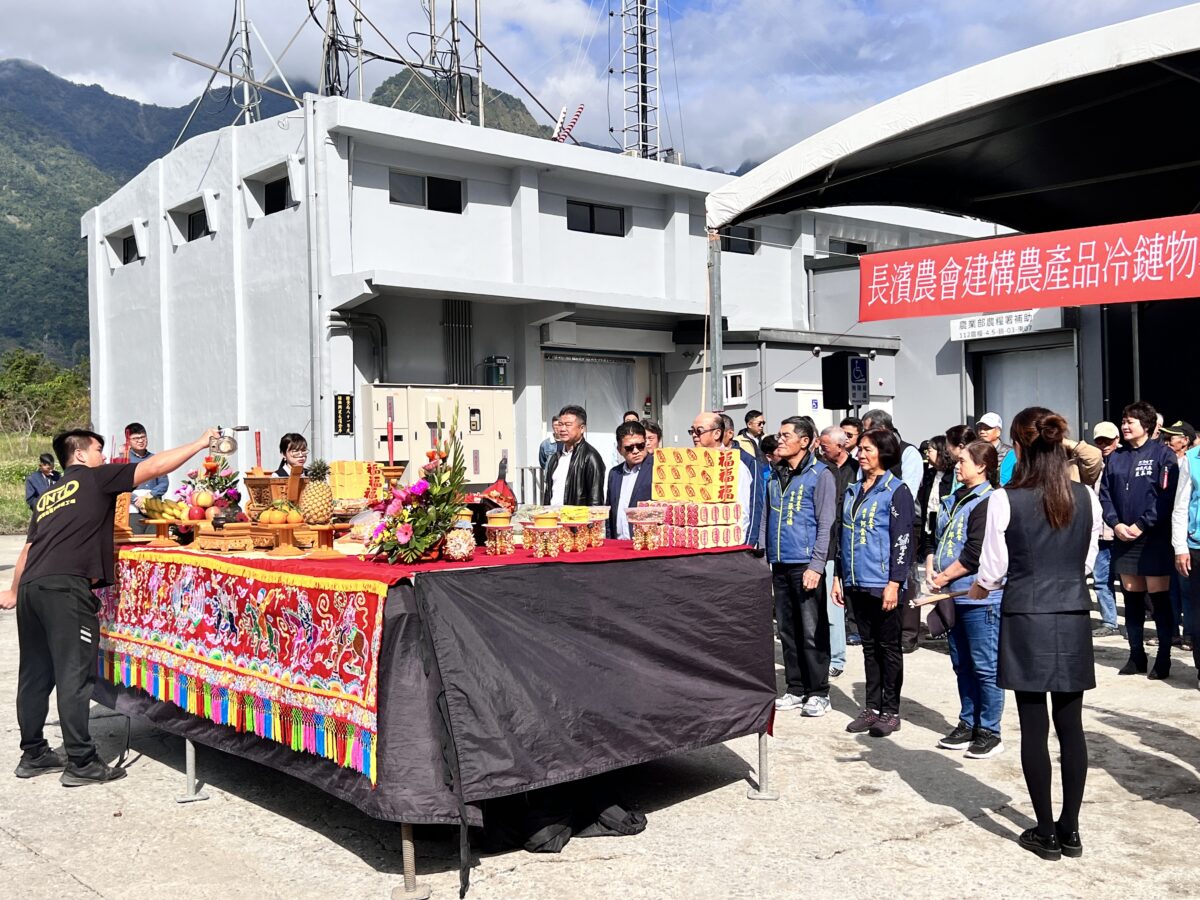
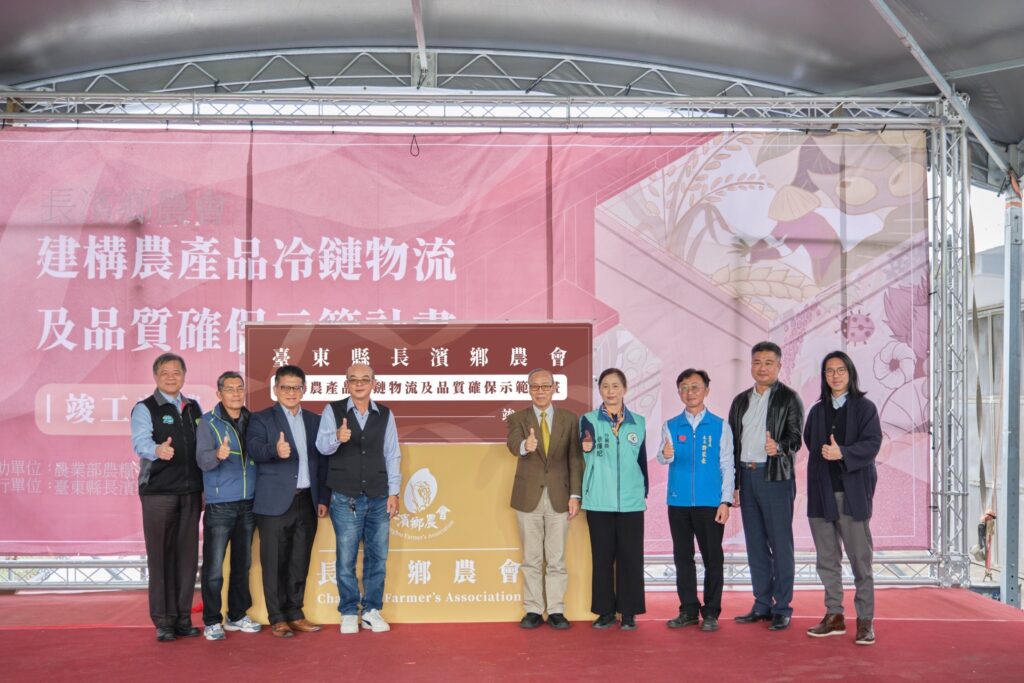
Within just three months, this warehouse located at the border of Taitung and Hualien counties was given a new lease of life, with a completion ceremony held on January 8.

Photo: Deputy Minister of Agriculture Chen Tian-shou (second from right), Director of the Eastern Branch of the Agriculture and Food Agency Hsu Hui-fei (first from right), and General Manager of Changbin Township Farmers’ Association Hong Cheng-hsian (third from right).

The cold chain warehouse is equipped with RC-style cold storage that can extend the shelf life of local crops, which has helped strengthen the production and sales chain through e-commerce channels and online services for home delivery. It also features a circular baking system, pneumatic single tea bag filling system, grain vacuum packaging machine, and other processing equipment to enhance the market visibility and added economic value of agricultural products. Additionally, the farmers’ association has installed solar panels on the roof, which serve both power generation and heat insulation functions, sustainably and effectively reducing power consumption.

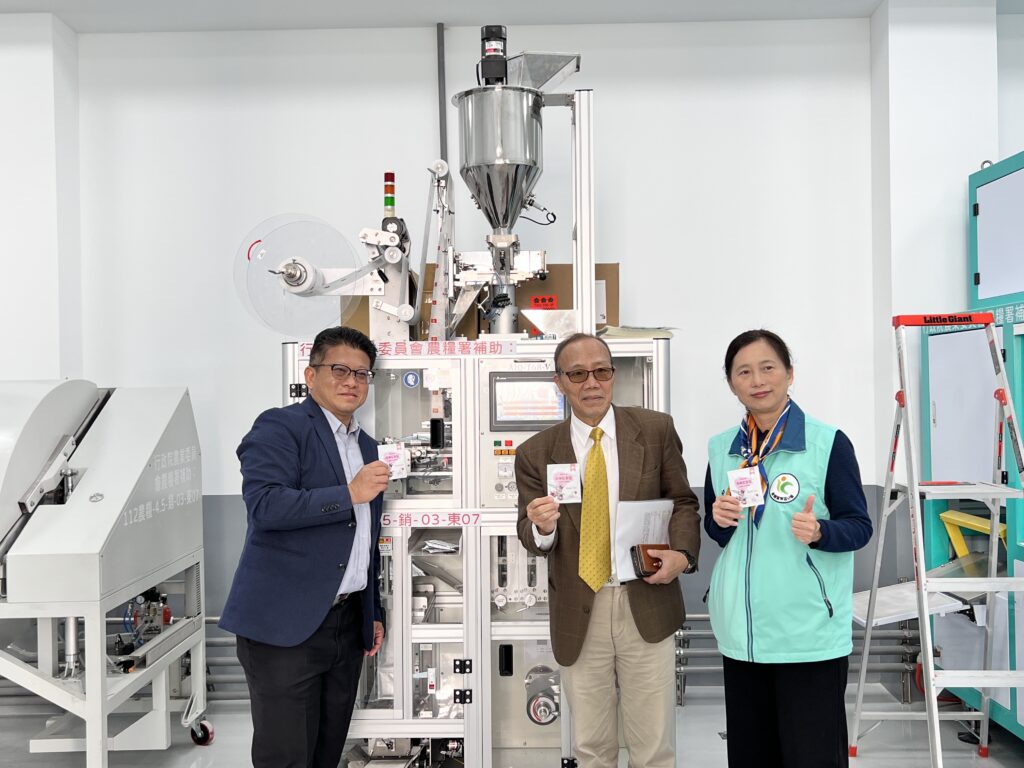
The machine in the image is the ‘Pneumatic Single Tea Bag Filling System,’ which transforms dried vegetables, fruits, and grains into brewing beverages, enhancing market competitiveness. The Taitung No. 3 roselle tea bag in the guest’s hand is made using this system, and is a renowned agricultural specialty product of Changbin Township. The ‘Circular Roasting System’ on the left can process soybeans, red quinoa, and millet into specialty products such as mixed grain tea and Jingang premium soy sauce.

After adding the cold chain system, Chung-yung Warehouse has not only acquired a refreshed exterior appearance but has also undergone a functional transformation, becoming a base for Changbin’s local brands.

SukiNa B&B – Changhua Old House Revitalization Project

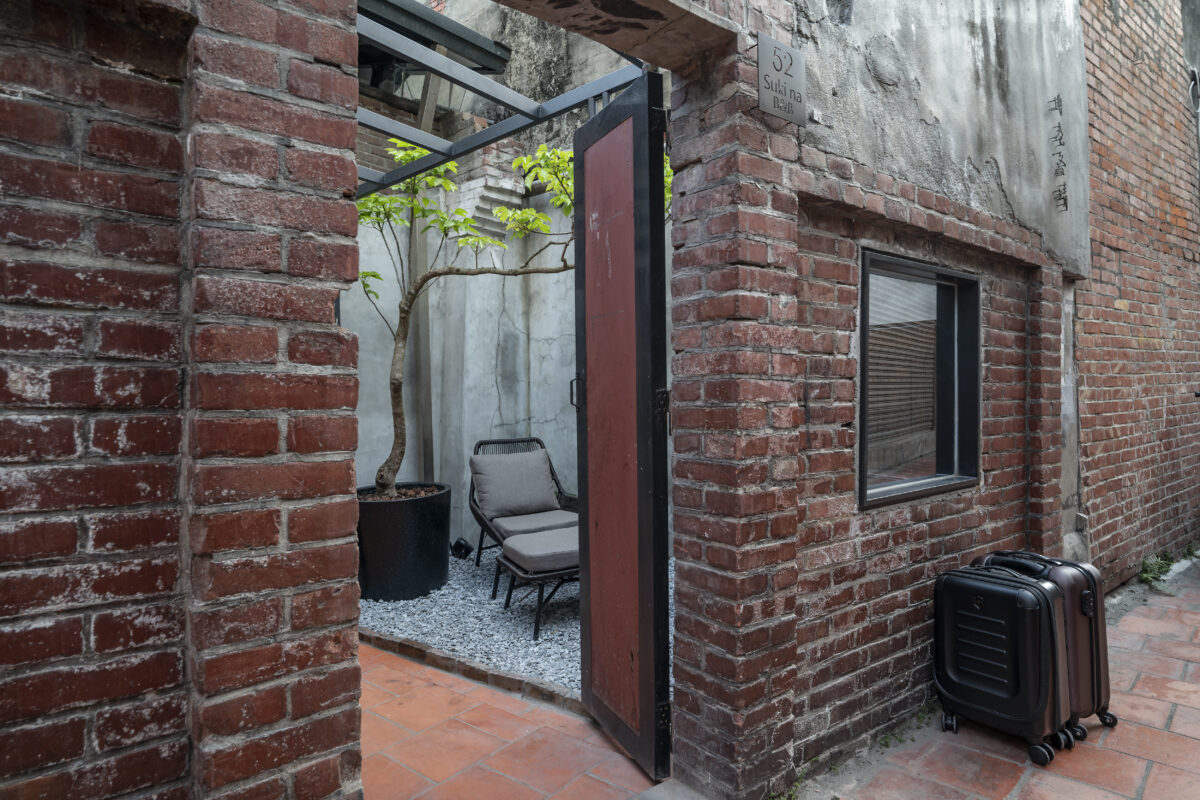
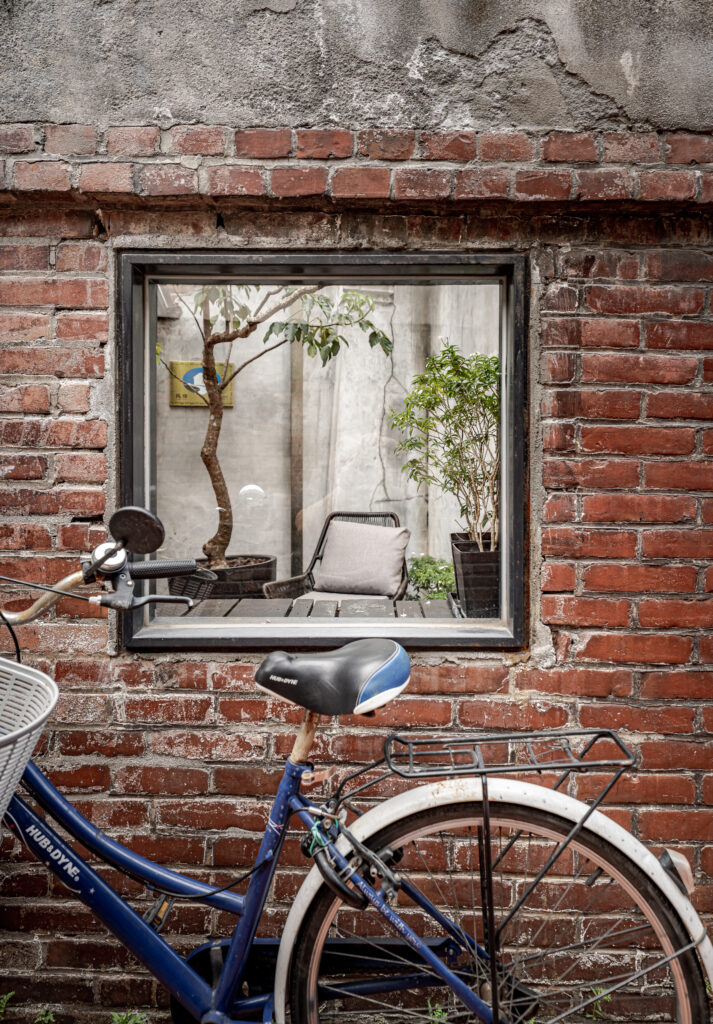
About two years ago, our small team received a special project for preservation of an old house. After preparation, renovation, and reorganization, it finally blossomed in spring this year. We now have our own old house bed and breakfast—”SukiNa B&B”. Located at No. 52 Jinsheng Lane within Lukang’s Nine Winding Alleys, it was formerly a Han-style old residence abandoned for over twenty years. With considerations for optimal spatial planning, we preserved the original features of the old house, such as hexagonal bricks, wooden round beams, and red brick walls. We repaired deteriorated parts, added steel frames to support the new structure, and introduced natural light, overcoming the typical lack of illumination in alley houses. We provide comfortable and distinctive accommodation experiences for travelers who appreciate old houses.

Old House Revitalization Challenge

“How can I properly repurpose the old house left by my elders?” The current owner who lives elsewhere raised this question with palpable anxiety coming from the dilemma of not knowing how to evaluate and utilize the renovated old house in the future.

Imagining they might not be able to plan the future of the old house comprehensively, yet concerned that merely handing over the restored space to others might lead to worries about proper care and utilization of the old house’s cultural value, they faced the layered dilemma that “neither renovating nor leaving it alone seems right.”

Planning Integration, Transformation and Renewal

In other words, although homeowners have the desire to preserve their family’s old house, they often cannot find appropriate solutions that address both ‘restoration’ and ‘adaptive reuse’ planning simultaneously. During the process of searching for solutions, our X-Basic Planning cross-departmental team’s professional ‘integration’ capabilities provides assistance, offering homeowners direction to solve this core problem.

From inspections of old houses, historical research, architectural repairs and interior design expertise, to evaluation planning and guidance on relevant government support and subsidy policies, we not only provide design planning for hardware renovation, but also focus on software aspects such as operation planning for reuse, assessment and implementation. This ensures that transformed old houses not only change spatially, but also connect with the times and maintain sustainability in their vibrant new uses.

We hope that at Jinsheng Lane 52 ‘SukiNa B&B,’ we can create a restful and comfortable home for travelers who appreciate old houses. The winding Nine Curves Lane blocks Lukang’s winter winds, keeping its houses warm as spring even in winter. One can enjoy the shade under a Chinaberry tree, looking up at green leaves against a blue sky, drink tea and soak in a hot bath in the backyard, or warm up with a drink by the fire in winter.

The ‘transformative renewal’ of local old houses is not easy. We hope that the comprehensive solutions we’ve discussed and implemented with homeowners can bring contented smiles to more people. Finally, we always say that a house with people has light. Lukang SukiNa B&B awaits your visit to experience the renewed charm of this transformed old house.

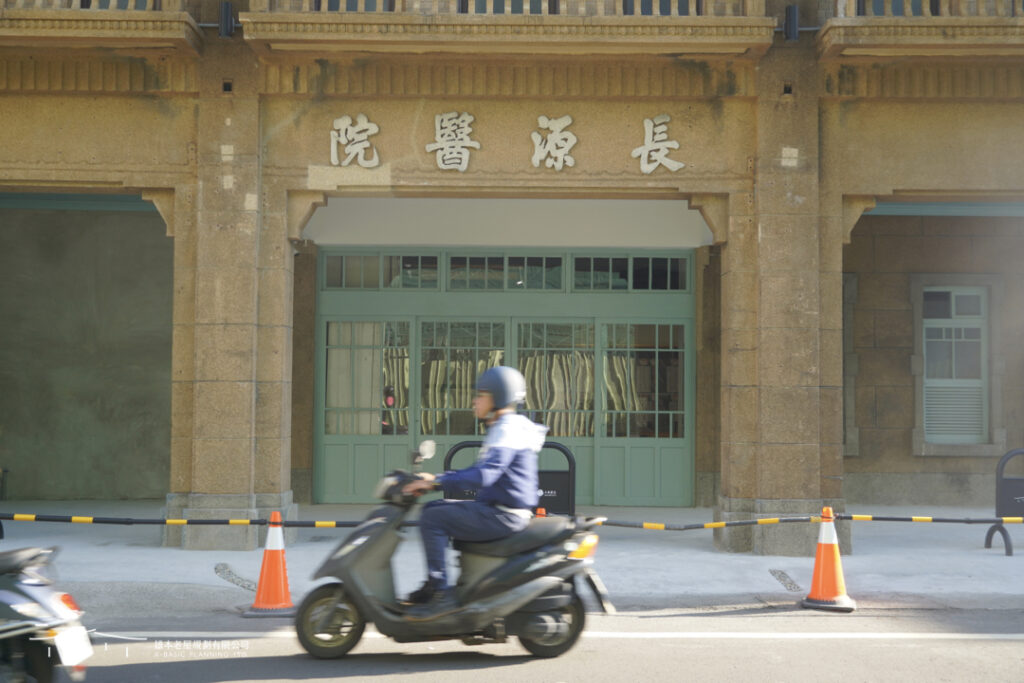
Chang-Yuan Hospital – Private Historic Building Preservation and Regeneration Project

Old Houses and Objects That Carry Memories

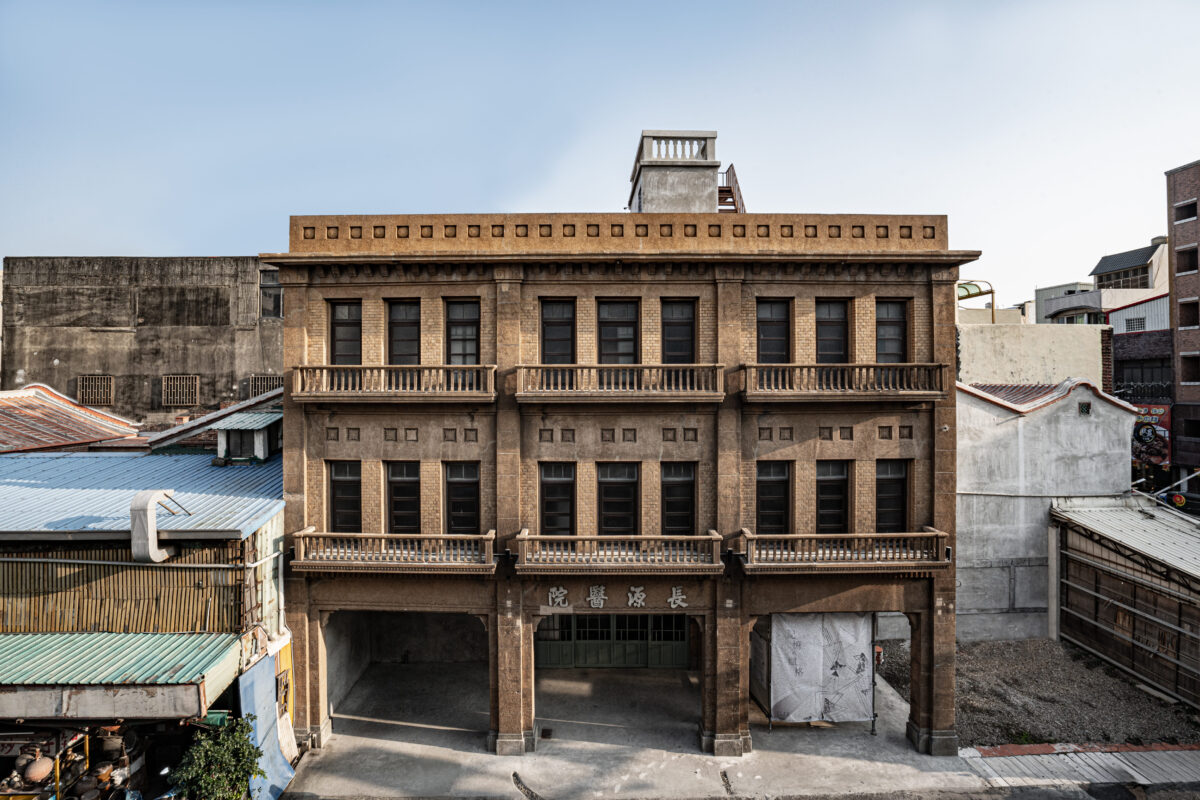
“When items are piled in corners for a long time and forgotten, their original value disappears gradually, and they eventually become waste that just occupies space.” While sorting furniture and taking inventory of past events, Dr. Hsu Cheng-yuan, the fourth-generation owner of Chang-Yuan Hospital, expressed his feelings about the reluctance to discard old items, and was grateful that someone still cares about this old building and its history.

Before the restoration work of Chang-Yuan Hospital commenced, X-Basic Planning helped the owner package and preserve the cultural artifacts, retrieving long-forgotten memories from the river of time. During the renovation process, structures that were originally decayed, buried, or even dismantled were restored to their original appearance through historical image research. The old house and its antiques thus shook off dust and returned to their former glory in the bustling neighborhood, weaving together with the historic Yu Jen Jai building across the street to form Lukang’s landmark intersection.

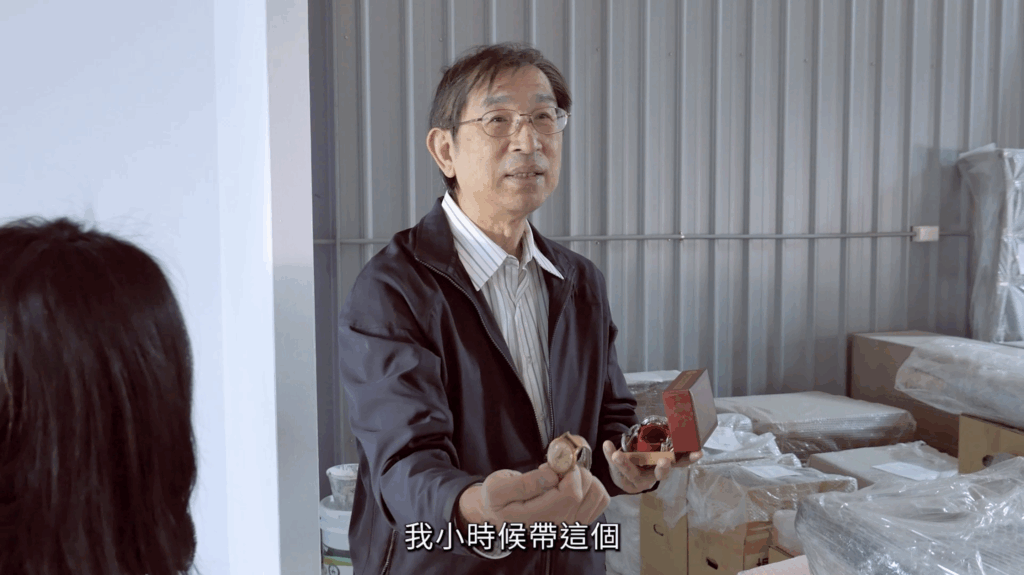
In 2020, the cultural artifact repository of Chang-Yuan Hospital displayed old furniture and items transported from the old building. During the documentation and organization process, Dr. Hsu Cheng-yuan discovered many old photographs and materials left by his father, and while conducting inspections on artifacts, he reminisced about his childhood, finding the first watch he wore during elementary school. After half a century, the watch band retains elasticity, and the unpowered hands seem to have frozen in time. As the captured moment in time grew warm on his wrist, a gentle smile graced Dr. Hsu’s face. He shared with his team the pure childhood joy of wearing his first Titoni watch.

New Discoveries Under the Metal Roof

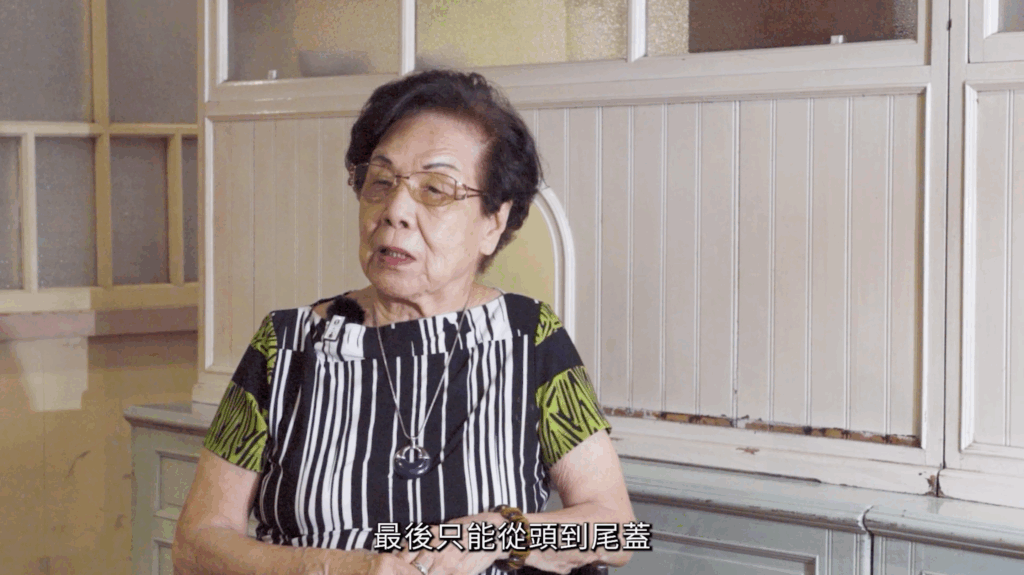
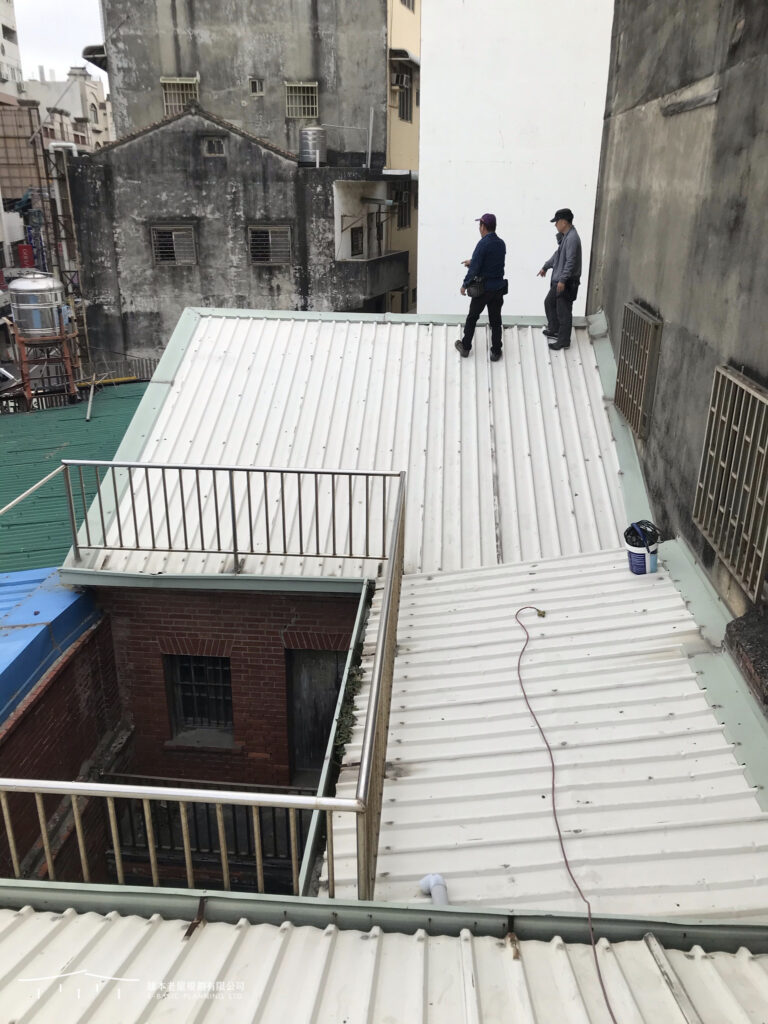
In contrast to the intact Titoni watch, the Chang-Yuan Hospital that has protected these old items through the long years has gradually developed serious problems such as water leakage, termite infestation, and wall bulging. With no other options, Grandmother Hsu (Ms. Shih Hsiu-hsiang) could only ask workers to cover the roof with steel plates to block the rain, temporarily alleviating the issues of building maintenance.

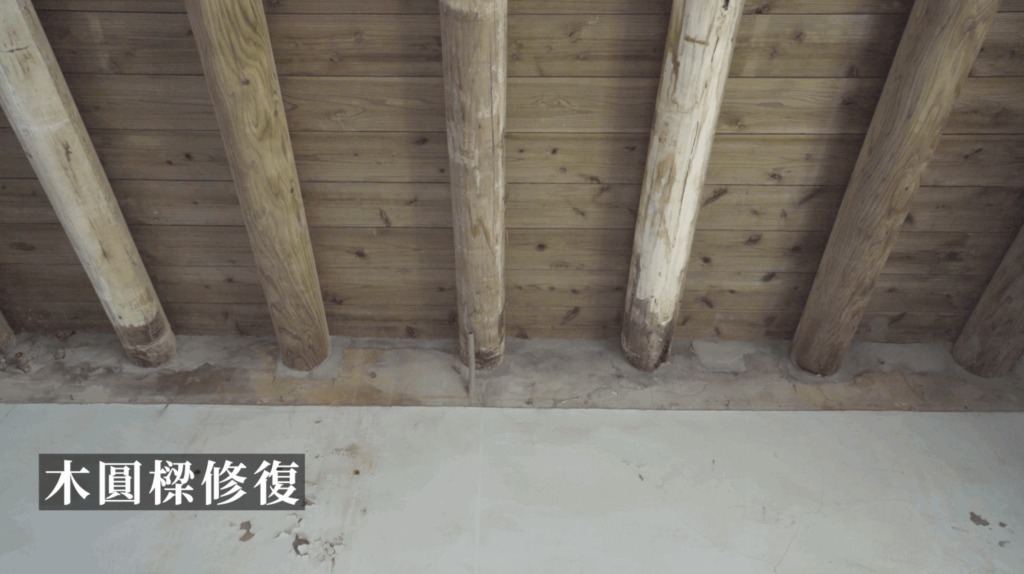
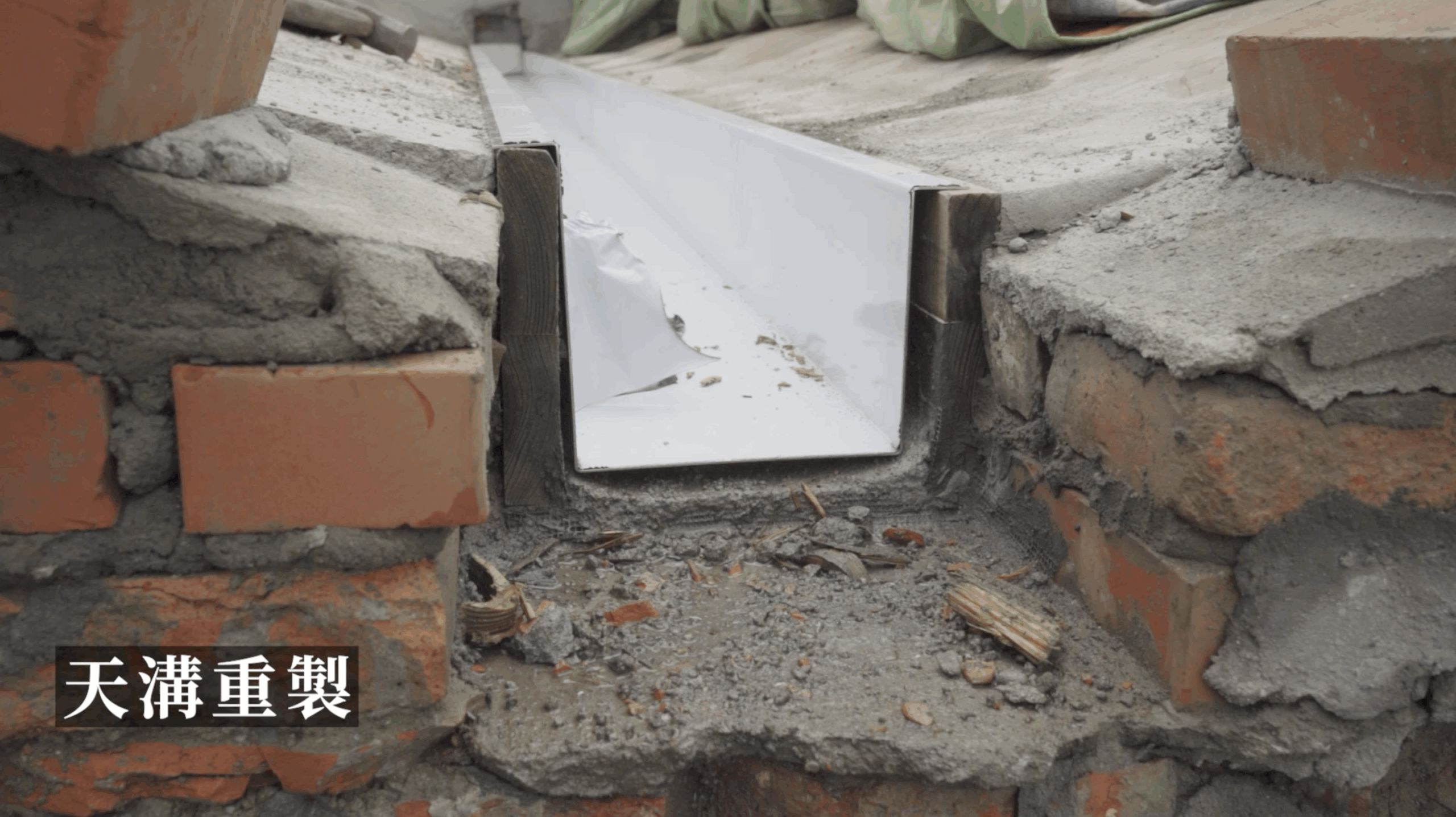
Although this blocked rainwater from leaking through the ceiling, the humidity of Lukang still seeped in everywhere, causing the ends of the wooden circular beams in the Minnan-style shophouse to rot, attracting termites to build nests. The restoration team’s original plan to replace 30 wooden beams had to be adjusted to 70 beams after removing the metal sheets and examining the actual structural conditions. The restored brick walls and wooden beams were thoroughly waterproofed to effectively extend their lifespan; while the white lime gutters on the roof that had weathered and collapsed were reconstructed using modern methods with stainless steel materials to improve drainage functionality.

Besides reassessing the extent of building damage, the restoration team also made many surprising discoveries during the construction work.

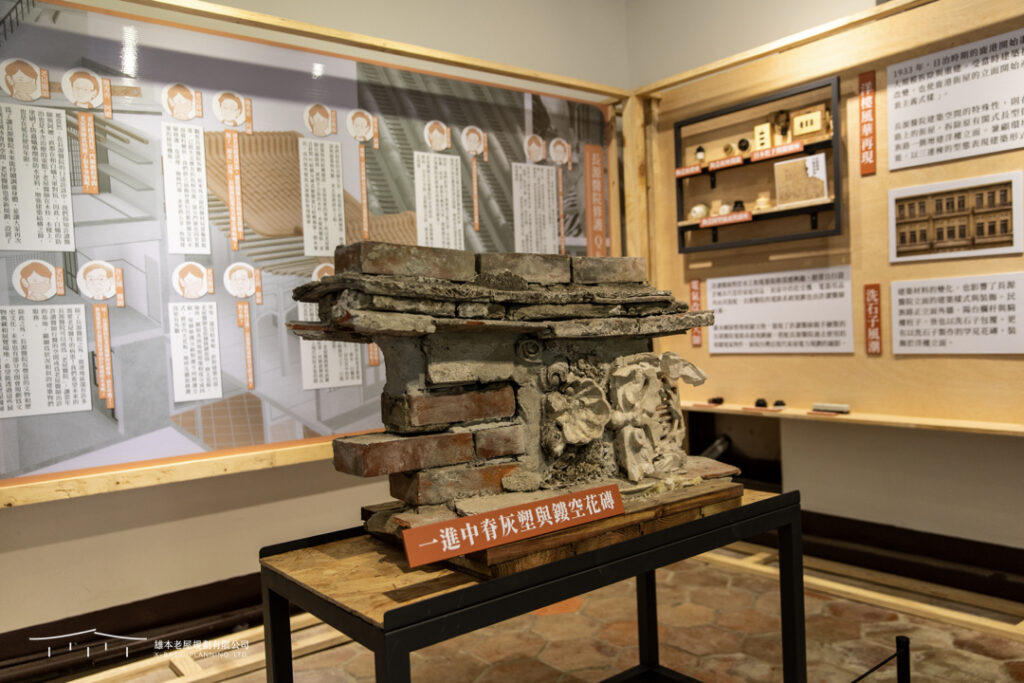
After the metal sheets on the main ridge of the roof were removed the decorative elements wrapped within them saw the light of day again. The delicate openwork brick patterns and relief designs not only symbolized the blessings of ancestors for the family but also showcased popular decorative elements from the period of construction. To preserve these precious patterns, the team used 3D scanning technology to digitize the architectural details, using this as a basis to rebuild the roof ridge; the originally fragile structures were evaluated, removed, and presented as exhibits, inviting the public to appreciate the details up close during the completion exhibition.

Recreating Architectural Features with Film Negatives

Lukang’s rainy summers and windy winters necessitated the formation of the distinctive ‘No Heaven Streets’: Vendors on both sides of the street built continuous ‘street pavilions’ stretching for miles, with brick platforms on top that allowed pedestrians to walk and gather together. Although the covered streets were demolished during the 1934 urban correction process, old photographs left by local residents on their rooftops became important reference materials in the building survey.

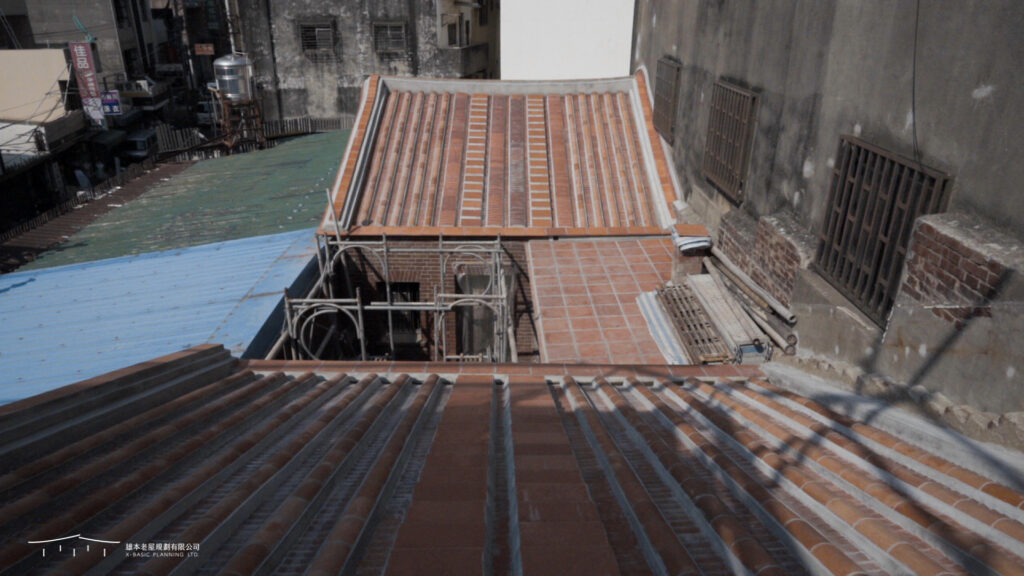
Following Grandma Hsu’s oral accounts, the restoration team found multiple areas of old, damaged brick platforms on the front facade of Chang-Yuan Hospital, in the water passages between the second and third sections, and on the rear sloped roof. After comparing them with old photographs and historical data, the team inferred these were extensions of the street pavilion structure. During the project, they relaid the floor tiles and also restored the old chimney in the water passage area.

Through historical photographs, we can not only have glimpses of the past architectural design of Chang-Yuan Hospital but also review the everyday life of Lukang residents—this is precisely what the regeneration of old buildings achieves. “When architectural spaces from different periods are no longer demolished due to deterioration, history naturally integrates into daily life, becoming part of the urban landscape.” As X-Basic Planning’s chief consultant Hsieh Pei-Chuan observed about Chang-Yuan Hospital, those once-vanished memories and architectural structures are details that shape local culture, reestablishing connections with modern life through processes of rediscovery.

The water passage area between the second and third sections of the hospital’s Minnan-style shophouse was once covered with corrugated metal sheets.
After the restoration project, the roof was newly covered with tiles and floor bricks, and the original chimney was restored to its former appearance.

Maoao Stone House Preservation and Regeneration Project

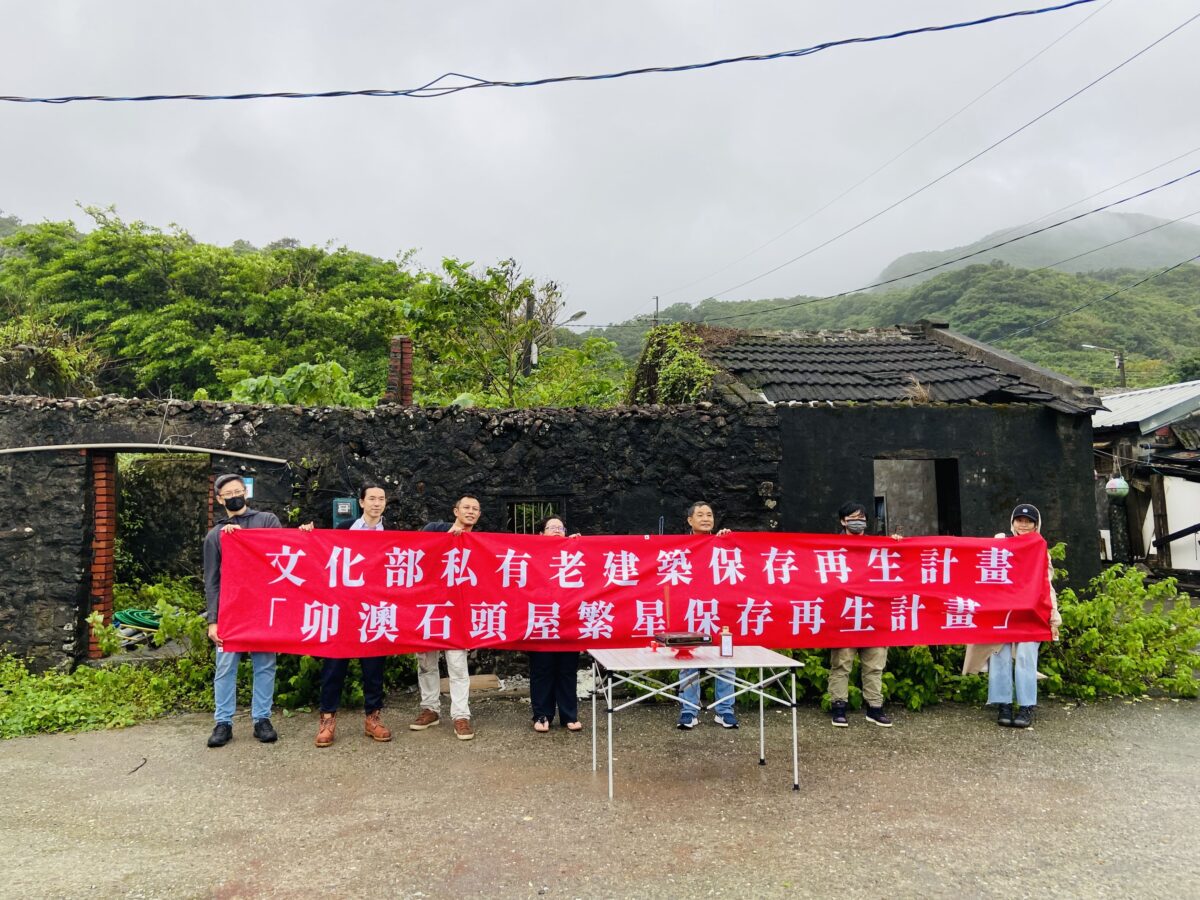
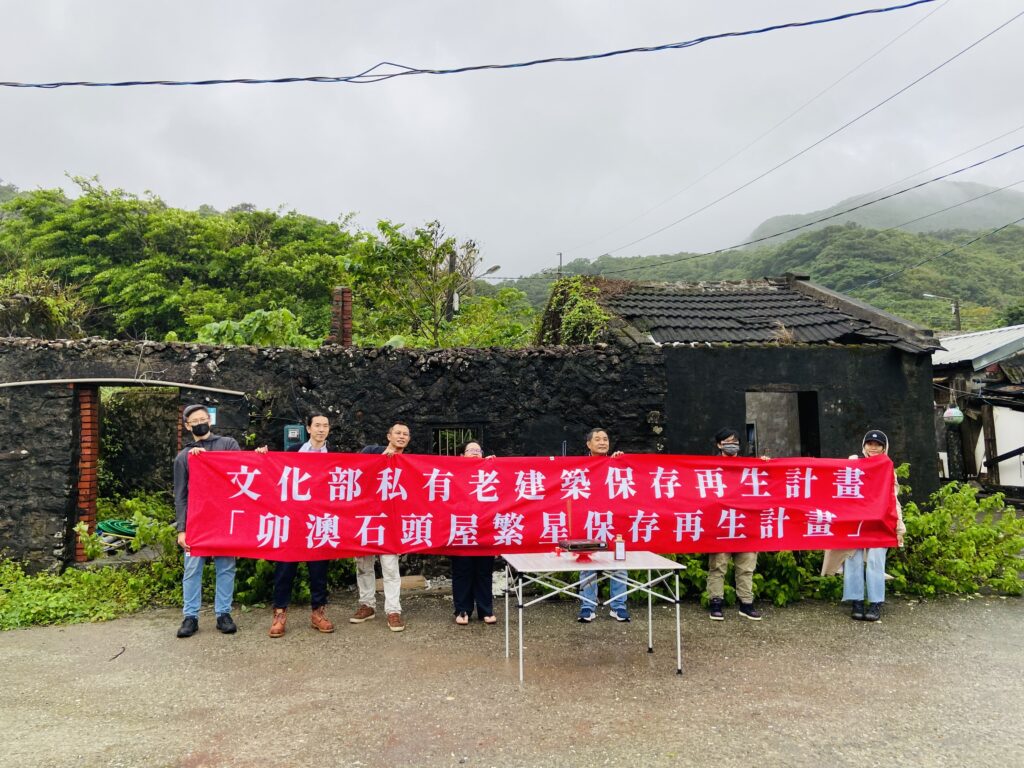
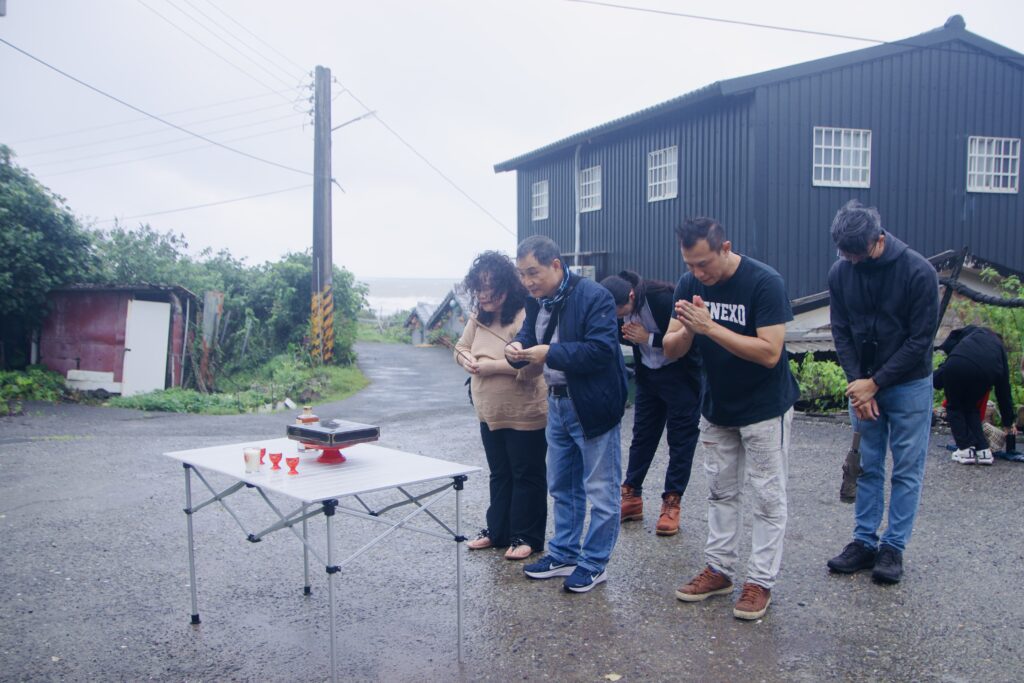
In October 2022, the X-Basic team and the local Maoao team Sandiao Cape Cultural Development Association jointly assisted Mr. Chiang Ming-Hsien, the owner of Maoao stone houses at 28 Fulian Street and 15 Fuxing Street, in obtaining the Maoao Stone House Preservation and Regeneration Star Project. On October 17th, under the accompanied effect of a typhoon, a groundbreaking ceremony for the stone house restoration project was held in the wind and rain. During the preparation for the ceremony, the X-Basic team members warded off wind and rain in order to light the incense in the northeast monsoon. We also worked together to hold up the groundbreaking banner, sincerely praying for the safety and smoothness of the upcoming project.

Stone houses are fishing village settlements in Taiwan’s northeast coast, built with local stone materials to adapt to the natural environment. Key features to preserve include the withstanding the northeast monsoon and ocean surf, the artistic quality reflecting the local environmental colors, and the cultural significance containing the fishing village’s developmental history. Although the environment of the fishing village was harsh in the past, neighbors would always help each other. From the construction of stone houses, daily fishing and harvesting, to the procession activities of the local Liyang Temple, life in the stone house settlement was always carried out together.

For the X-Basic team, accompanying the stone houses from field investigation and project application to groundbreaking has been the same. We have experienced Maoao’s extreme heat and cold winters together with the local team and the homeowners, never missing the story of any stone or tile. On the day of the groundbreaking ceremony, the timely northeast monsoon allowed everyone to experience something of the daily life of local residents, while also evidencing the resilience of the stone houses, which remain standing in the wind and rain even with only one wall left.

In the future restoration project, the X-Basic team will transform this wall that has withstood wind and rain into stronger stone houses. This will create new spaces for local residents but also, through innovative planning and use, allow the features and stories of the stone houses to continue to be built upon, just like the stones that have been piled up generation after generation.

BackerHouse – Private Historic Building Preservation and Regeneration Project

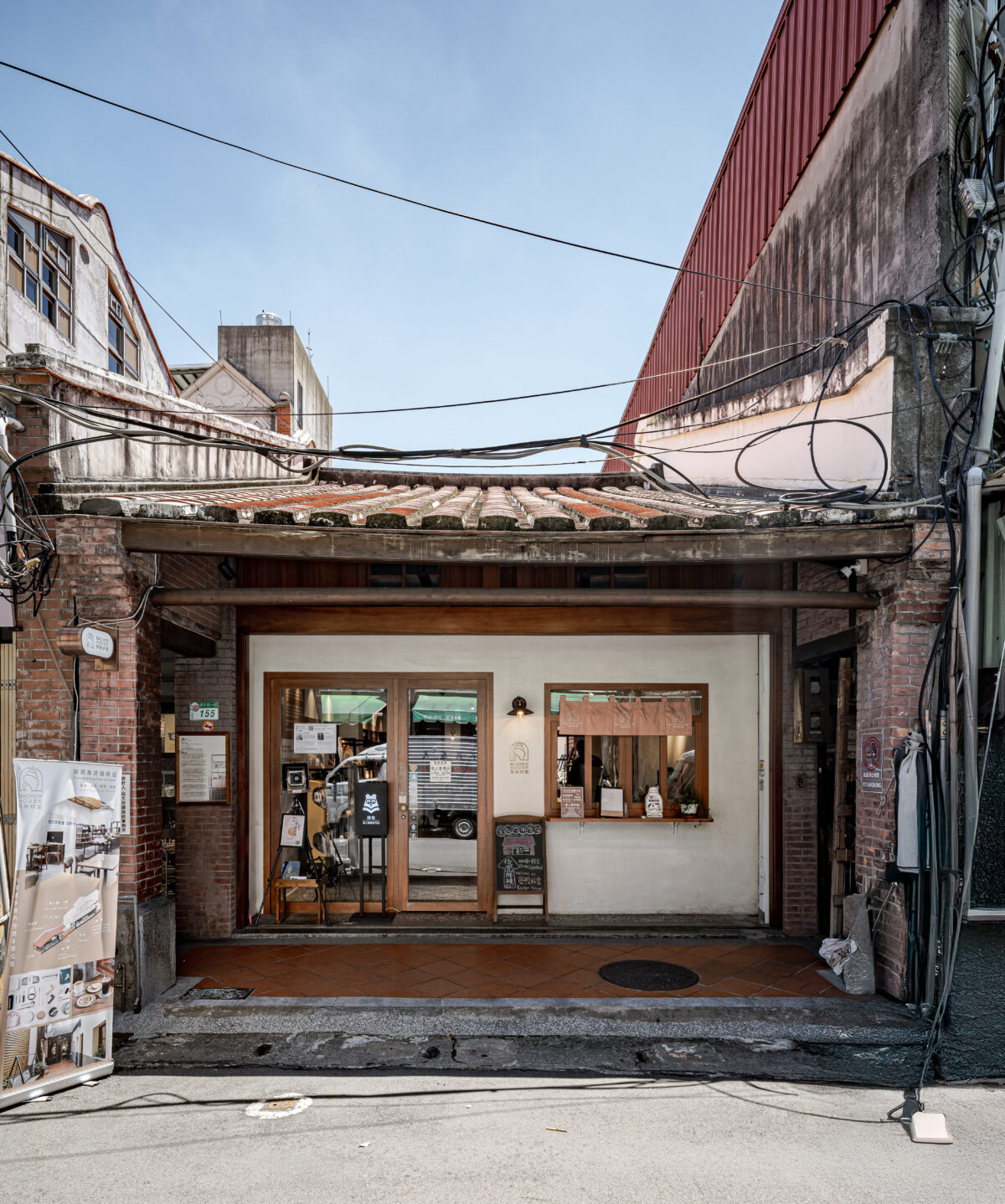
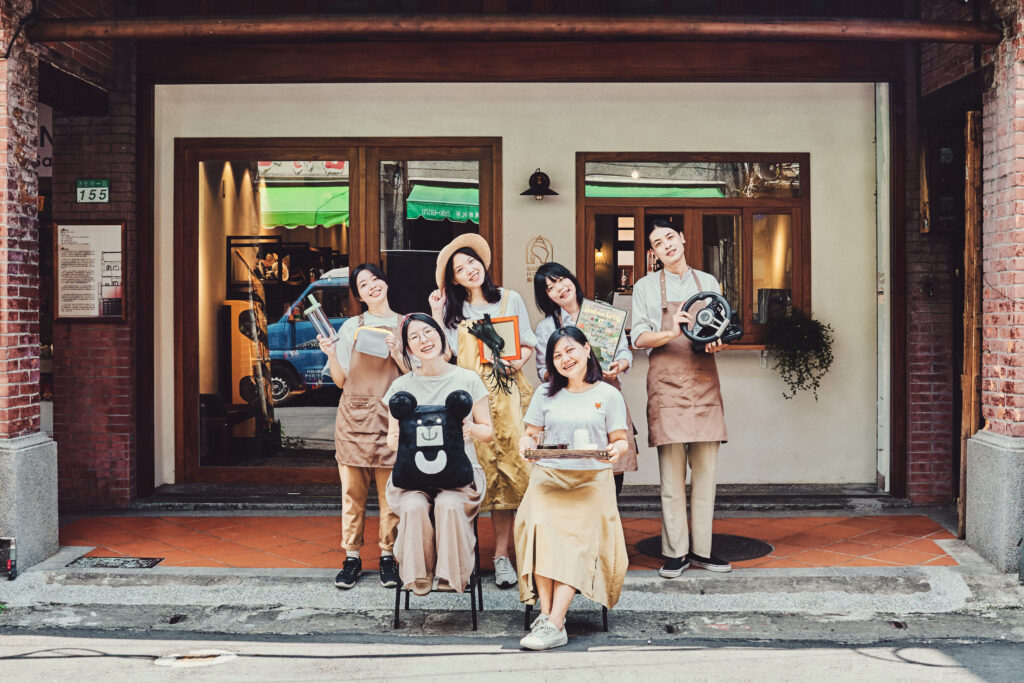
Dadaocheng is the area with the highest concentration of cultural assets in Taipei City and has long been known for its thriving commerce. Reflecting the Qing rule, Japanese rule, and the post-war era, various forms and styles of commercial street houses stand side by side, shaping Dadaocheng’s unique neighborhood character. The building at No. 155, Section 1, Dihua Street, now operated by BackerHouse, is a three-story Minnan-style shophouse built during the Qing Rule Period with additions made during the Japanese rule period and after the war. In 2005, it was designated as a historic building by the Department of Cultural Affairs, Taipei City Government.

From 2012 to 2019, No. 155, Section 1, Dihua Street served as the “Urban Regeneration Station (URS)” under the Taipei City Urban Regeneration Office. In 2020, after completion of its phase mission, it was transferred to the Department of Cultural Affairs, Taipei City Government, which promoted the Old House Cultural Movement Project. The initiative aimed to attract private organizations through a system where restoration costs could offset rent and management fees, creating a public-private partnership for revitalization.

The crowdfunding consultancy company Backer-Founder submitted a proposal to the Department of Cultural Affairs, Taipei City Government at this time, inviting the X-Basic Team and Huang Wei-cheng Architectural Firm to assist with local historical research, space renovation, interior decoration, and a series of operational planning recommendations. To accommodate future store operations, the team built upon the restoration work done by Lu Ta-chi Architectural Firm ten years earlier, proposing appropriate restoration and reuse plans for the future.

This Minnan-style shophouse with a “single-Bay, two-hall, two-corridor” layout suffered from efflorescence due to ground and roof water seepage, along with damaged doors, windows, and electrical interfaces. After conducting surveys and documenting current conditions, the team carried out restoration work on four major components: wall surfaces, floors, doors and windows, and wooden stairs. During the process, the team not only considered the compatibility of building materials with the architectural aesthetics but also followed reversible renovation techniques. While striving for thorough restoration, they strengthened the connection between new and old materials to facilitate future management and maintenance.

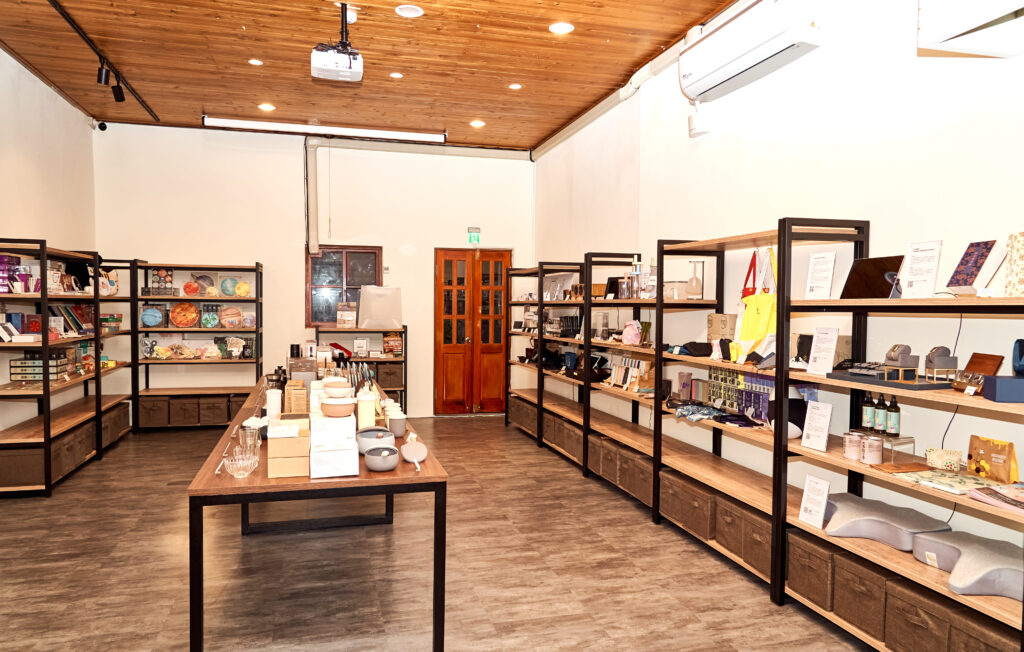
In 2022, Backer-Founder transformed Dihua Street No. 155 into an exhibition and sales space for crowdfunding brands and products, officially opening as BackerHouse, bringing new creative products, crowdfunding business energy, and fundraising events to revitalize No. 155 Dihua Street. Currently, the store showcases over 50 brands formed through crowdfunding, bringing new industrial exchanges to the historic district of Dadaocheng.

As part of the Old House Cultural Movement, revitalizing old houses through crowdfunded experiential spaces is quite a creative approach even in Taipei. Combined with Dadaocheng’s background as a once-thriving commercial district, this repurposing of old houses further extends the historical context of a neighborhood once filled with herbal medicine shops, tea merchants, general stores, and other vendors. It further establishes roots in Dadaocheng in both software and hardware aspects through a new-era business model. This is precisely the ideal old house regeneration envisioned by the X-Basic team, which focuses on practical everyday needs while addressing the importance of preserving historical memory. We are honored to have had the opportunity to participate in the BackerHouse proposal project, helping to connect the old house with contemporary times. We watch as No. 155 Dihua Street continues to flourish, accompanying this historic district, already famous for its commercial prosperity, as it strides confidently into the next era.