EN
ZH
JA
Copyright © 2025 X-Basic PLANNING Ltd.
Dedicated to the Future of Old House Revitalization
Whatever is worth doing is worth doing well.

ABOUT
雄本精神

Building a Sustainable

Old House Revitalization Ecosystem

To establish a support network for adaptive reuse and reclaim the role of old buildings in modern cities through comprehensive planning and integration.

WORKS
經典案例

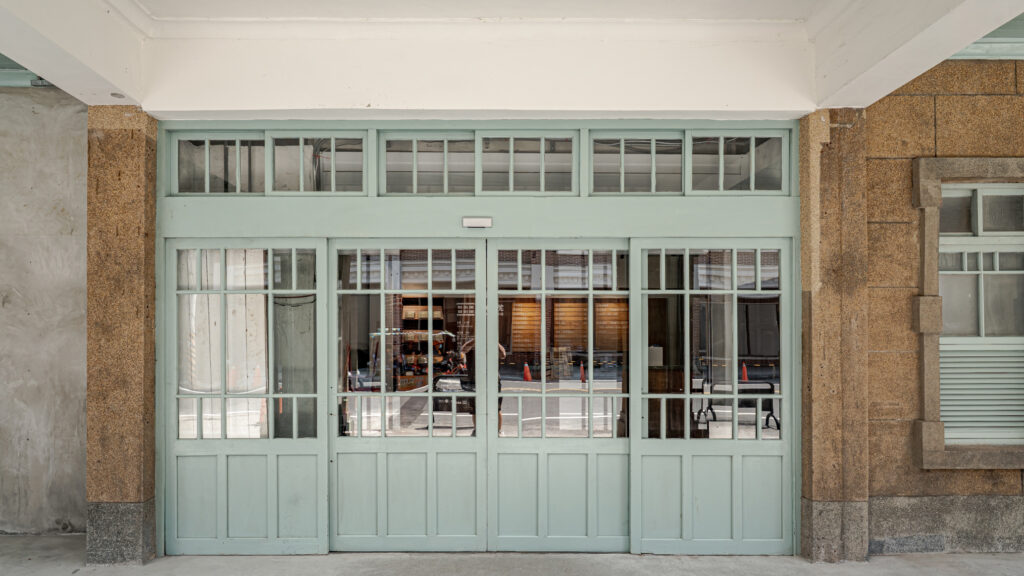
Chang-Yuan Hospital Lukang Historical Image Museum

Chang-Yuan Hospital Lukang Historical Image Museum

LocationLukang Township, Changhua County
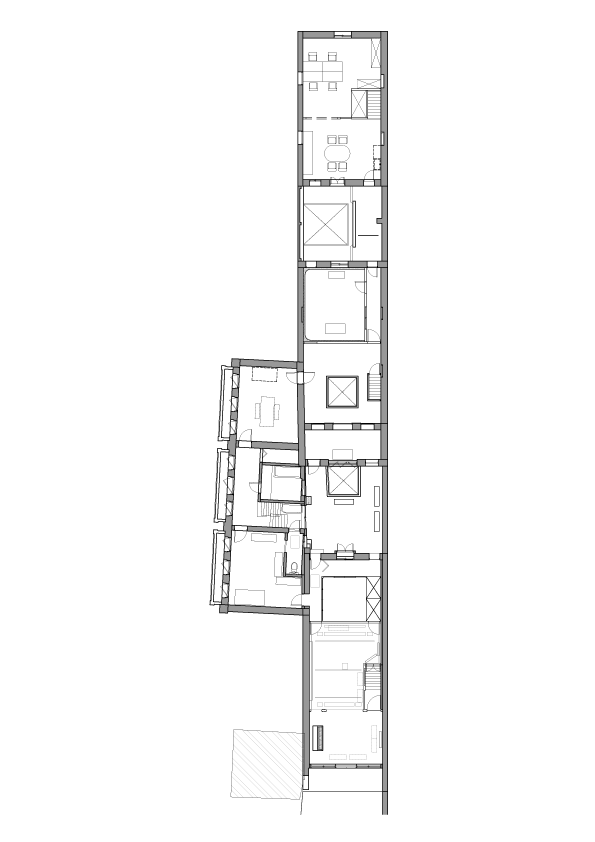
Building StructureTraditional Han-style three-section, two-story brick-and-wood shophouse/
Transitional-style three-unit, three-story RC and brick mixed house
Restoration Information“Lukang Historic House Revitalization Subsidy Program” (2019–2020);
“Ministry of Culture Private Historic Building Preservation and Regeneration Program” (2022–2023);
“Ministry of Culture Taiwan Art Research Grant” (2022–2023)
Project IntroductionCombining a Qing-era shophouse with a Western-style building constructed in the 1930s, the architecture showcases a transitional blend of Han, Japanese, and Western aesthetics. It once served as the clinic and residence of renowned Lukang physician Hsu Tu and was also the former home of documentary photographer Hsu Tsang-tse. The site preserves four generations of the Hsu family’s medical legacy, photography, and daily life, reflecting Taiwan’s path toward modernization.
ChallengesAs family members gradually moved away, the building deteriorated over time. Although the owner wished to preserve the old house, finding a professional restoration team and skilled workers proved difficult, and there was uncertainty about its future use.
Revitalization StrategyA phased restoration approach was adopted, allowing the house to maintain operational vitality during construction. It has since reopened as the “Chang-Yuan Hospital Lukang Historical Image Museum,” hosting exhibitions on architecture, local history, and family heritage, while also offering light aiyu refreshments and Japanese–Western tea service. Additionally, the “Old House Clinic” was established to provide consultation services for historic buildings.
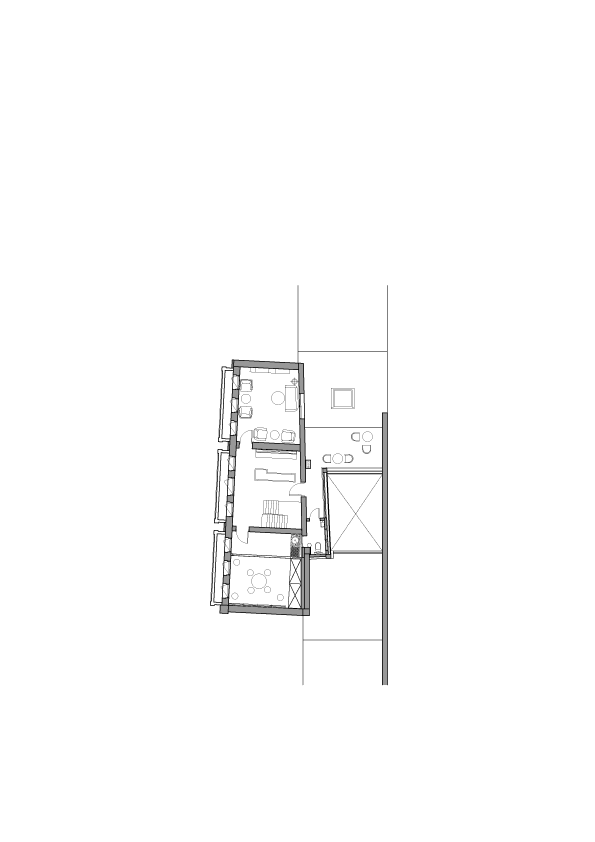
1F
2F
3F

Permanent Exhibition

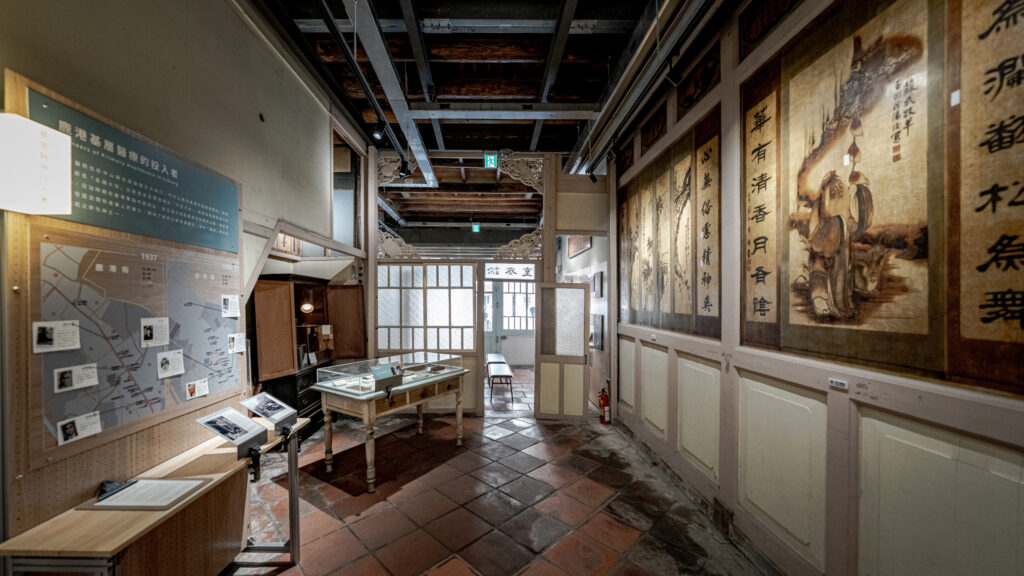
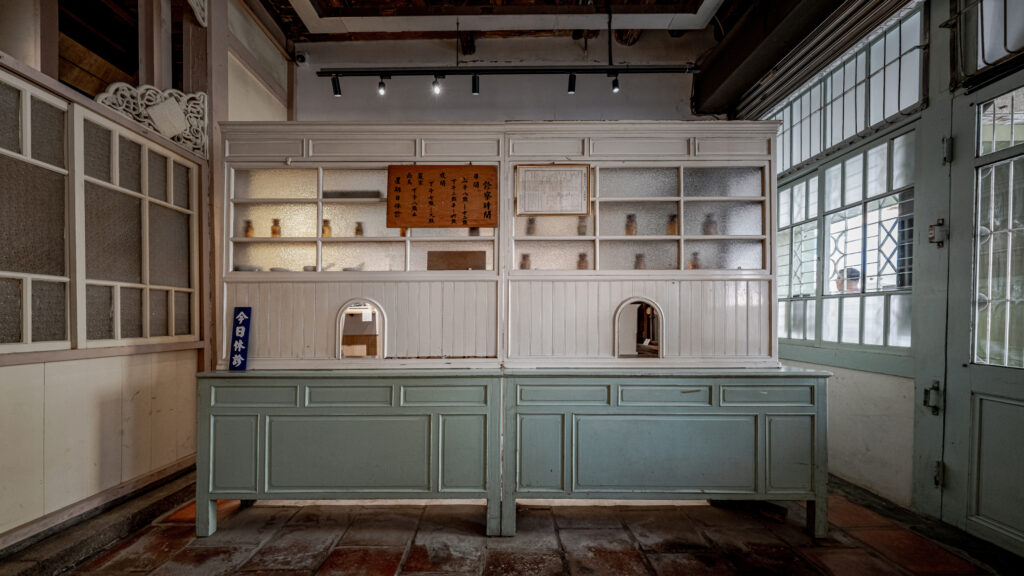
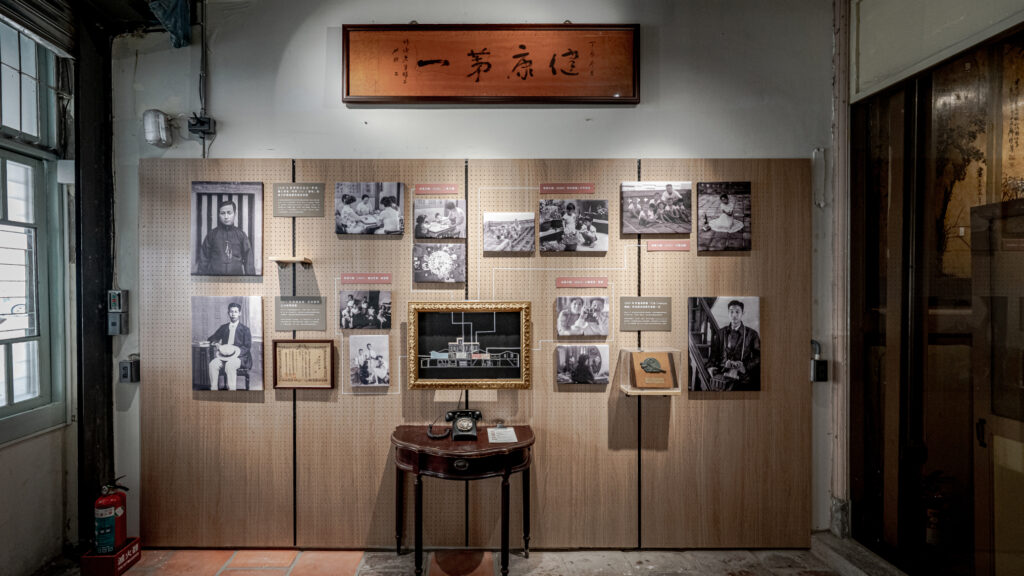
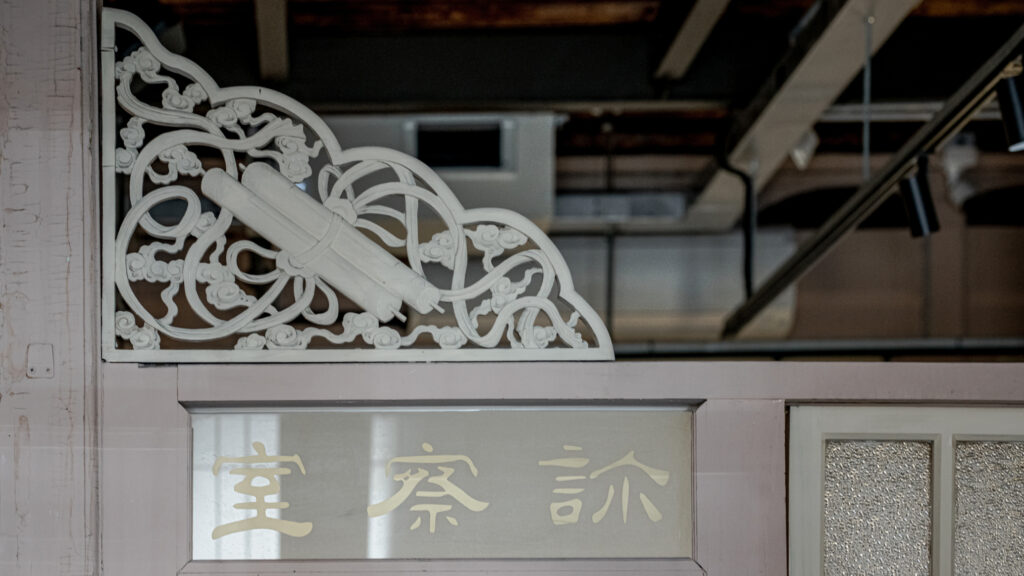
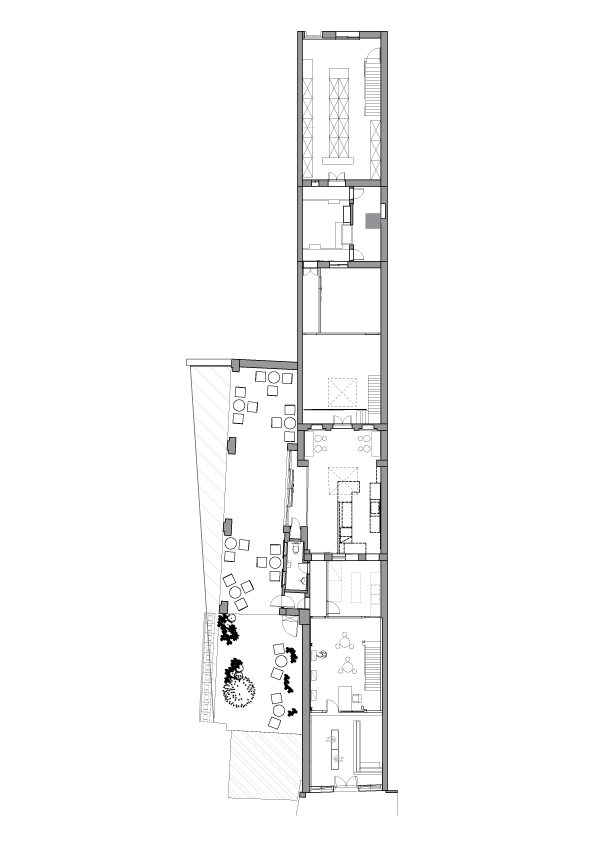
The first floor of the front section served as the facade of 'Chang-Yuan Hospital,' where the second-generation owner, Dr. Hsu Tu, practiced medicine and examined patients. It carries the memories of local residents waiting for treatment. The original medicine cabinets and patient record forms remain, outlining the daily contours of modern medicine's early days in Lukang. The murals and inscriptions on the walls were commissioned by the first-generation owner, Hsu Liang, when he purchased this townhouse in 1923. He invited Lukang calligrapher Wang Hsi-pin and Guo school painting masters to create these works, which were important preservation items during the restoration project. Today, this area is designed as a permanent exhibition space, inviting visitors to view the past and present of Chang-Yuan Hospital through historical artifacts and displays on the development of medical practices.

Information Desk

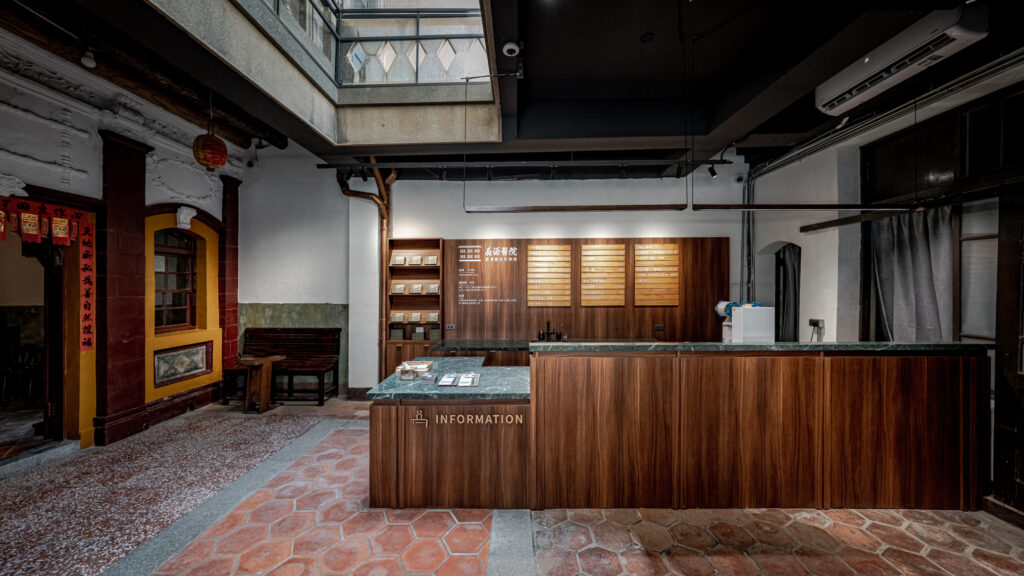
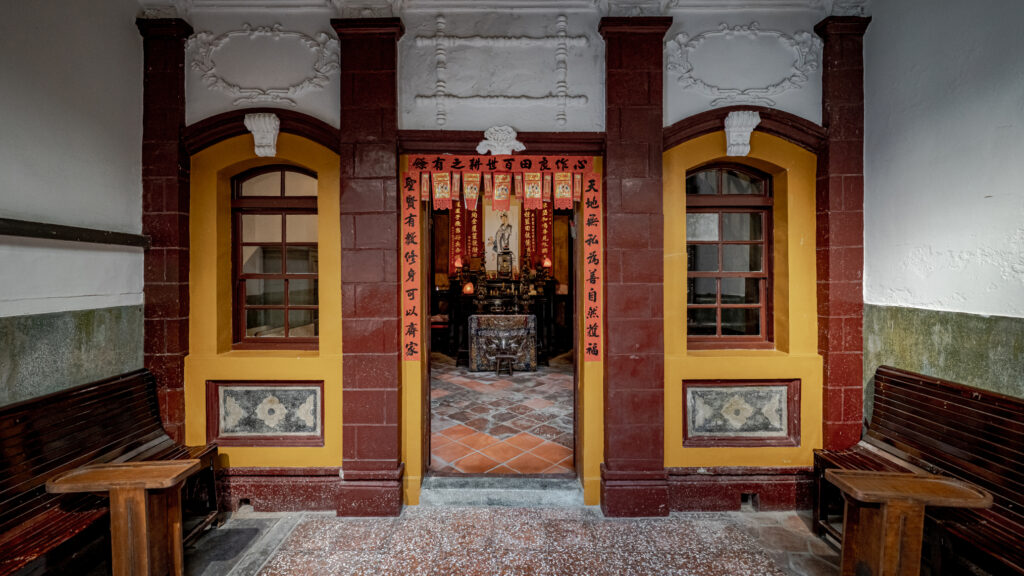
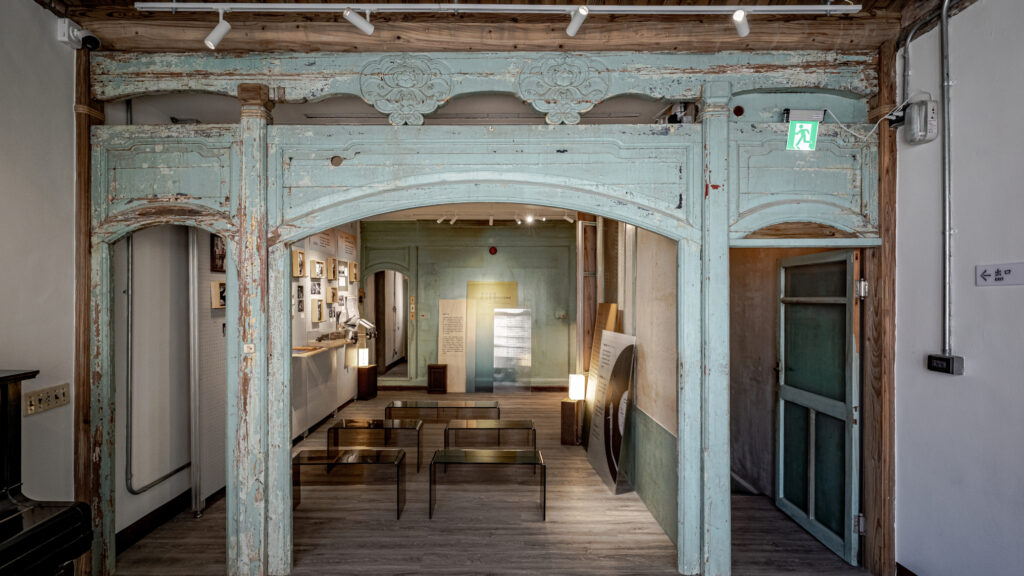
The courtyard connecting the main Western-style building and the first and second sections of the Han-style townhouse features a drainage well and brick paving. This was once the space where the Hsu family entertained guests, enjoyed the cool air, or parked their vehicles. In the 1960s, the corridor pillars were removed to expand the space. From here toward the 'inner hall' that houses the Hsu family shrine, one can see the elaborate Western-style decorative elements on the facade of the second section, including intricate floral stucco reliefs, keystone of the window arches, and acanthus leaf extensions from the column capitals, showing the transitional trajectory of architectural aesthetics over time. This area now serves as a service hub with a counter for ticket sales and visitor inquiries. It also offers aiyu jelly in the shape of a Nikon S2 camera, as well as "Blossom-carved Cake", created in collaboration with the century-old "JSJ Pastry", molded after the stucco reliefs on the facade.
Main Hall

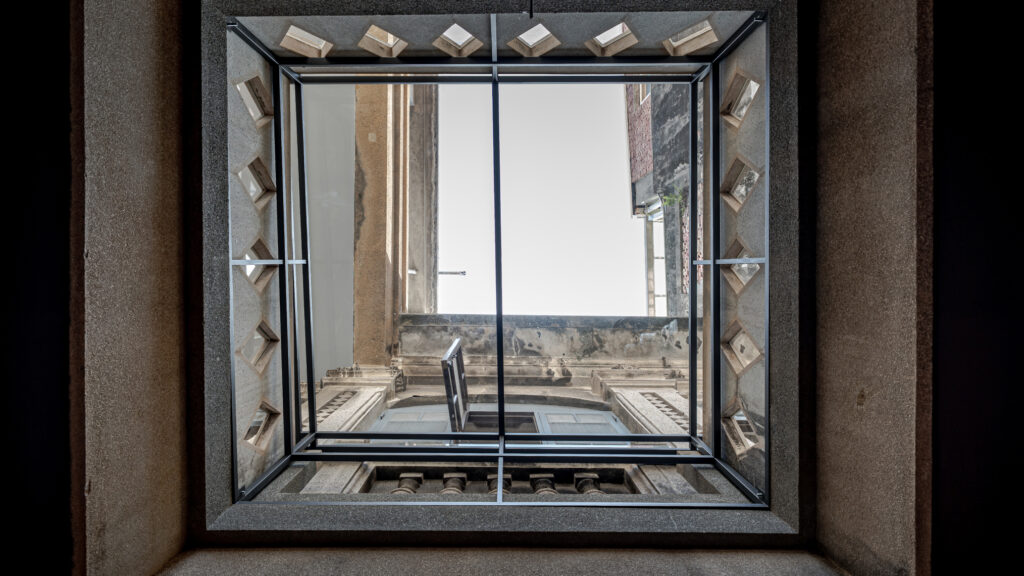
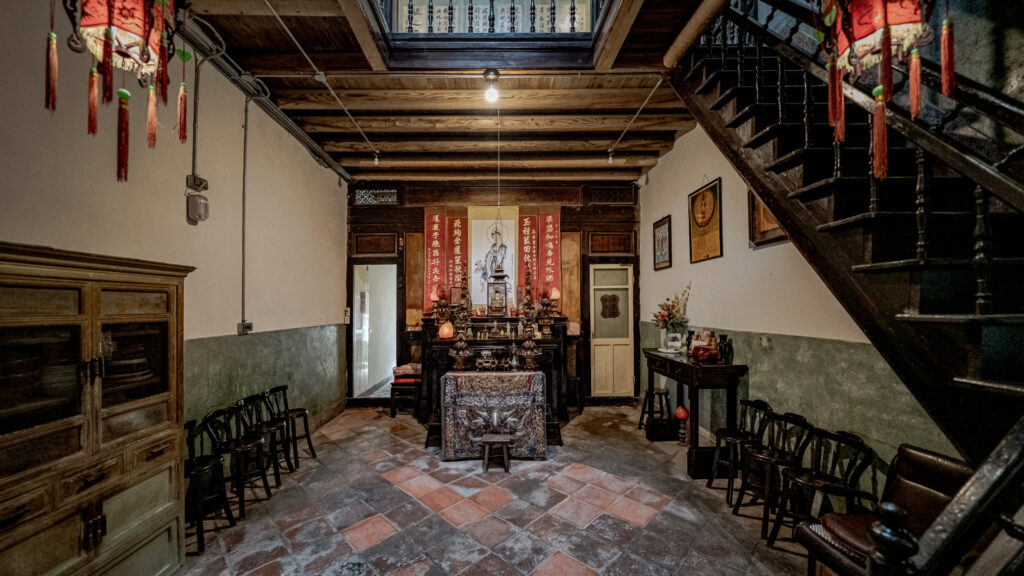
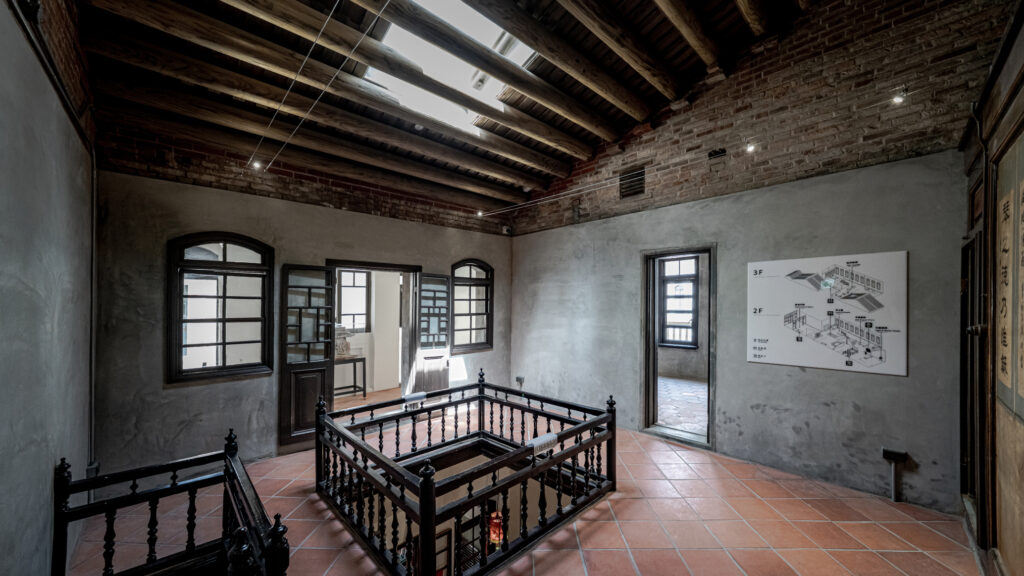
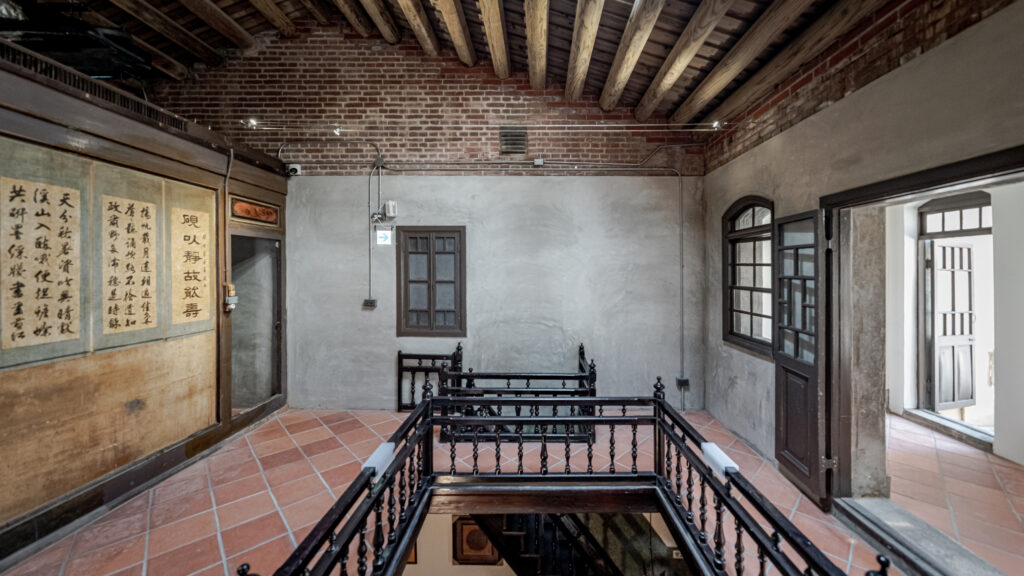
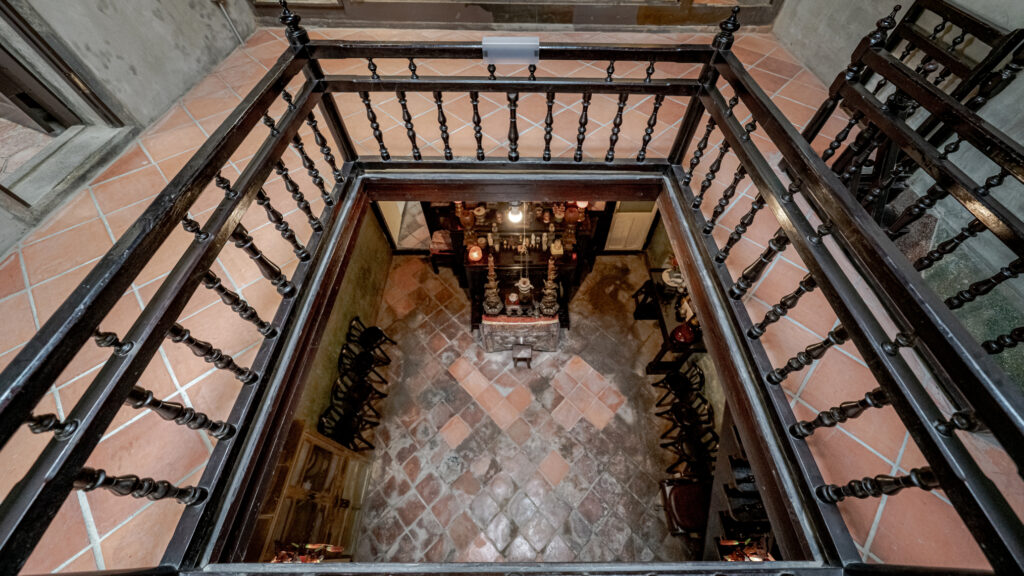
The first floor of the central hall was the Hsu family shrine where they held ancestral ceremonies and religious worship, as well as a dining space for family gatherings. This attachment to home is embodied in the daily routine of Grandmother Hsu, Ms. Shih Hsiu-hsiang: even during the period when the old house awaited transformation, she continued to come here to clean the space and worship for decades without fail. For this reason, the restoration team built temporary passages and structures to ensure the uninterrupted burning of incense that retained the most authentic warmth of the central hall. Ascending the stairs, the area above the atrium was once a corner where children read and wrote. The daylight that once fell upon book pages now warms Wang Hsi-pin's calligraphy on the walls and brightens the junction between old and new exposed bricks, reflecting the spectrum of cross-generational memories, family emotions, and the soul of the old house.

Performance Space

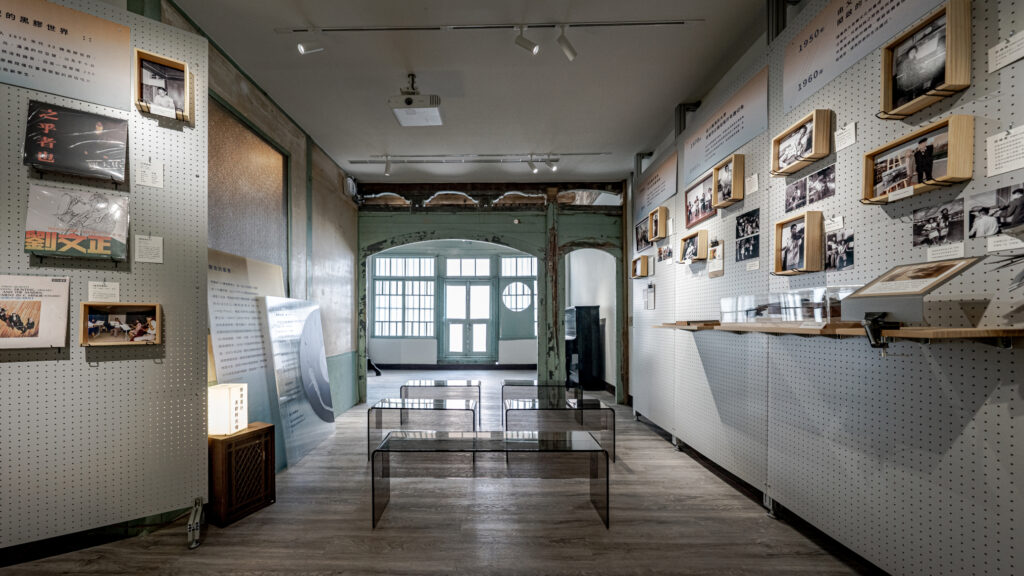
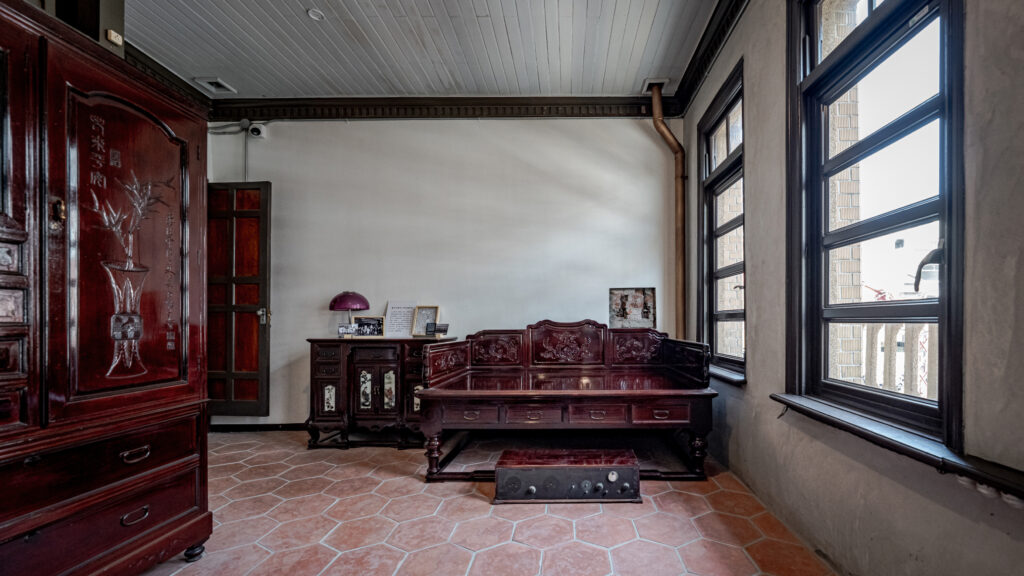
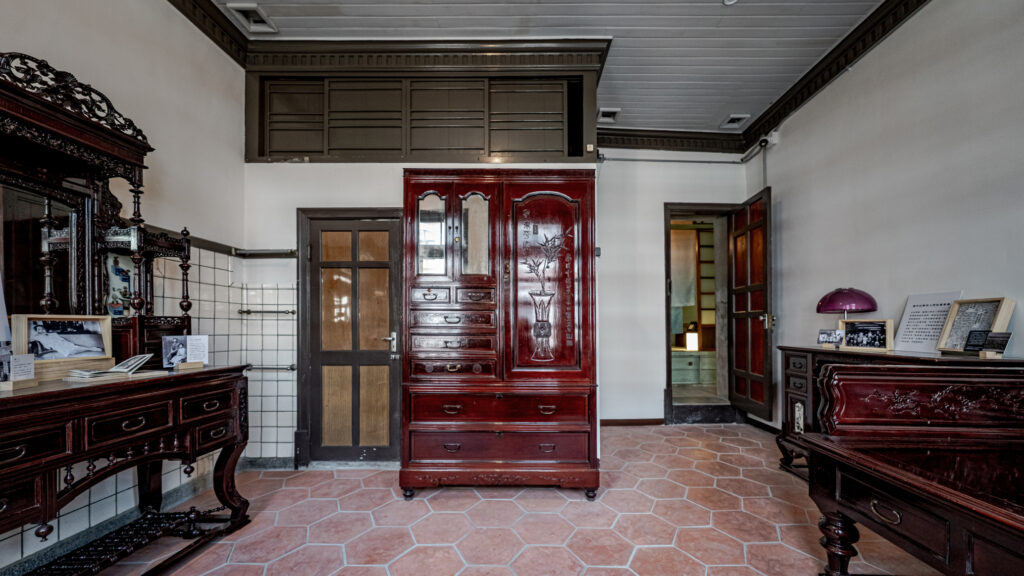
The 'front building' on the second floor was originally an atrium that was enclosed in the 1960s and used as Dr. Hsu Tu's living quarters and a venue for family concerts. In the past, family members would open the doors and windows to enjoy festival activities on Lukang Main Street from the arcade roof. Next to it is the 'Dreamland,' which was the living quarters of Dr. Hsu's wife, Huang Shih-yi, and still contains many antique furniture pieces. These private spaces have now been redesigned as exhibition areas, reinterpreting the music and moments of daily life in the past through special exhibitions and displays of family history. The restoration team preserved the aluminum windows that were replaced after the war, documenting the organic modifications made to accommodate usage needs throughout the house's nearly hundred-year history.

Old House Clinic

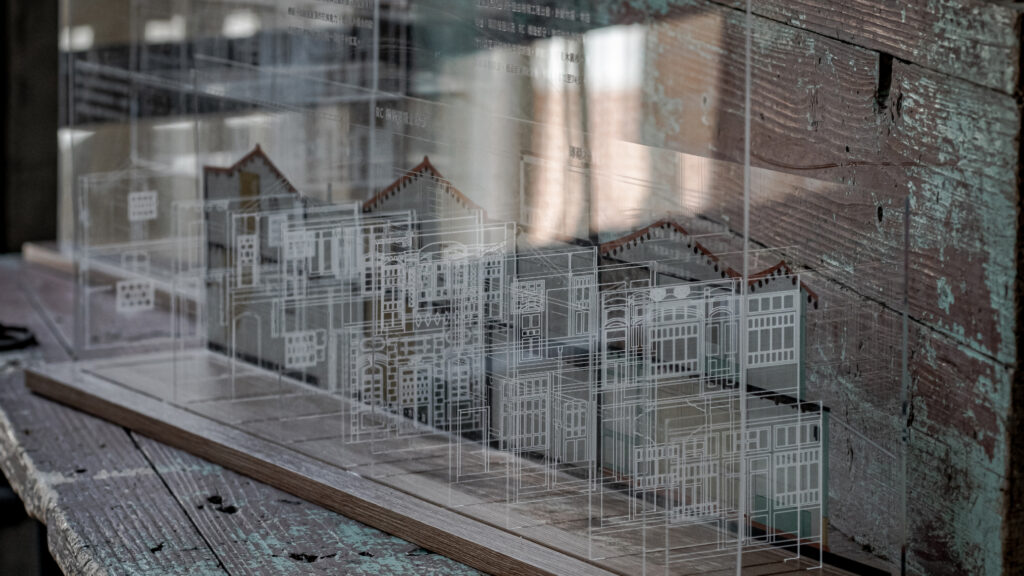
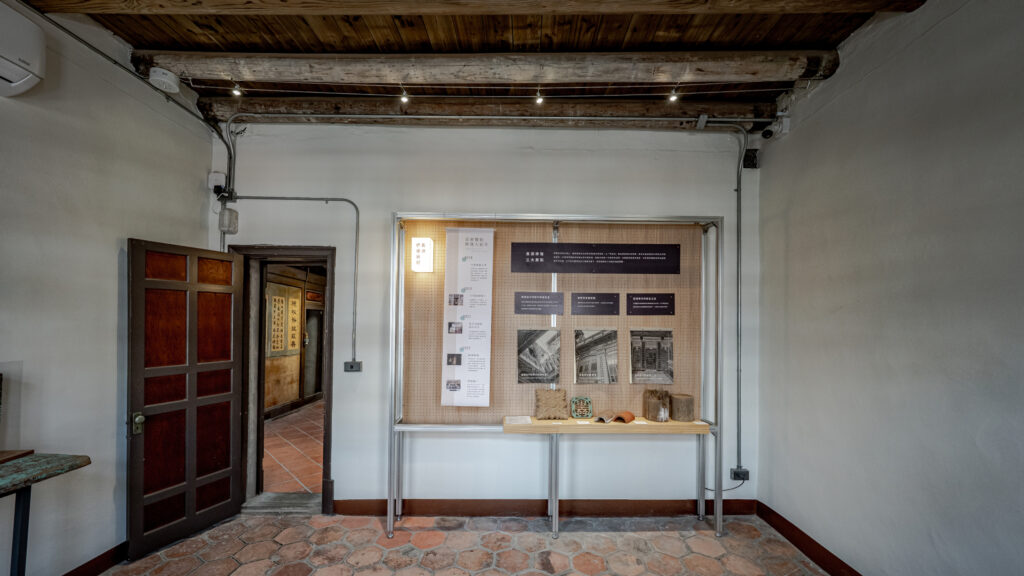
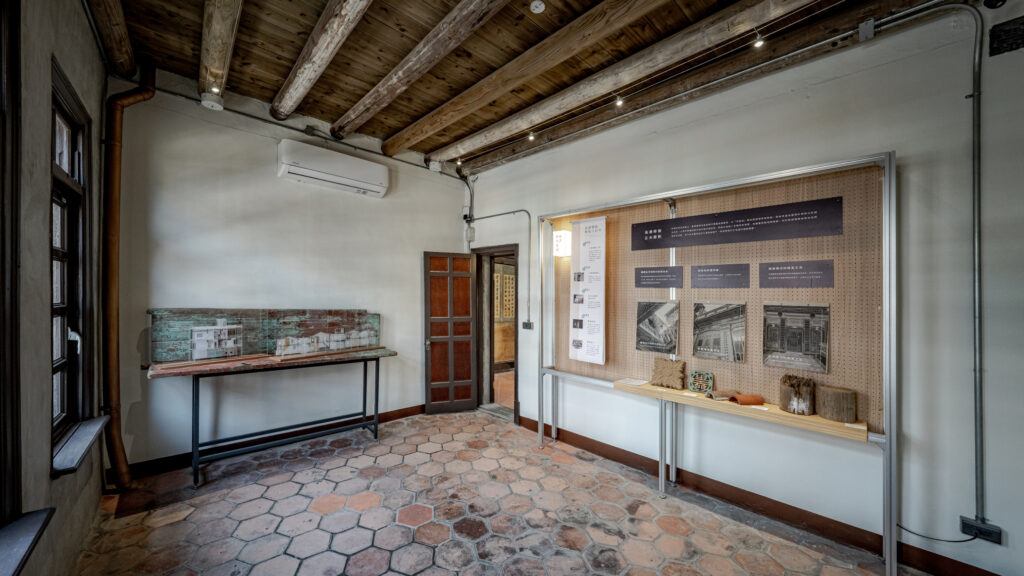
Originally designed with a full-bed layout, the beds were later removed due to termite damage, revealing beautiful hexagonal brick flooring. This space has now been transformed into the 'Old House Hospital,' repurposing the former Chang-Yuan Hospital's medical setting into a platform offering consultation services for regeneration of old houses, complete with architectural-themed exhibitions. Visitors can learn about Chang-Yuan Hospital's architectural design through detailed acrylic models and clay sculpture exhibits. On the other hand, if your old house is experiencing the test of time, you can also come here for a 'prescription' and receive regeneration advice.

Light & Motion Room

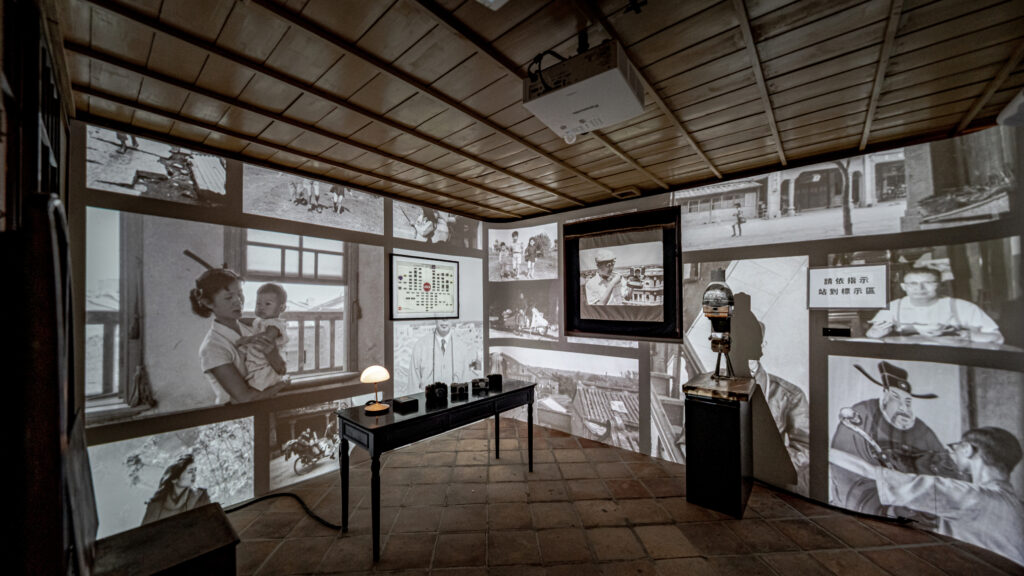
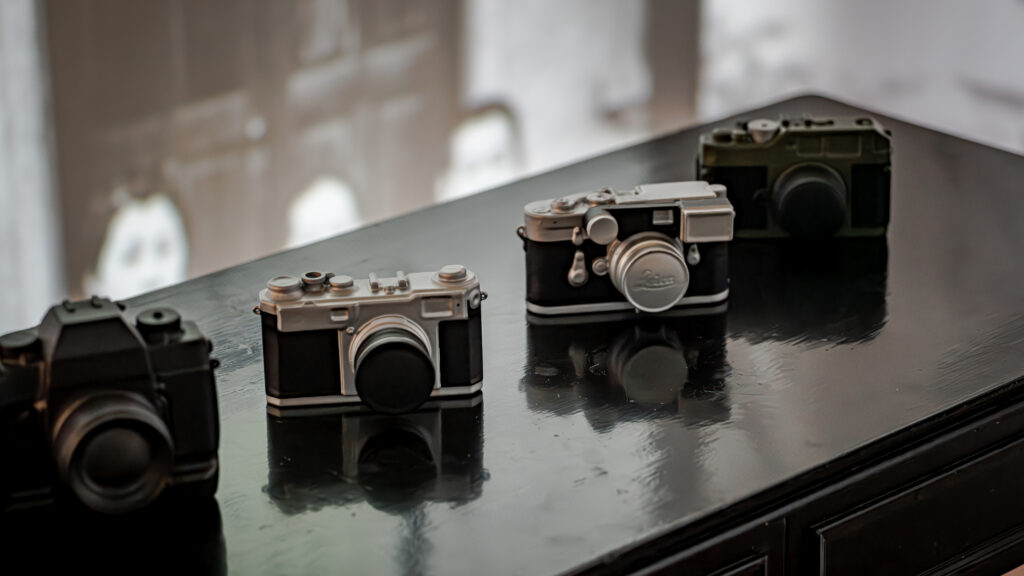
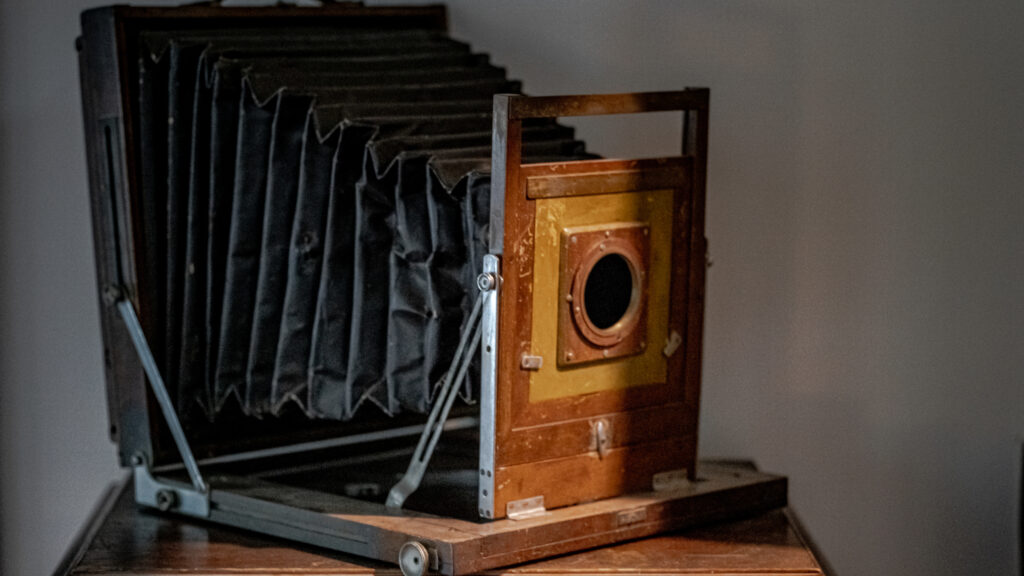
This was once the room of Mr. and Mrs. Hsu Tu, when they were newlyweds, the bedroom of photographer Hsu Tsang-tse and his wife, and also the childhood residence of current owner Dr. Hsu Cheng-yuan. The Leica camera genealogy poster on the wall, treasured by Hsu Tsang-tse, concretely presents the profound bond between three generations of the Hsu family and photography, foreshadowing this space's future transformation into a 'Light & Motion Room.' Today, the exhibition room features interactive light projection installations custom-designed by local team 'LightFull Studio.' Visitors can witness stories between Hsu Tsang-tse and his cameras by placing camera models in the sensing area, and experience darkroom development processes firsthand, engaging in dialogue with family memories in this seemingly ordinary living room.

Tea Lounge

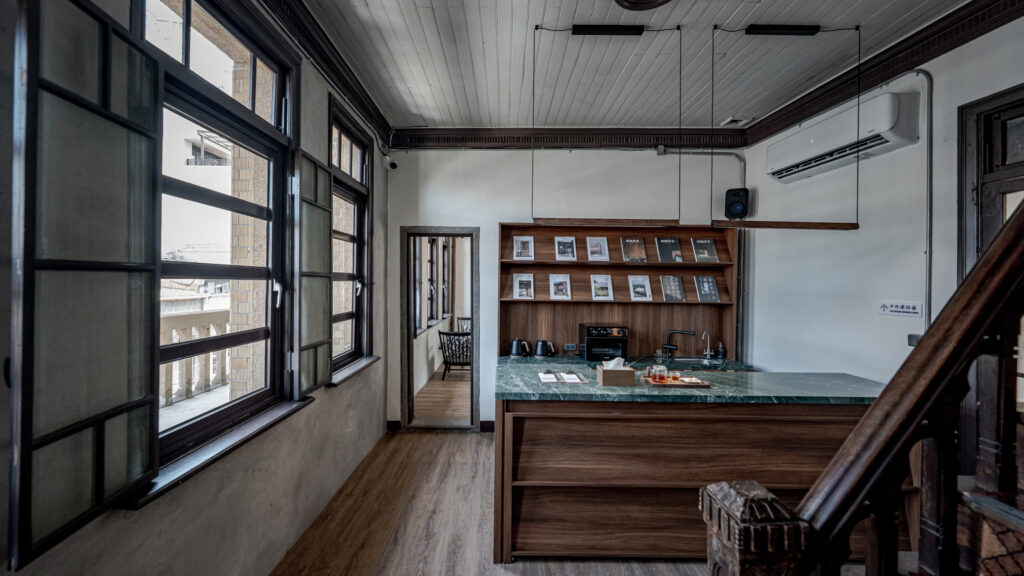
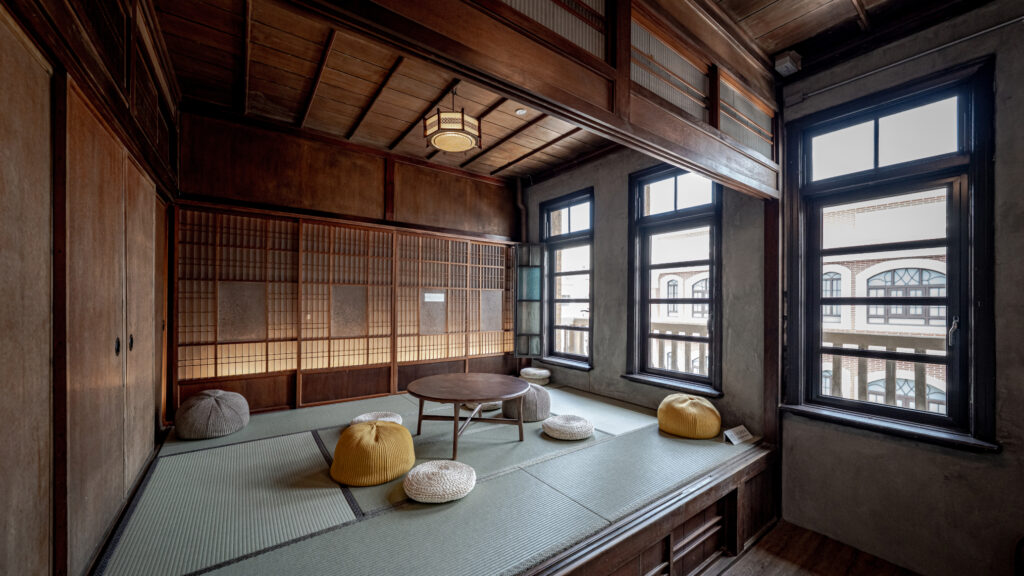
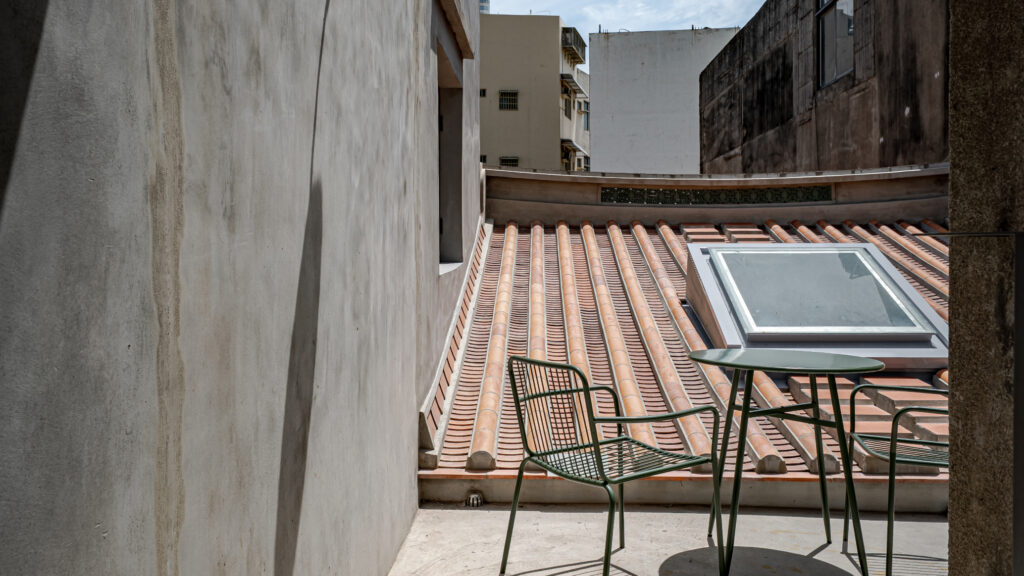
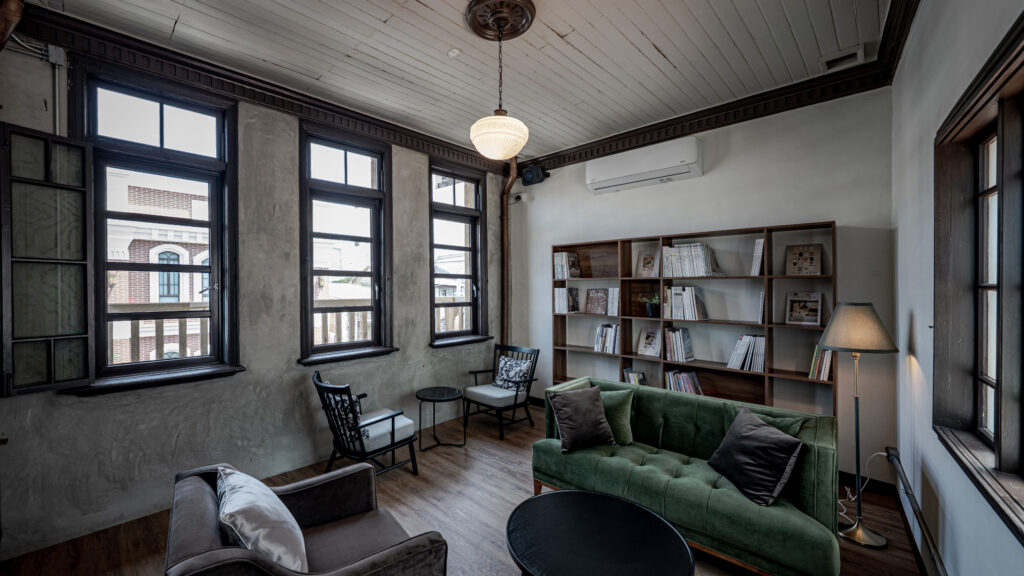
Ascending to the third floor of the main building, the former 'living room' welcomes travelers with a central tea and snack bar. The spaces on either side present a fascinating contrast: one side preserves the traditional Japanese-style tatami reception area with soft lighting added behind sliding doors, creating an elegant and tranquil private tea space; the other side is designed as a brightly lit Western-style seating area, echoing the modernized everyday life during the Japanese Rule Period. The book selection here, compiled in collaboration with 'Boven Magazine Library,' allows visitors to browse publications and draw inspiration while enjoying both Japanese and Western aesthetics. Walking from the living room to the balcony, the intricate roof structure of the Han-style shophouse is within arm's reach. Take time to examine the 'hanging tile' technique used by the restoration team to match the shared wall, along with the clay sculptures on the roof ridge and the openwork brick details, visualizing how the undulating red tiles across the ancient town once accommodated the daily roof-traversing activities of Lukang residents.

JOURNAL
觀點專欄

Grounded in diverse practical experience, X-Basic Planning develops integrated strategies by exploring interdisciplinary perspectives and forward-looking policy trends.
Adaptive Reuse
Research & Curating
Strategic Placemaking
Sustainable Urbanism

NEWS
最新消息

2025 / 11 / 14
Chang-Yuan Hospital, the Historic House Museum, Responds to Contemporary Sustainability Issues: A Review of the 2025 ICOM Dubai Conference
2025 / 11 / 13
Taiwan Modern Old Houses and Urban Regeneration Series: Taiwan History in Architectural Drawings × Beyond Aged × HIKARIE
2025 / 11 / 11
Modern Old House Surprise Package: A Recap of the Smile Taiwan Autumn Issue Sharing Session
2025 / 11 / 04
Co-writing a Book with City Residents: A Review of Professor Yukio Nishimura’s Lecture and Urban-Rural Summit Forum
2025 / 11 / 01
People-Centered Support System for Old Houses: 11/1 SAT. ‘Beyond Aged’ Taipei Book Launch Event
2025 / 10 / 22
Opening the Modern Old House Surprise Package: Smile Taiwan × X-Basic Team Special Report and Podcast Review
2025 / 10 / 21
Reading the Century-old Texture of the Windy City: Hsinchu Historic Site Day Lectures