
Reading the Century-old Texture of the Windy City: Hsinchu Historic Site Day Lectures
When facing century-old buildings, should we trace their original appearance, or understand the layers accumulated over time?
The first Historic Site Day lecture of ‘100 City in Progress’ was led by architect Huang Yun-shu from the firm Atelier TimeScape, who took the audience back to the research and renovation sites of ‘Beimen Elementary School’ and ‘Hsinchu City Art Museum’; the second lecture invited Chen Po-liang, a doctoral student in Cultural Heritage and Art Innovation at Taipei National University of the Arts, to share experiences in the restoration and reuse of the city-designated municipal historic site ‘Hsinchu Provincial Library’. In addition to lectures by spatial professionals, a silk-screen printing workshop held in collaboration with inBlooom invited the public to print century-old buildings onto personal items, integrating the beauty of cultural heritage into daily life.
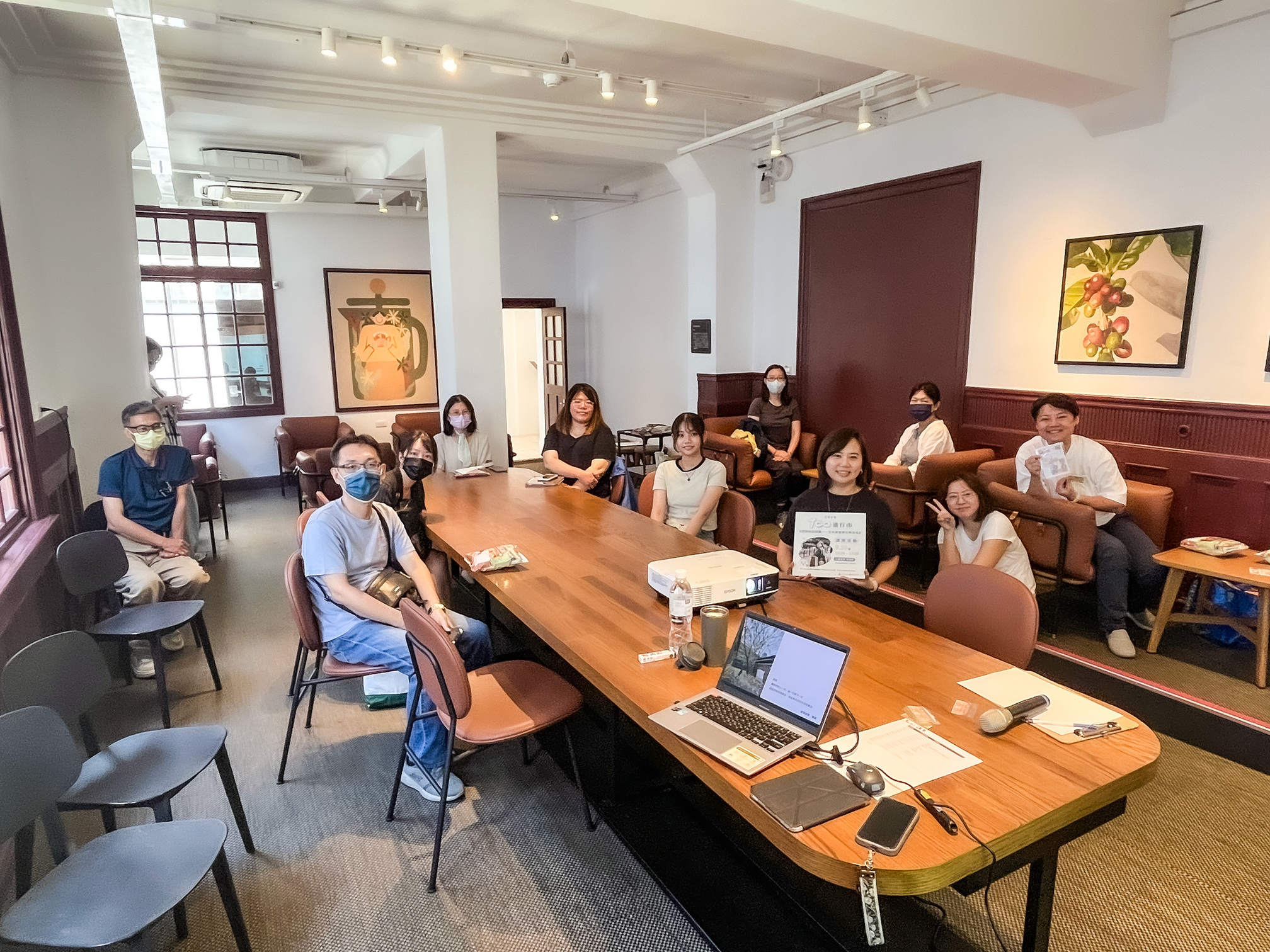
Beyond Ideal: Cultural Heritage Restoration
With the lecture theme ‘Following Time Toward the Sense Place—Cultural Heritage Preservation and Revitalization’, architect Huang Yun-shu presented two completely different cases, revealing the real challenges on the frontline of cultural heritage restoration. Starting from the legal definition of cultural heritage, architect Huang Yun-shu carefully explained the Atelier TimeScape team’s survey research and mapping work at Hsinchu’s century-old Beimen Elementary School. From the first visit, they gradually uncovered the spatial evolution history intertwined with the campus’ architecture and social changes, discovering the process of school establishment and expansion. After organizing research materials, Huang shared with the audience how they reinterpreted how Beimen Elementary School’s campus buildings responded to the design theories of its time of construction. Finally, she also provided an architect’s observations and thoughts on issues of future preservation and restoration of the campus.
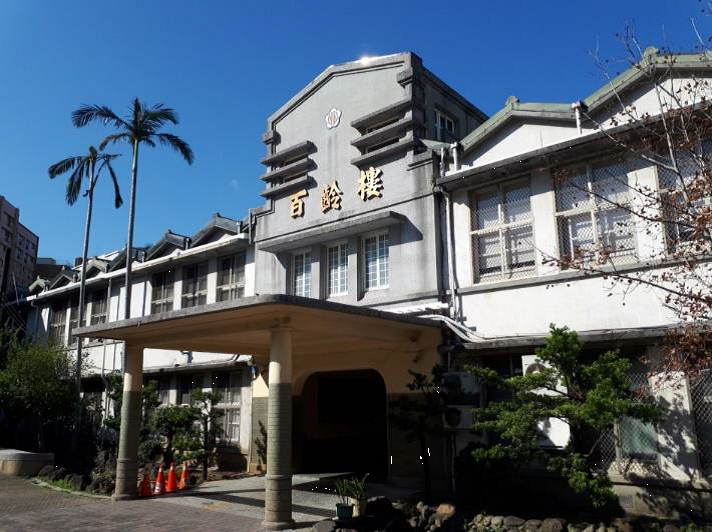
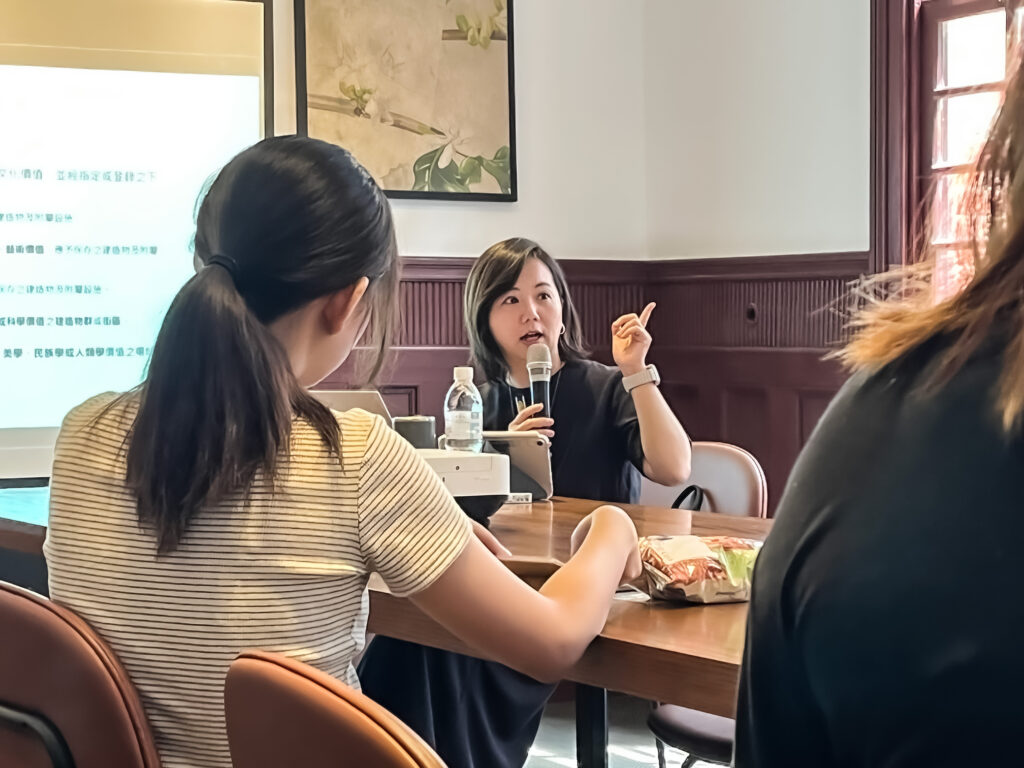
Figure 1 / Bailing Building, Hsinchu Beimen Elementary School. (Image source / Hsinchu Cultural Affairs Bureau)
Figure 2 / Side view of Architect Huang Yun-shu’s lecture.
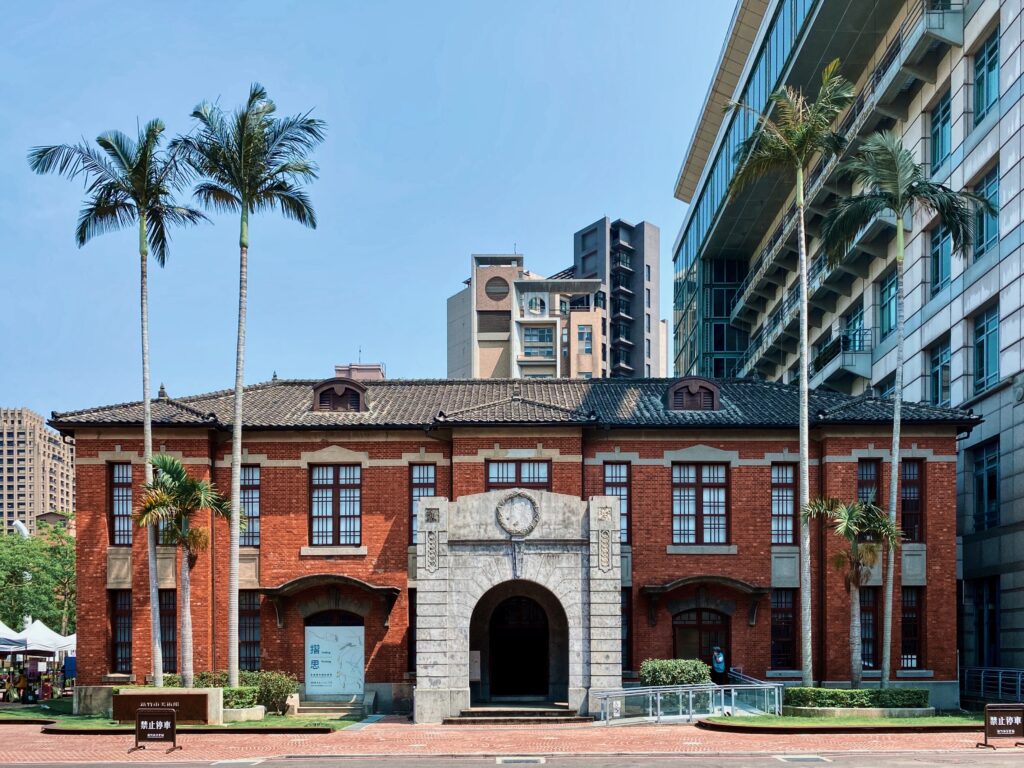
In addition to the survey and research of campus buildings, the architect also shared the story of repairing the leaking roof of Hsinchu City Art Museum (former Hsinchu Municipal Office). She described how the team, under limited budget and complex regulations, identified the causes of leakage by reviewing previous repair records and current conditions, then assessed the building’s overall repair needs to propose feasible solutions appropriate for the local climate. Since the museum needed to remain open during repairs, and that the building was adjacent to the Hsinchu Tax Office during peak tax season, the museum, Cultural Affairs Bureau, and the restoration team worked together to create protective construction barriers that blended into local life and were praised as the city’s ‘most beautiful construction fence,’ demonstrating how multiple constraints can lead to mutually beneficial outcomes.
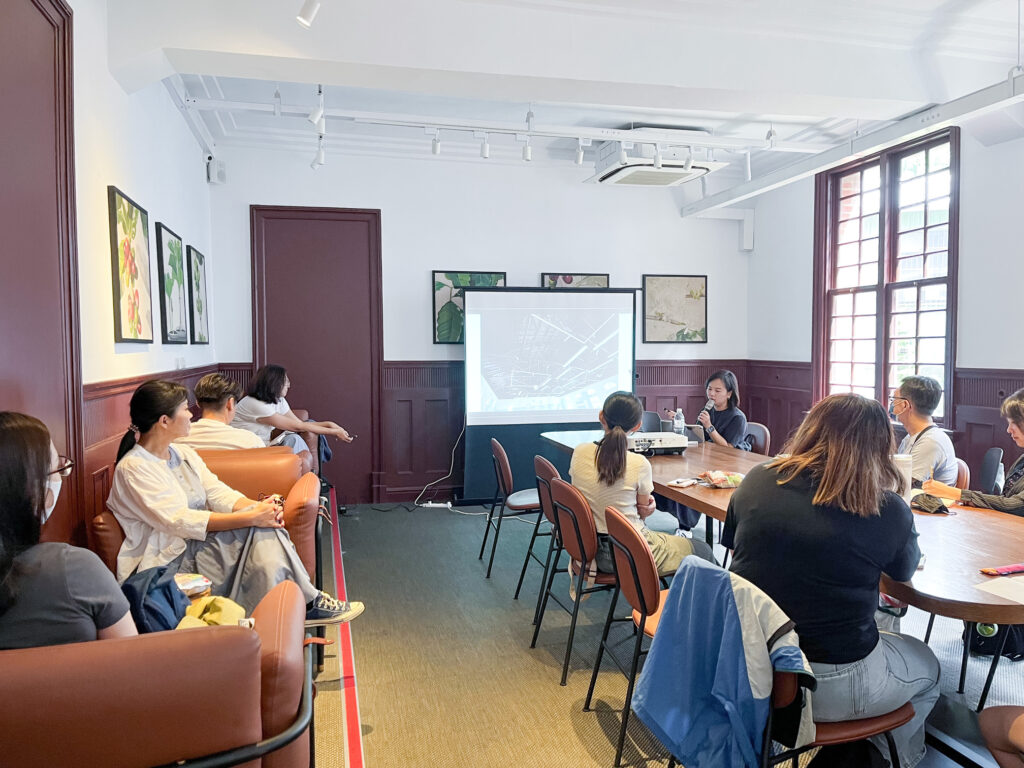
Through sharing survey research and actual engineering cases of Beimen Elementary School and Hsinchu City Art Museum, architect Huang Yun-shu concretely shared the frontline realities of cultural heritage restoration work, while explaining one of the most common valuable judgements: when dealing with ‘later additions and modifications,’ is it always necessary to restore the building to its ‘original appearance’? The architect used the roof additions of the Bailing Building at Beimen Elementary School as an example for discussions based on original designation conditions and current status of the target. If later additions and modifications reflect the valuable characteristics of a specific period and have long been integrated into the building’s life cycle, then in recent years, the cultural heritage academic and professional communities have actually developed a more tolerant and open perspective, able to inclusively view the imprints of different eras on a building, rather than arbitrarily determining value based on a single period. Just as city life never stands still, cultural heritage is also an organic entity that continues to dialogue with the contemporary world, and the restorer’s task is to give spaces the most appropriate interpretation through deep understanding.
Reading the Cultural Heritage of a City
How do old buildings reflect a city’s cultural heritage? In the second lecture of Hsinchu Historic Site Day, speaker Chen Po-liang presented ‘From Architects to the Public—The Architectural Story of Hsinchu Prefecture Library,’ focused on his experience participating in the restoration and reuse project of the ‘Hsinchu Prefecture Library.’ The audience was encouraged to interpret the historical texture of the Windy City.
Starting with how the concept of ‘libraries’ was introduced to Taiwan from diverse civilizations, Chen Po-liang first broadly outlined the development context of ‘public library buildings’ on the island of Taiwan. He then focused on the culturally prosperous Hsinchu, explaining how the local community leveraged the Crown Prince’s visit to Taiwan as an opportunity to gather funds and create a rationale for construction, eventually building a library that belonged to the people of Hsinchu. Under the guidance and design of Takeo Ushiki, an engineer at the Hsinchu Prefecture Construction Department at the time, the library not only housed a rich collection of books, but also featured clever lighting design that created a comfortable and well-lit reading space for readers.
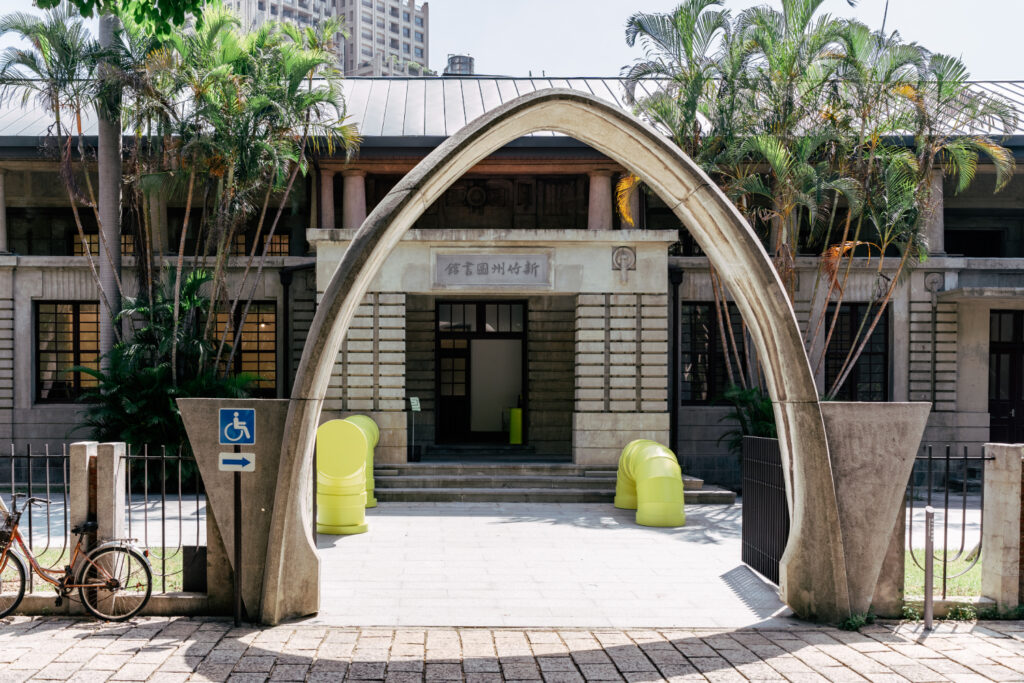
Through cross-referencing records and official documents from libraries across Taiwan, the lecturer guided the audience to understand the vibrant usage of the Hsinchu Prefecture Library. He also highlighted an issue of the time, explaining that children outnumbered adult readers throughout Taiwan’s libraries, while the space allocation was disproportionate—this was the reason for the library’s subsequent expansion and gradual renovations. After the war, as Taiwan’s economy developed, Hsinchu planned to build a new library in accordance with the national ‘Twelve Major Construction Projects’ policy. However, many unstable factors emerged due to the separation of Hsinchu City and County. After a prolonged process, the Prefecture Library was finally preserved as a municipal historic site, thanks to persistent public advocacy.
The Hsinchu Prefecture Library building is now leased by the chain coffee brand, Starbucks, while the Hsinchu City has invested in building a new main library. Nevertheless, the enthusiastic sharing of memories about the Prefecture Library during the lecture and discussions about restoration investigations demonstrate the important position this century-old library holds in the hearts of Hsinchu citizens. Before the completion of the newly constructed library, it was an honor to revisit history with the audience, reflecting the possibilities of ‘libraries’ across different eras, and the diverse meanings that a classic, beautiful library can reflect for a city.
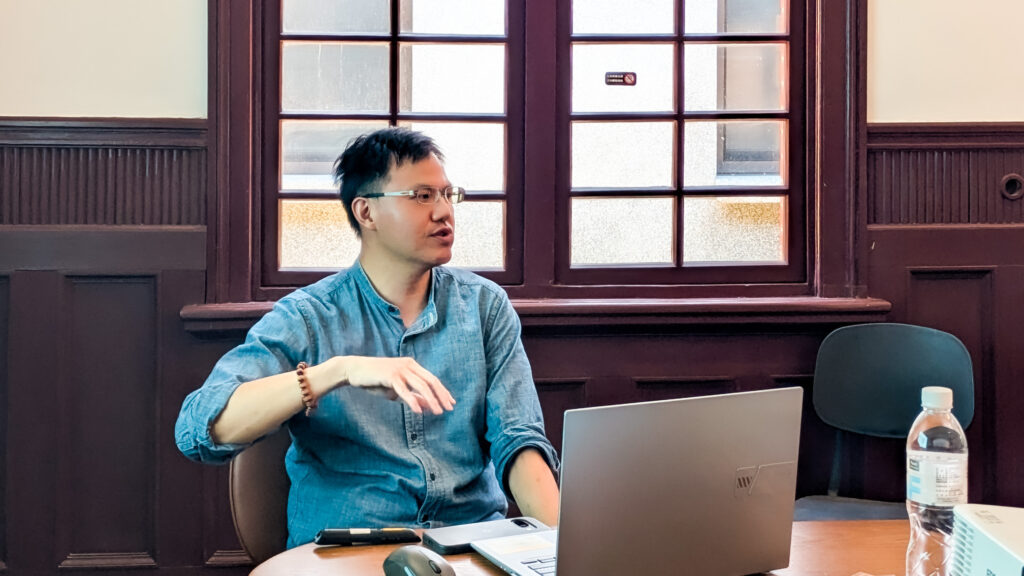
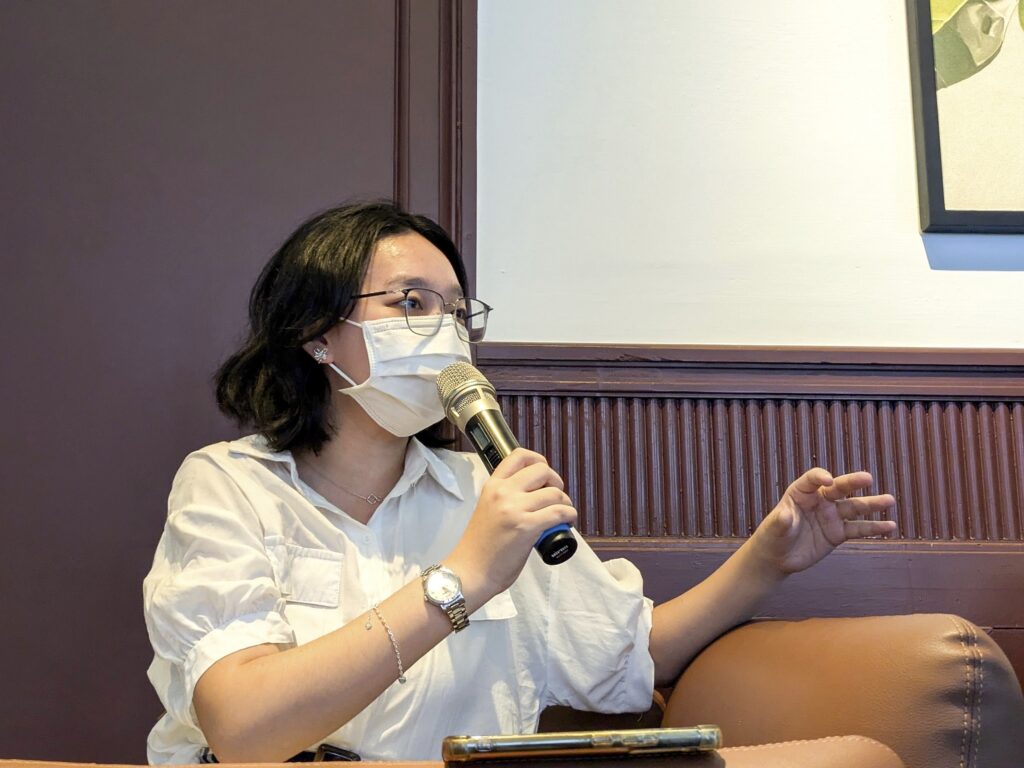
Figure 1 / Lecturer Chen Po-liang presented ‘From Architect to Public—The Architectural Story of Hsinchu Prefecture Library,’ sharing the restoration and reuse process of the Hsinchu Prefecture Library.
Figure 2 / Audience members enthusiastically shared their memories and thoughts related to the Prefecture Library.
Printing Century-Old Buildings on Everyday Items
To ensure cultural heritage extends beyond just listening to knowledge, this Historic Site Day event specially invited Taiwan’s sustainable brand ‘inBlooom’ to lead participants in personally ‘transferring’ memories through printing. Using New Taiwanese-style designs with contemporary aesthetic taste, participants could use screen printing methods to print the silhouette of the Prefecture Library onto drawstring bags and small handkerchiefs.
In addition to silk screens specially designed for the Prefecture Library building, the event also featured inBlooom team’s well-known Taiwanese element design patterns, such as transforming the native Taiwanese starling (Wuqiu) into the ‘Wuqiu Circles’ pattern, and ‘Fireworks’ motif inspired from Dadaocheng imagery. This allowed visitors to not only listen to history in the historic site but also take home a colorful and lovely souvenir, experiencing how cultural heritage isn’t just rigid architecture but can also be integrated into daily life through the texture of textiles. This perfectly echoes the core concept of the Historic Site Day series of activities—when history is no longer merely preserved and looked back upon, cultural heritage truly becomes part of life.
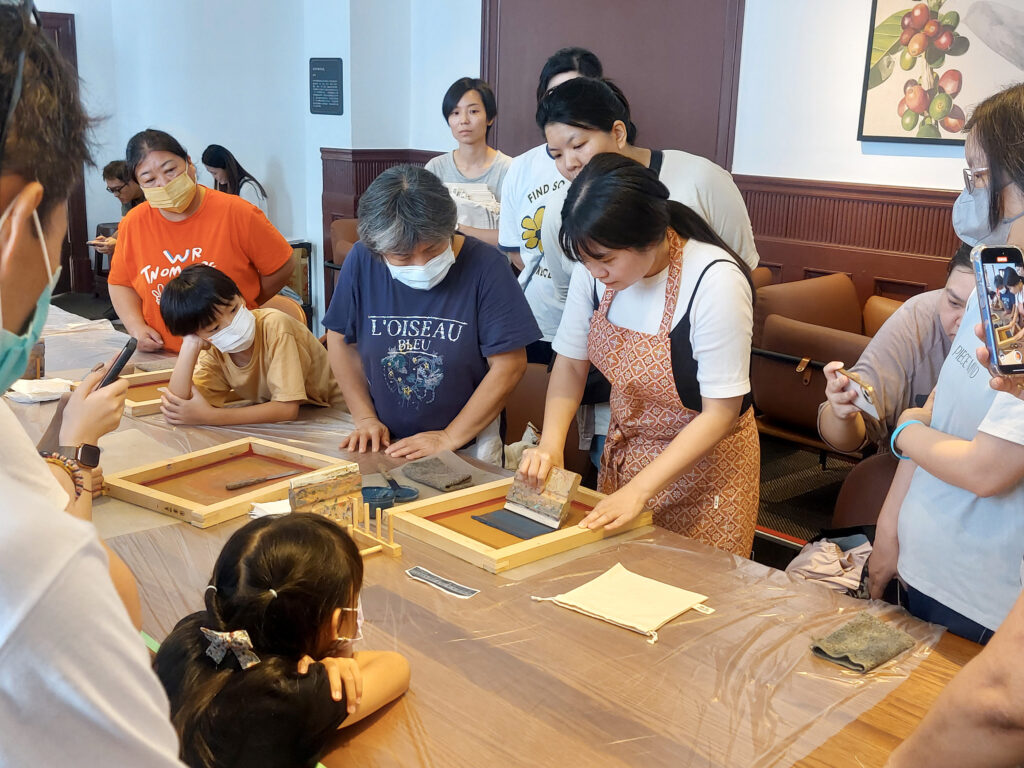
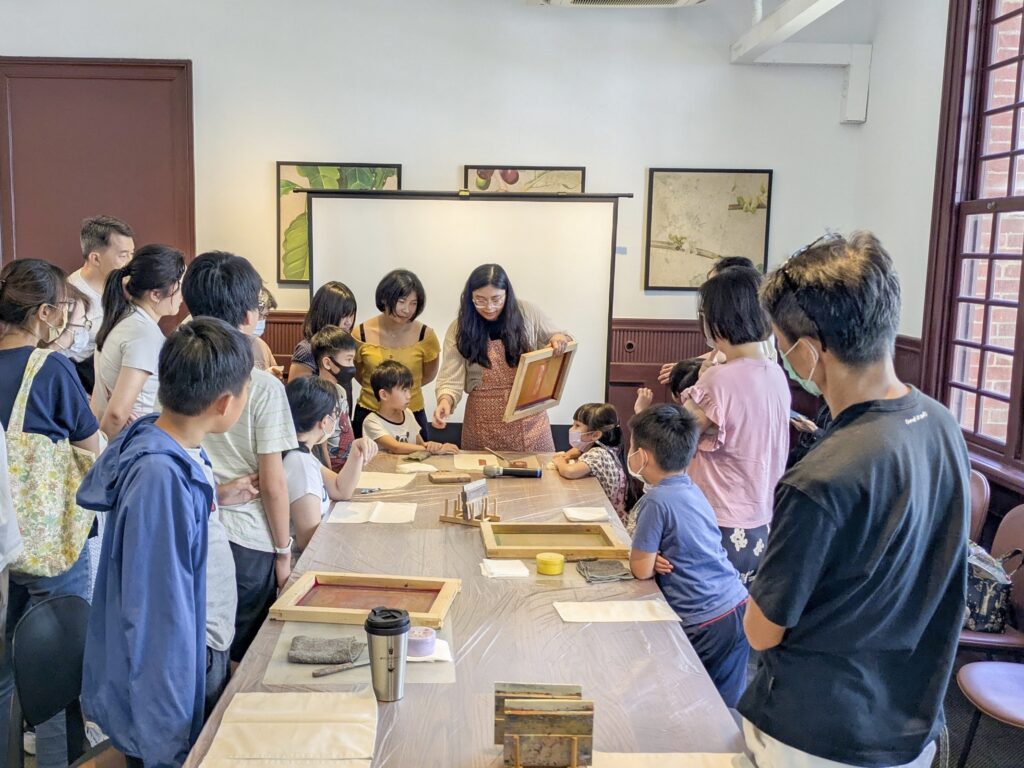
Side view: Hsinchu Historic Site Day screen printing workshop.