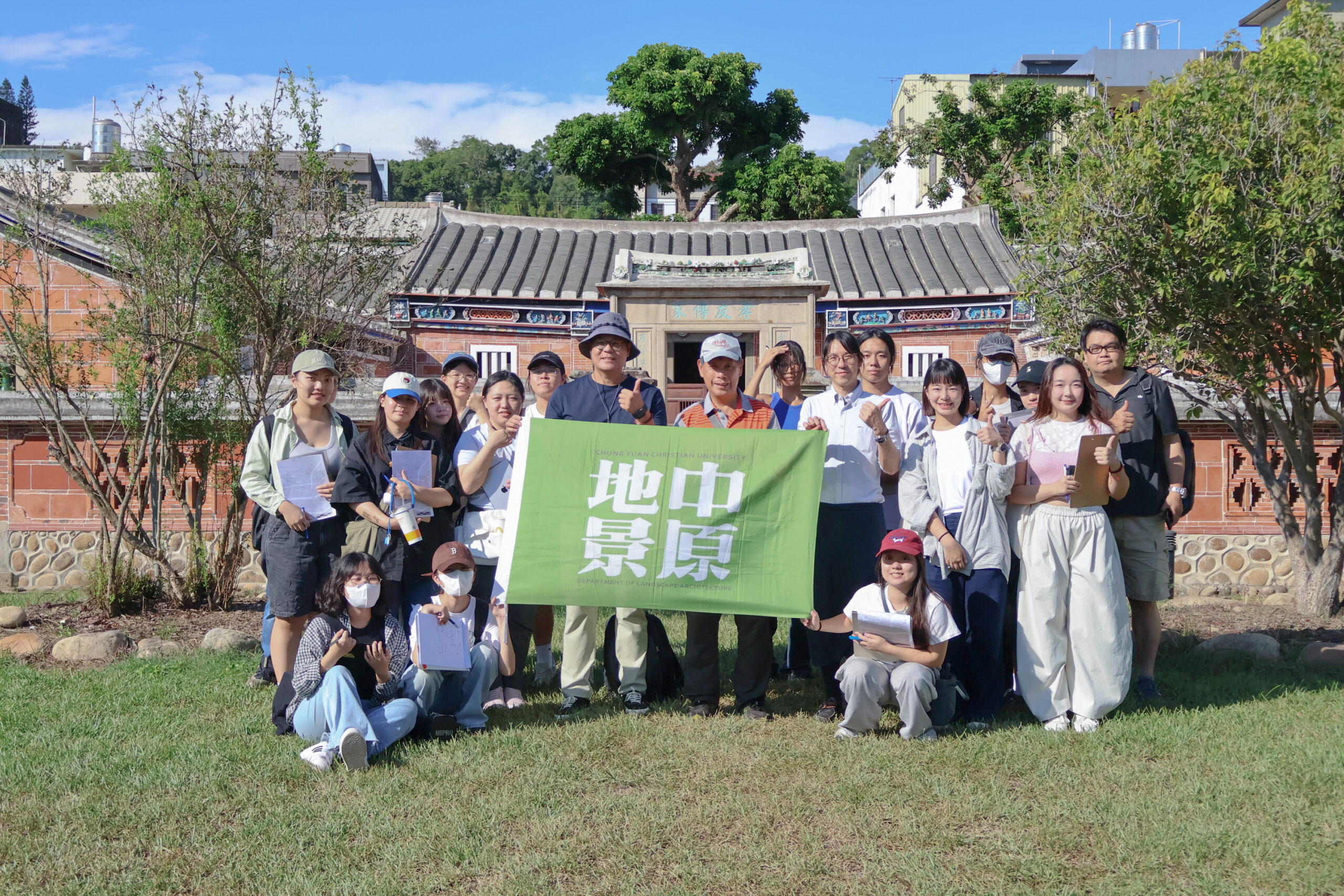
When Design Class Enters the Streets of Xinpu: Oct 8 (Wed) Local Co-learning Extended from the Pan Jinhe Residence
For the X-Basic team, the restoration of spaces has always been about integrating the relationship between people and place. Our connection with the Xinpu Pan Jinhe Residence follows this principle. Through collaboration with the homeowner’s family, we continue to advance the renovation and regeneration concepts for the residence, “beginning with the end in mind” to breathe new life into the old house. This ensures that beyond maintaining its appearance and functionality, the residence becomes a node connecting past and future, linking local wisdom with external creativity.
This walking tour used the concept of a “local museum” as a framework. This guided students to deeply understand Xinpu’s daily appearance, clarify the site’s contours, and combine field research findings with the future spatial plans for the Pan Jinhe Residence to propose design solutions with local significance. Through this course visit, we explored the relationship between place and architecture together with a new generation of designers, not only as an extension of classroom activities but also as a starting point for preserving the Pan Jinhe Residence before it enters its next phase.
Opening Multiple Perspectives on Place
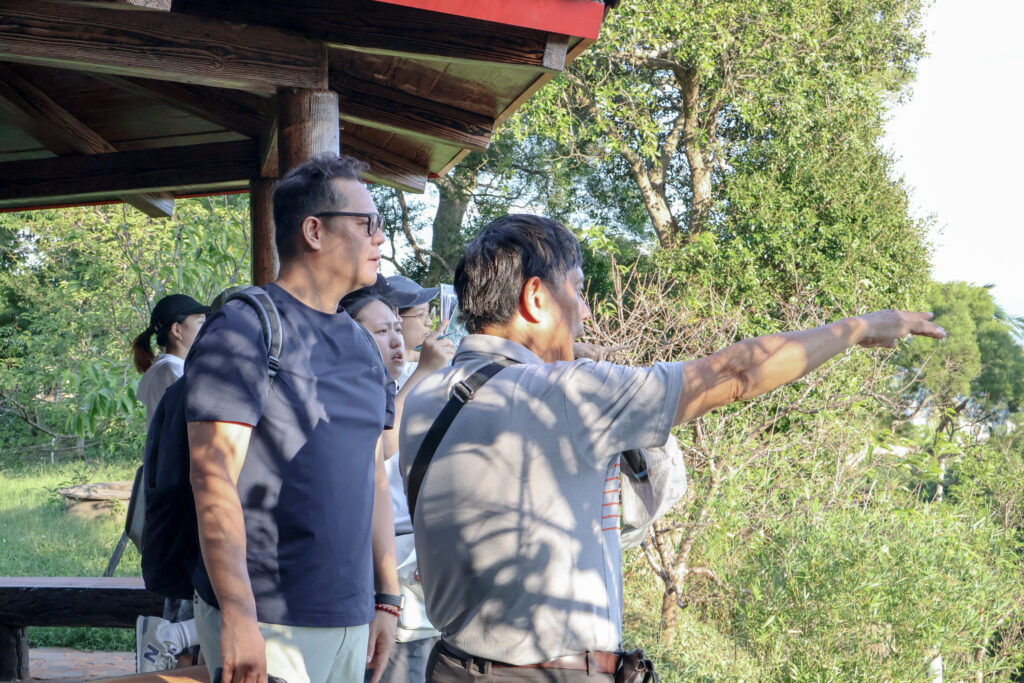
The walking tour began at the Xinpu Visitor Center, where the X-Basic team shared with students the current preservation status and ongoing regeneration process of the Pan Jinhe Residence. We deeply understand that the vitality of a space comes from continuous dialogue and thinking, so we invited teacher Tsai Jung-kuang, who possesses rich local knowledge, to lead everyone in re-understanding Xinpu through the systematic framework of “Humanities, Landscape, and Industry.”
Teacher Tsai Jung-kuang began by discussing Wu Cho-liu’s literature and Chen Ting-kuo’s comics, then talked about how the dustpan-shaped terrain nurtures the sharp winter winds, which in turn shaped the “three flavors of the wind” – persimmon cakes, rice noodles, and mullet roe – connecting Xinpu’s natural environment with everyday life. Through teacher Tsai Jung-kuang’s guidance, we saw how the local environment, industry, and culture are tightly interwoven in the landscape, and understood how local memories continue in daily life.
Traversing Feng Shui and Alleyways, Reading History Without Words
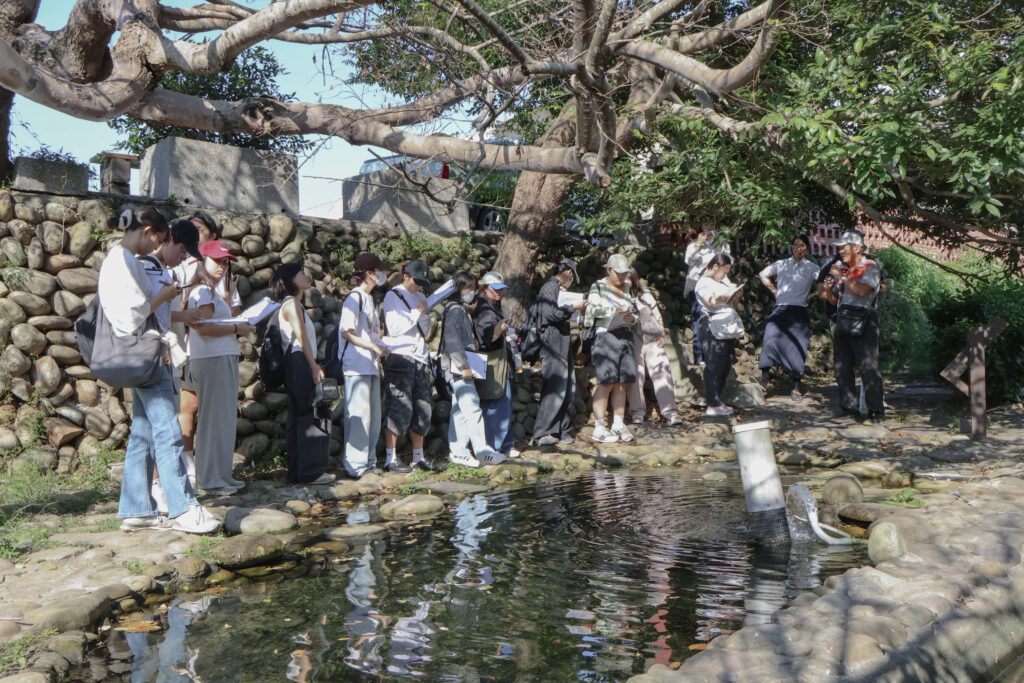
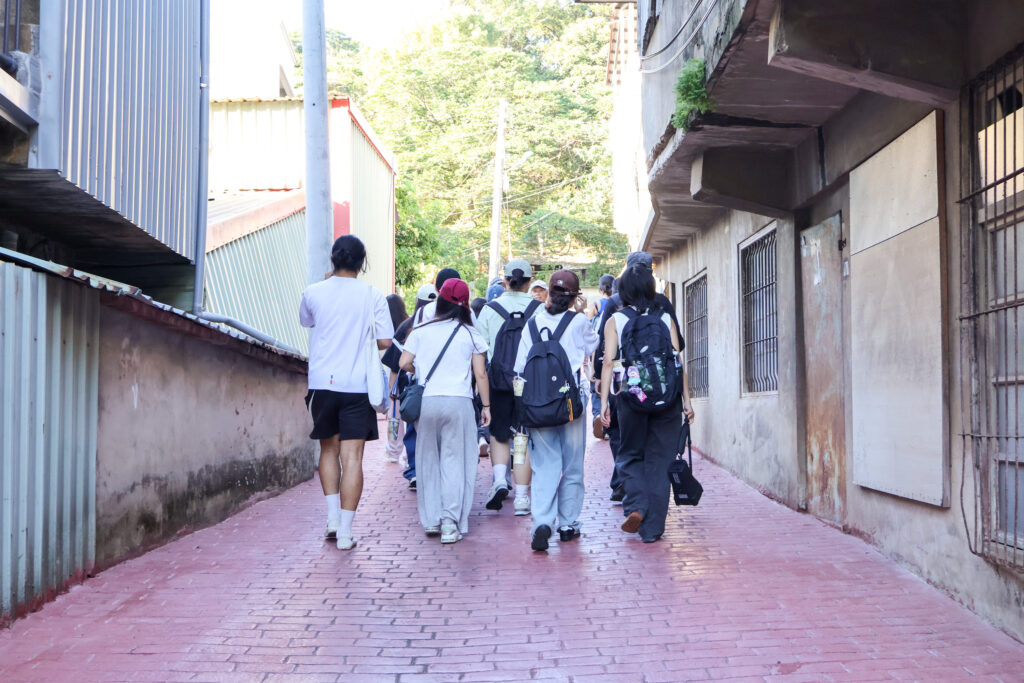
Following Teacher Tsai Jung-kuang ‘s footsteps, we walked through the historical context of ‘Three Streets, Six Alleys, and Nine Ancestral Halls,’ traversing the intersections of time and faith. We closely observed how the wisdom of our ancestors was distilled into the texture of streets and the expressions of architecture. On Heping Street, the dense arrangement of ancestral halls is no coincidence, but stems from the feng shui vision of ‘mountain at back, water in front’—a common prayer for the sustainability of families and settlements. Arriving at the Pan Residence, we shared with students the story of the unique Crab Hole: roof tiles forbidden to be red, flowing water ceaseless before the door. Seemingly everyday taboos actually carry the ancestors’ vision of peaceful living and prosperity and represent the cultural foundation that old house regeneration aims to continue.
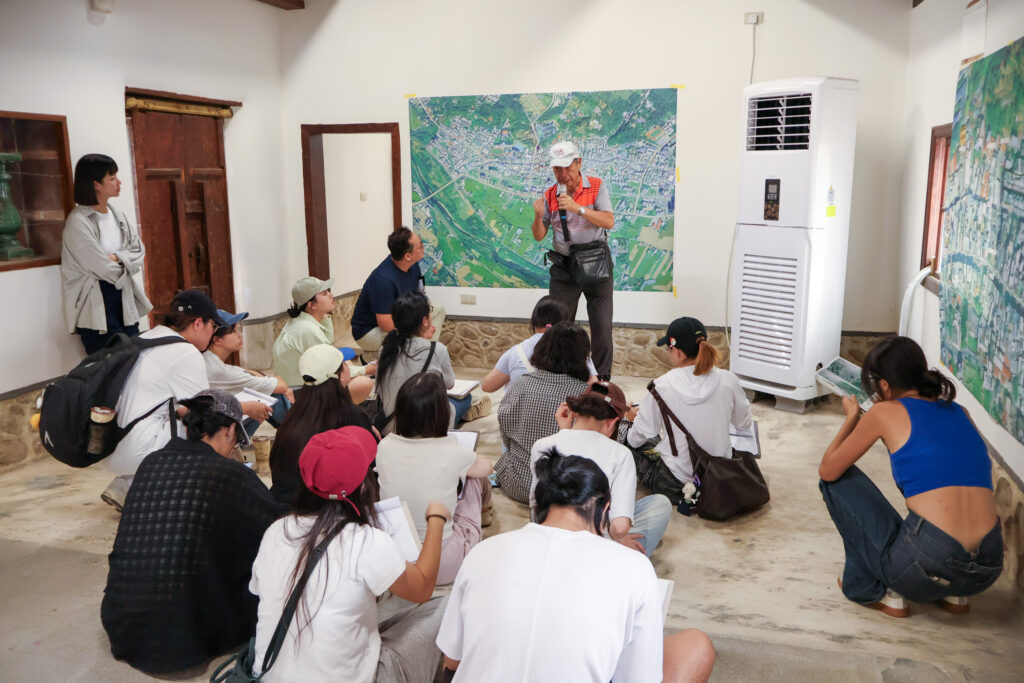
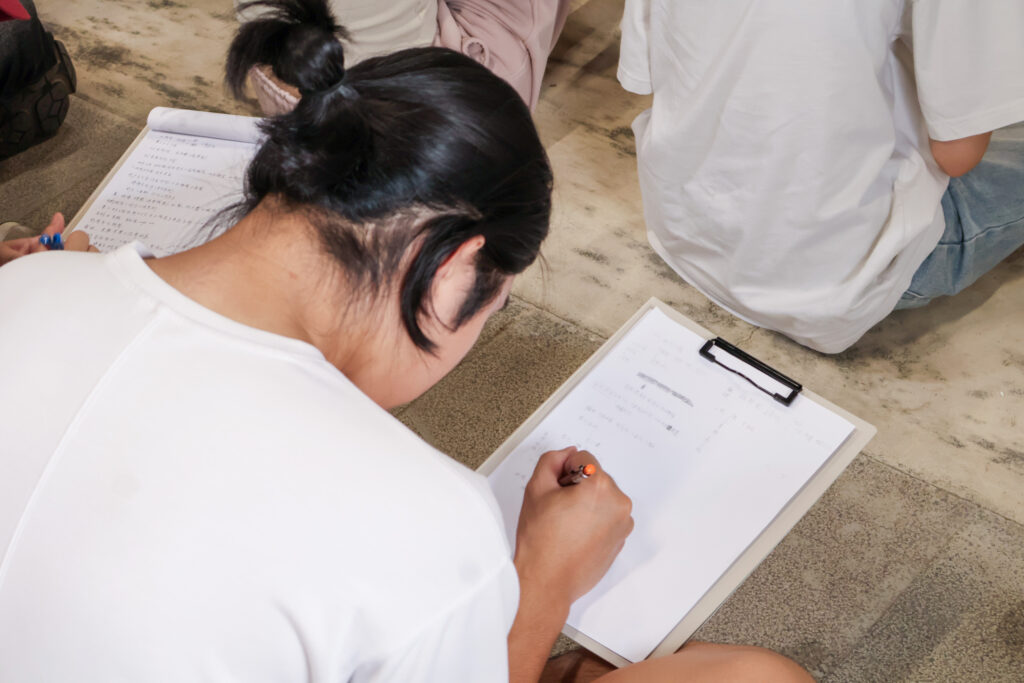
Using a large-scale map of Xinpu Township, teacher Tsai Jung-kuang guided landscape design students to consider the relationship between the blue and green belts of Xinpu settlement. He further explained the landscape changes in Xinpu Township under recent urban development policies.
During the tour, teacher Tsai Jung-kuang also mentioned another layer of memory obscured under Han Chinese pioneering history—the migration and disappearance of the Plains Indigenous Taokas people. The nine-character maxim ‘When language breaks, culture dies, and the ethnic group perishes’ reminds us that every piece of land contains the history of diverse ethnic groups. While promoting local revitalization, picking up these forgotten stories is an ongoing consideration for cultural workers.
Seeing Family Memory and Local Context from Pan Jinhe Residence
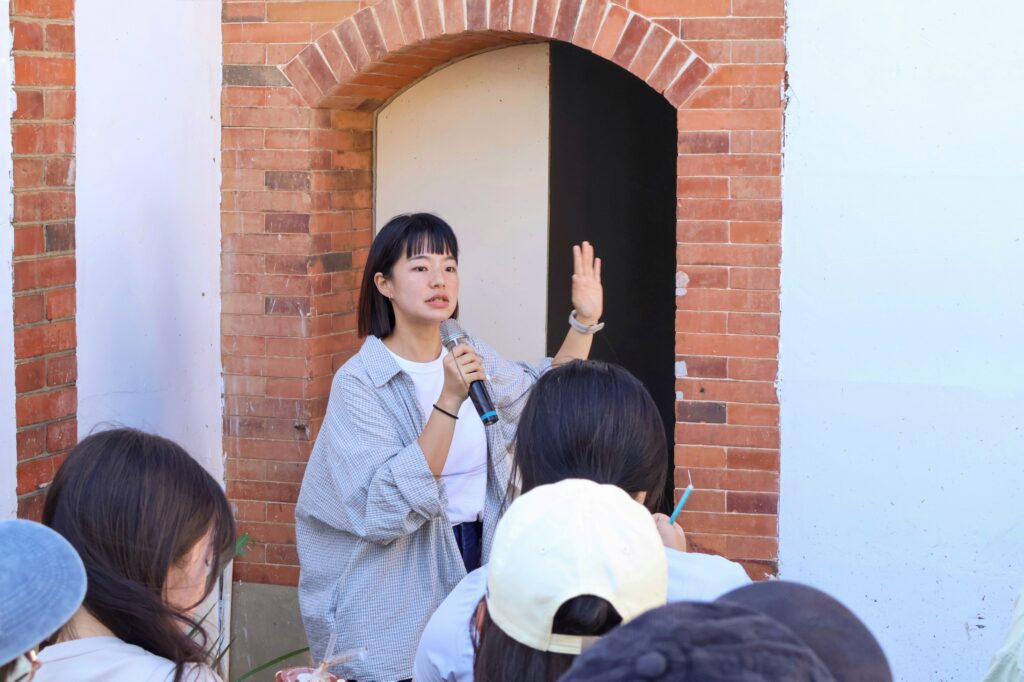
Passing through the rear courtyard of the Pan residence, we arrive at Pan Jinhe’s former residence, where the architectural vocabulary quietly shifts from a traditional Chinese courtyard to a Western-style building with mixed Japanese and Western elements. Located on Zhongzheng Road in Xinpu, the Pan family’s Western-style mansion was personally designed by Mr. Pan Jinhe, who once served as the mayor of Xinpu. From the exterior decorations to interior details, from structural design to spatial arrangement, the residence carries multiple contexts of local life and social transformation. Through the Pan Jinhe residence, we can glimpse the transformation of local gentry during changing times and also see the care of an elder for his children and descendants.
Since its construction during the Japanese rule period, the Western-style building’s use has continuously evolved—from a home to a restaurant to the multiple possibilities of its upcoming transformation. Each stage has left its corresponding mark. Stepping inside, from the Western-style living room symbolizing the family’s facade, to Mr. Pan Jinhe’s living quarters, to the practical function of the family granary, cross-generational lifestyles are preserved in microcosm.
Through Pan I-hsun’s introduction, we understand that every old house is like an elderly person: When it reaches a certain age, the body faces different challenges and conditions. Pan Jinhe’s former residence has also reached such a juncture. Fortunately, the family is willing to unite their strength to extend its life through restoration work, maintaining both the building’s structure and local historical context while preserving the descendants’ appreciation and memories of Mr. Pan Jinhe.
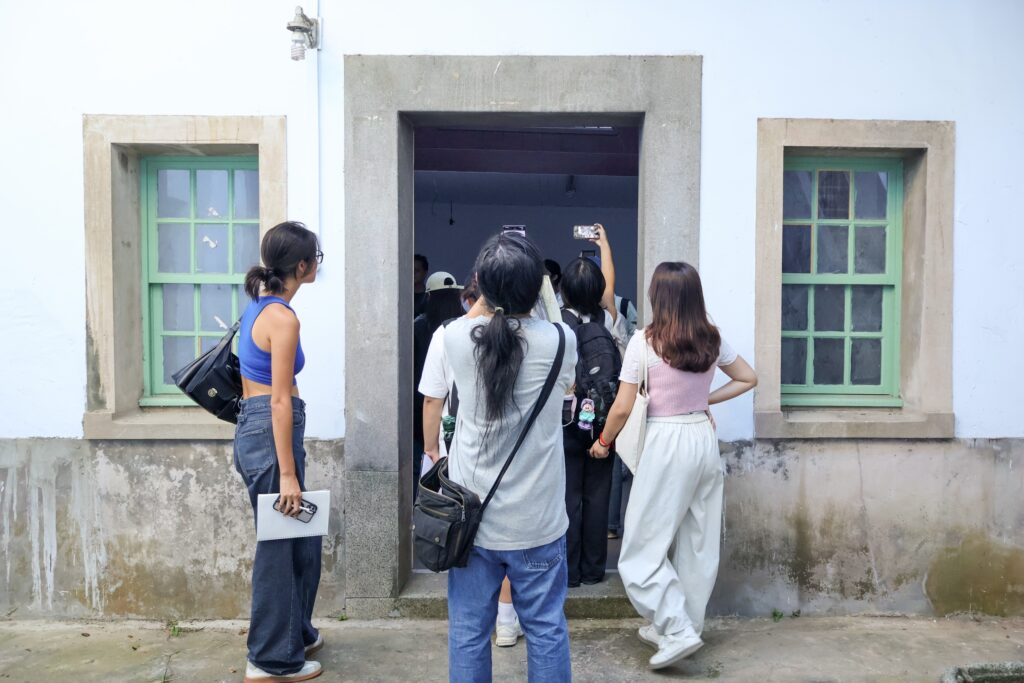
During the guided tour, students understood the relationship between space usage, architectural form, and cultural context by observing the courtyard between buildings, the personal study with round windows, the modernized Western-style living room, and the tatami mats that preserved Japanese living habits. Pan Jinhe’s former residence has gradually moved from architectural preservation toward the regeneration of living experiences, where past and present meet, allowing younger generations to feel the local culture and historical stories of Xinpu.
From Seeing Problems to Finding Possibilities
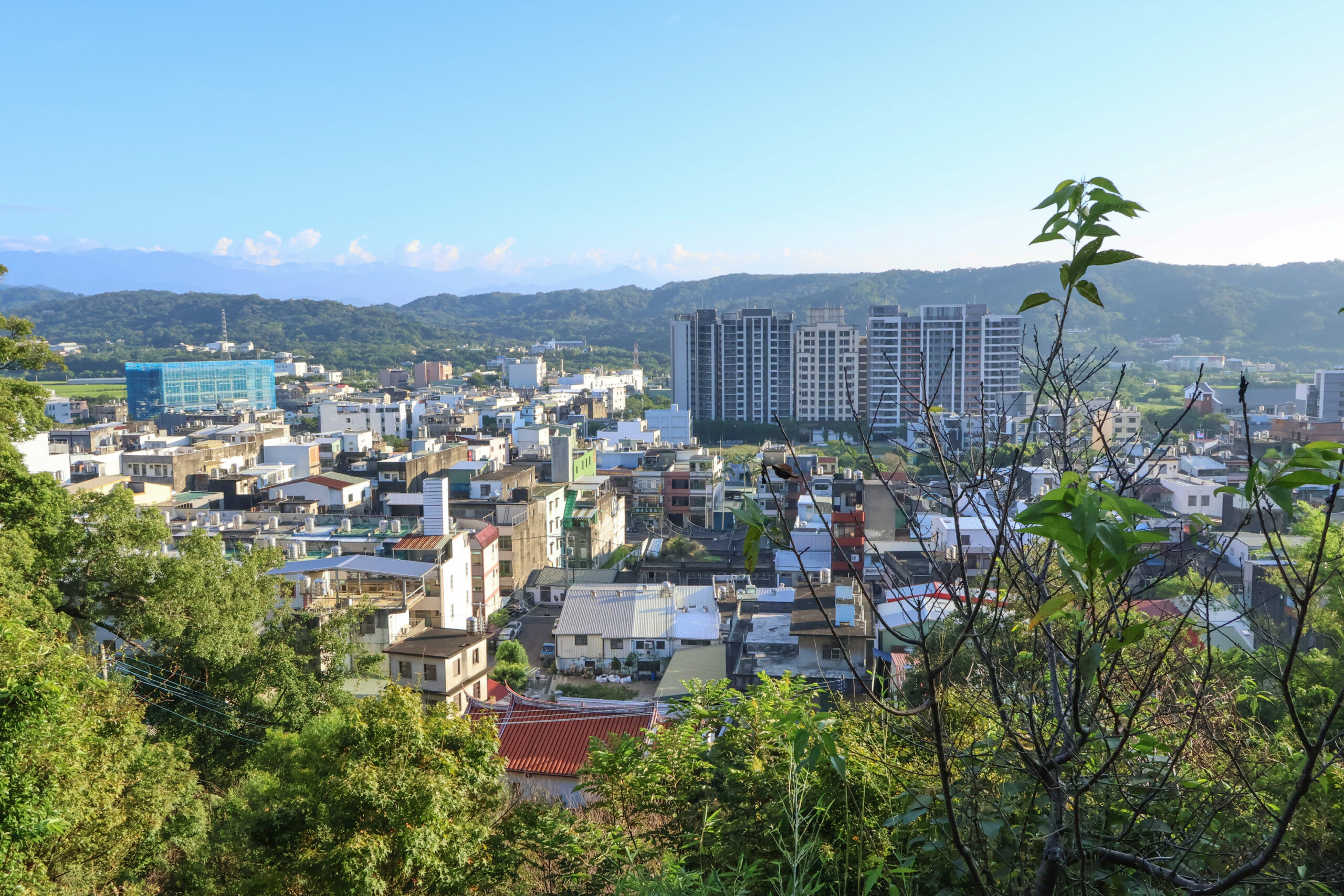
When the group reached the Japanese Park with its open view overlooking the streets where old and new blend together, the clues we had gathered along the way converged into a complete picture. After walking through alleys, ancestral halls, and markets, students gained a more three-dimensional sense of Xinpu and raised thought-provoking questions: What roles can these solemn ancestral halls play in contemporary life beyond being spaces for family worship? And how can a sustainable local ecosystem be established? This is precisely the core issue that the X-Basic team continuously contemplates. The revitalization of old houses is never a single preservation action, but rather an integrated process of “connecting points into lines, and expanding lines into surfaces.” They also hope that Pan Jinhe’s former residence can become a starting point for ongoing dialogue with the local community, gathering countless possibilities.
At the end of the tour, students divided into groups based on themes and delved into Xinpu’s everyday spaces, visiting locally renowned establishments like Grandma Hua’s Rice Cake and Yihsun Ice Shop, engaging in brief exchanges with the shopkeepers. When local stories resonate in our ears and new generations’ creativity reverberates through historical spaces, we reaffirm, through learning and listening, the significance of accompanying old houses toward rebirth—that is, we make the stories of old houses heard and collectively imagine the future of the place.