
When Neighborhood Daily Life Enters Old Houses: 10/18 ꜱᴀᴛ. ‘Beyond Aged’ Kaohsiung Book Launch
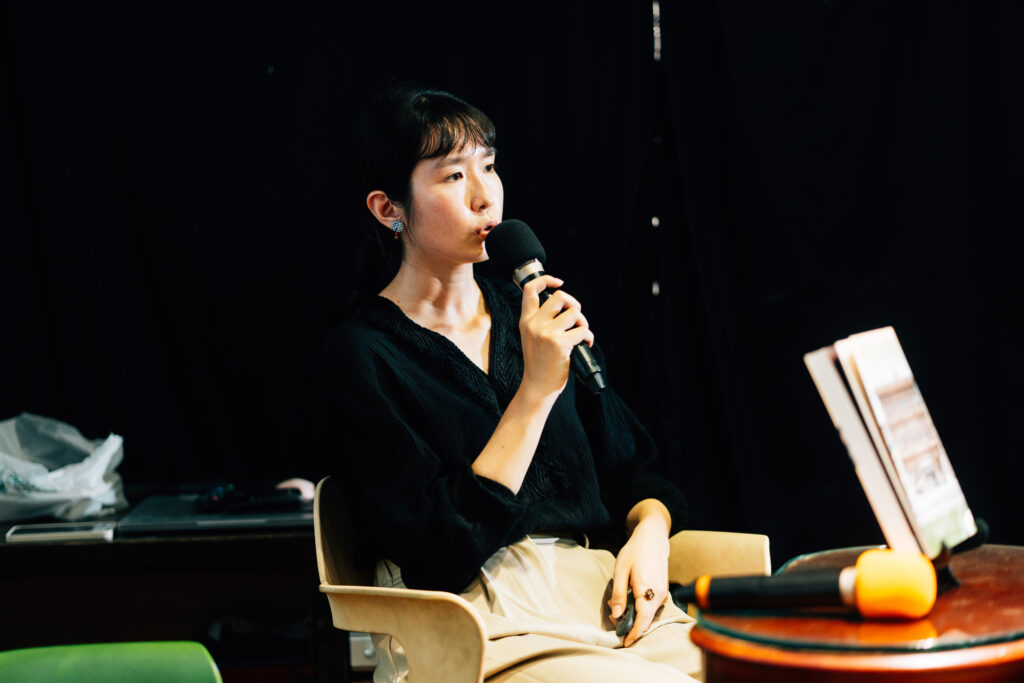
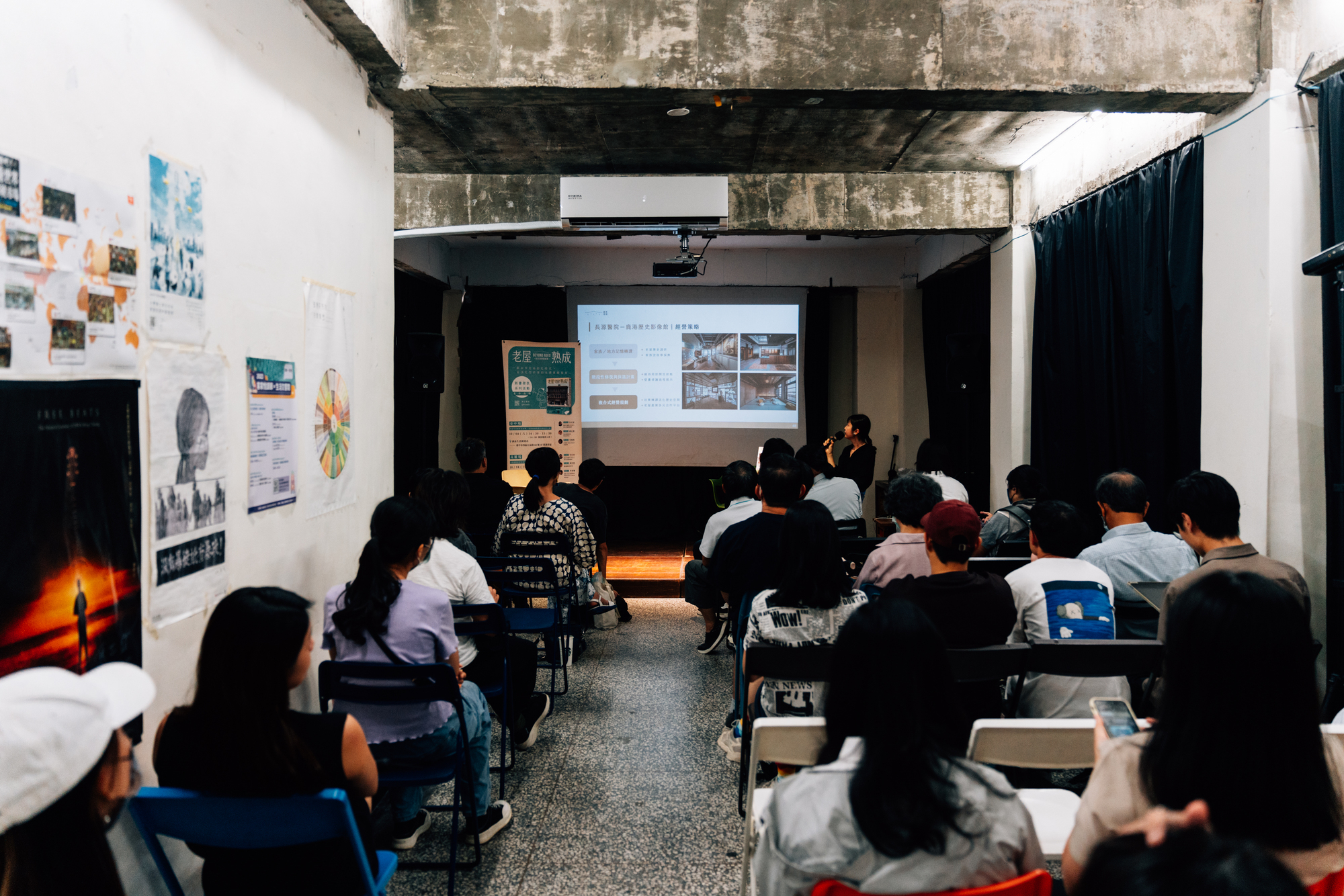
This session, titled ‘Warm Homes with Great Stories: Unveiling the Map of Classic Old House Renovation Cases,’ featured X-Basic Team co-author Chung Chia-ling as the main speaker, with Li Chao-hsiang, expert committee member of the International Council on Monuments and Sites (ICOMOS), joining the discussion. Hosted by Wu I-yen, head of ArchiWalk Co-creation and Integration and editorial consultant for the book, they explored how old houses evolve from independent buildings into memory anchors that connect neighborhood emotions and catalyze community renewal.
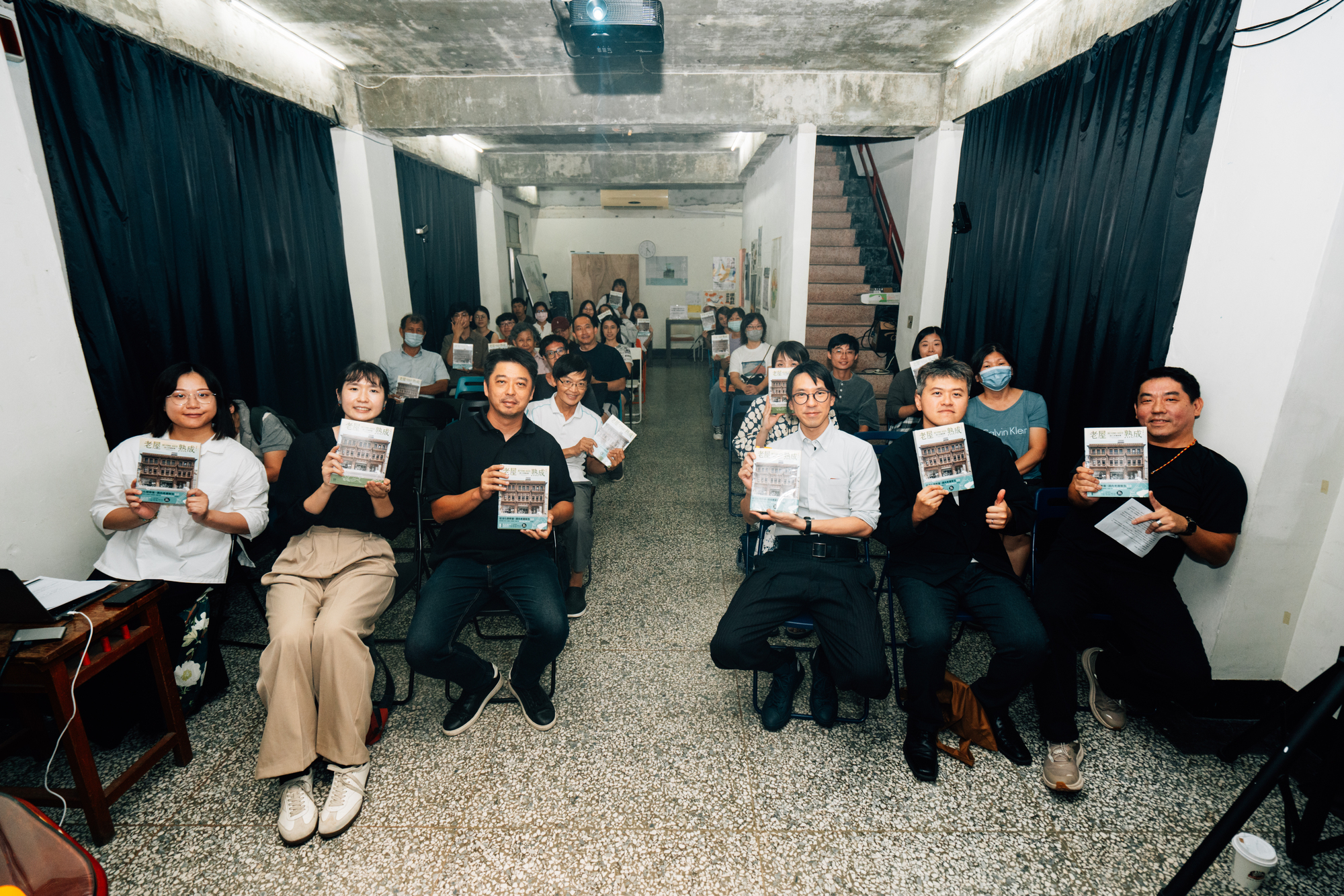
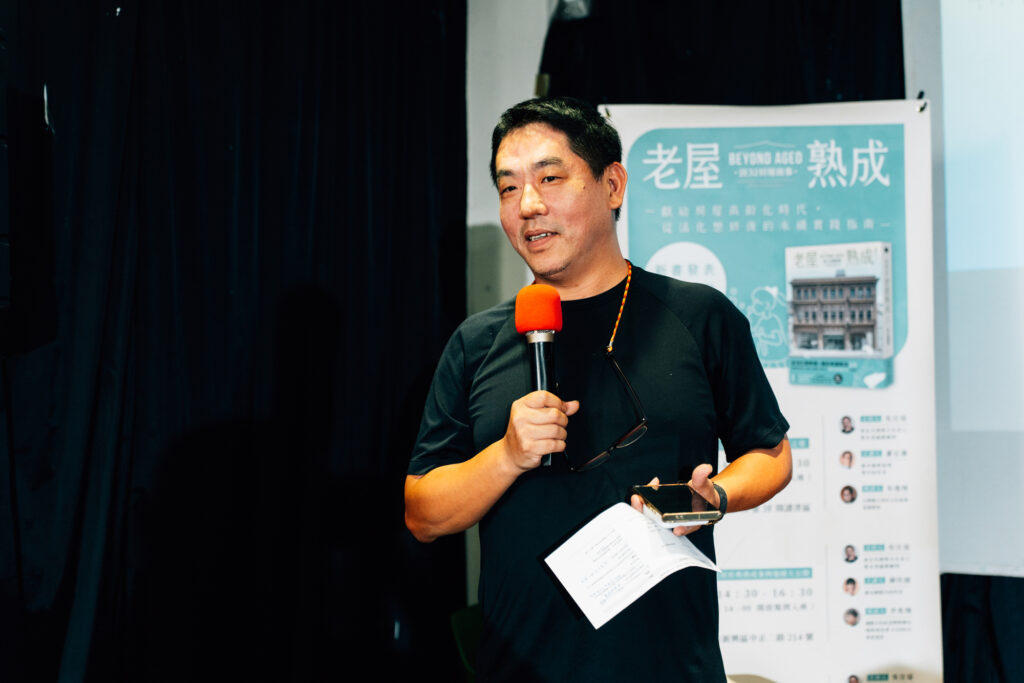
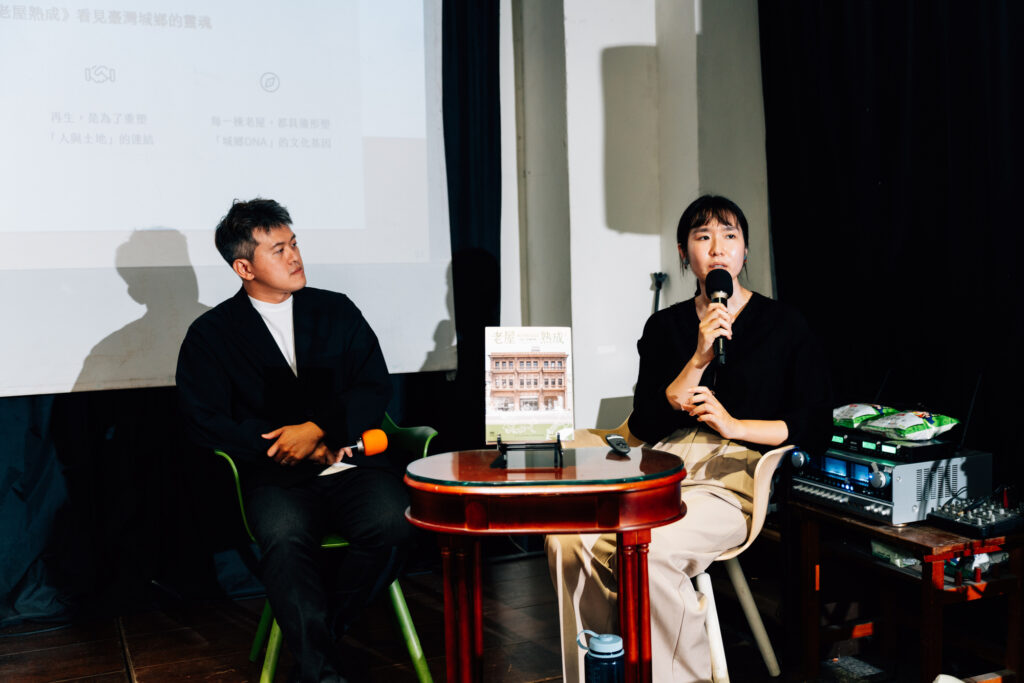
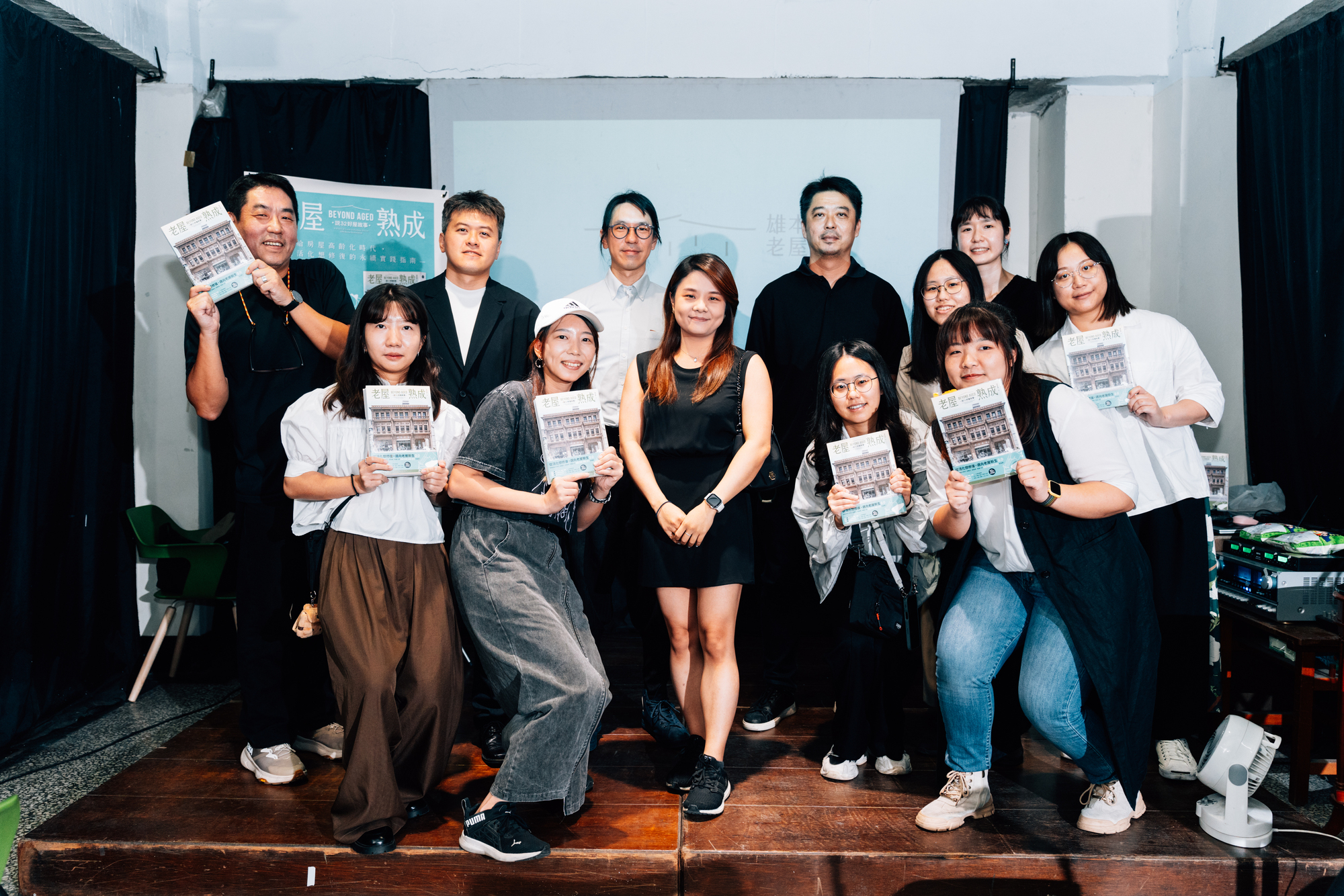
Figure 1: Group photo from the ‘Beyond Aged’ Kaohsiung book launch event. (Image source: Gather Feather Studio – Photography by Chang Chia-wei)
Figure 2: Wu I-yen, head of ArchiWalk Co-creation and Integration and editorial consultant for the book, hosting the launch event. (Image source: Gather Feather Studio – Photography by Chang Chia-wei)
Figure 3: X-Basic Team co-author Chung Chia-ling and Li Chao-hsiang (from right), expert committee member of the International Council on Monuments and Sites (ICOMOS), engaging in a discussion on the main theme of the launch. (Image source: Gather Feather Studio – Photography by Chang Chia-wei)
4 Languages of Conversing with the City
Compared with the Taichung event’s focus on the commercial potential of old houses, speaker Chung Chia-ling shifted perspective toward the softer ‘stories between people and buildings of a certain age,’ carefully selecting local Kaohsiung cases and team practical experiences to guide the audience in considering: How did Kaohsiung, a city once separated from its port, reintroduce everyday life into coastal old warehouses? How were the overgrown, abandoned dormitories for technicians transformed into a base for skills transmission and artisan training through university intervention? Could the numerous old apartments become places for young people to settle? And during a long restoration process such as this, how can the stories of old houses maintain continuous connections with contemporary life?
Public-Private Partnership Awakens Old Warehouse: Kaohsiung Port Warehouse No.2
Kaohsiung’s Kaohsiung Port Warehouse No.2 was integral to the port area’s glorious past, but gradually declined with containerization; port control during the martial law period further distanced the waterfront from everyday civilian life. In 2017, ‘Kaohsiung Port Land Development Corporation’ took over the warehouse revitalization with a corporate approach, not only avoiding drastic renovation by preserving the Liba steel trusses and weathered walls, but also attracting many local brands (such as the ‘Shanjinwu’ team’s restoration and promotion of fishing flag culture). Meanwhile, the X-Basic team collaborated with Muji Renovation to create second-floor accommodation spaces, transforming the dormant warehouse into a showcase of port district living.
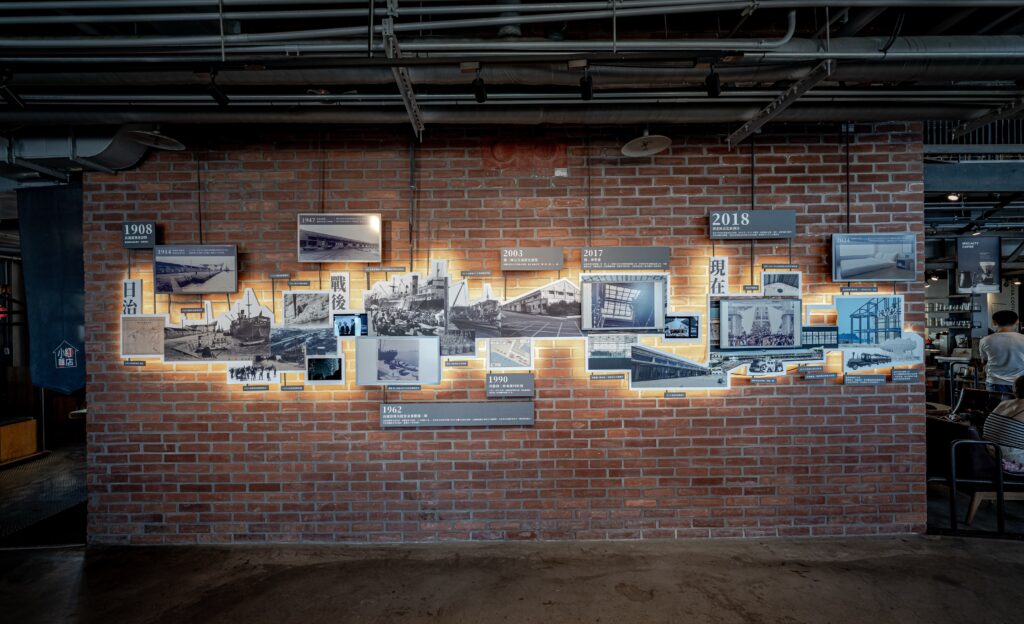
Old building regeneration doesn’t end with restoration completion; the operation process must continuously foster interaction between space and people. Taking KW2’s fifth anniversary special exhibition as an example, the X-Basic team, with a curator’s perspective, imprinted the historical depth of various corners. This included work on the ‘Missing 24 Meters’ of the front warehouse truss, marking the section removed during road widening, making invisible urban development patterns clearly visible. The ‘Time Corridor’ displays port area chronicles on red brick walls that echo the wall texture, inviting hurried travelers to pause and glimpse the warehouse group’s past and present.
From the physical coexistence of old and new, to the translation and curation of historical context, Kaohsiung Port Warehouse No.2 continues the urban texture while transforming intangible local culture into a five-sense experience. As commercial, cultural, accommodation and transportation functions converge here, the city’s daily life naturally flows into this waterfront area.
An atypical Path to Revitalize Industrial Heritage: Cijin Social Innovation Base
Across the harbor from Kaohsiung Port Warehouse No.2, the Cijin Social Innovation Base on the port island demonstrates a completely different, bottom-up, atypical revitalization path. This was once home to shipyard technicians and even housed diverse groups like residents from Xiaokezailiao and immigrants from Dachen Island. It was abandoned following the military streamlining initiative and nearly faced demolition. It wasn’t until the Department of Sociology at Sun Yat-sen University became involved by chance that this derelict complex of buildings welcomed new life.
The Department of Sociology at Sun Yat-sen University didn’t rush to restore the dormitories, but instead used the USR project as a catalyst. They started with soft approaches like historical research, field surveys, and skill inheritance and later established a Technician Advancement Team to integrate cross-disciplinary craftspeople and various small project resources. This allowed for the gradual restoration of the settlement space and, through annual festivals, brought the venue back into public view.
Due to the migration of original residents and industrial changes, the regeneration challenge in this case was to mend memory gaps and the relatively distant emotional connection with the neighborhood. Today, the Technician Quarters, which encompasses a long-term care station, local food promotion, traditional craft preservation in workshop areas, and independent bookstores, has reintroduced contemporary community life. The space itself has become an organic medium for mending historical contexts and cultivating local identity.
The Social Innovation Path of an Old Apartment: Kaohsiung Simple-Basic Apartment
The spectrum of old house revitalization not only encompasses historical buildings with significant cultural heritage but can also extend to everyday dwellings in the city. In today’s era of soaring housing prices, the younger generation faces difficulties. Meanwhile, there are large numbers of poorly managed old apartments in the city gradually becoming vacant spaces. The Kaohsiung Simple-Basic Apartment was born against this background as a social innovation solution.
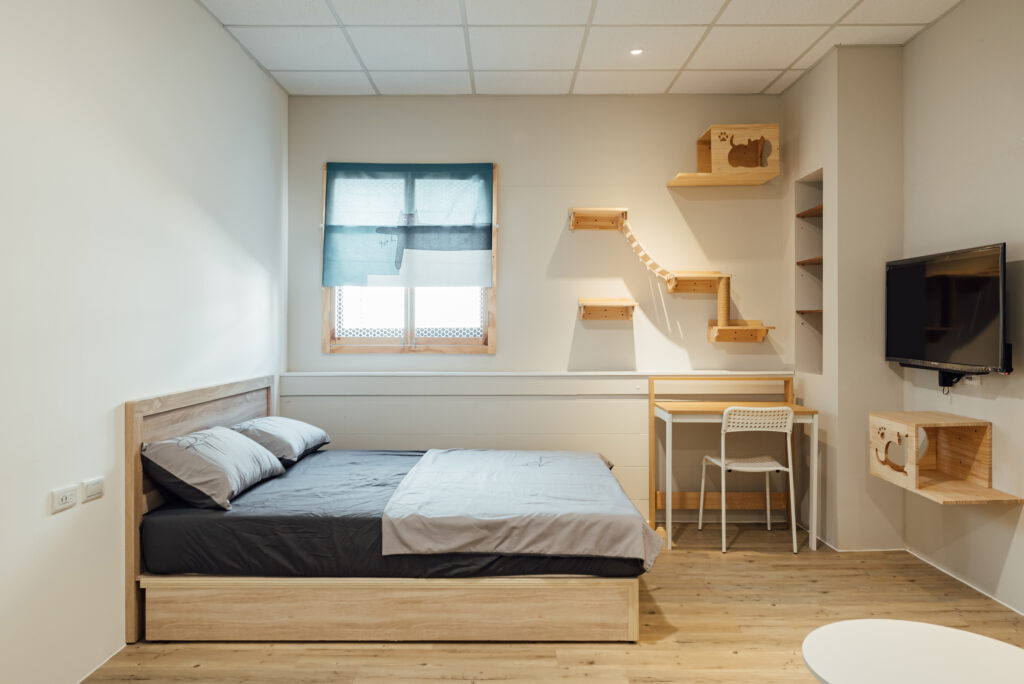
Focusing on market gaps and drawing from the designer’s past rental experiences, S-Basic Living Construction developed a regeneration plan for these old apartments. They targeted groups often overlooked in the rental market, such as pet owners and single young adults, launching product series like ‘S-Basic Apartment’ and ‘Sukinaroom No. 2’. Their approach integrates design, construction, and subsequent property management, while making effective use of engineering inventory panels and second-hand furniture to systematically transform outdated, unattractive spaces into themed rental housing. In addition, the team proposed a ‘rent first, buy later’ model, making renting not just a short-term transition but also a place for long-term residence.
The Simple-Basic Apartment and Sukinaroom No.2 series have now accumulated more than a dozen locations across Kaohsiung, with their core being the transformation of human-centered care into concrete spatial practices—from details considering pet habits (such as installing cat climbing platforms indoors and invisible iron windows on balconies) to long-term planning supporting youth settlement, all demonstrating the new value that old houses can play in contemporary cities.
Keeping Space and Memory Warm: Chang-Yuan Hospital Lukang Historical Image Museum
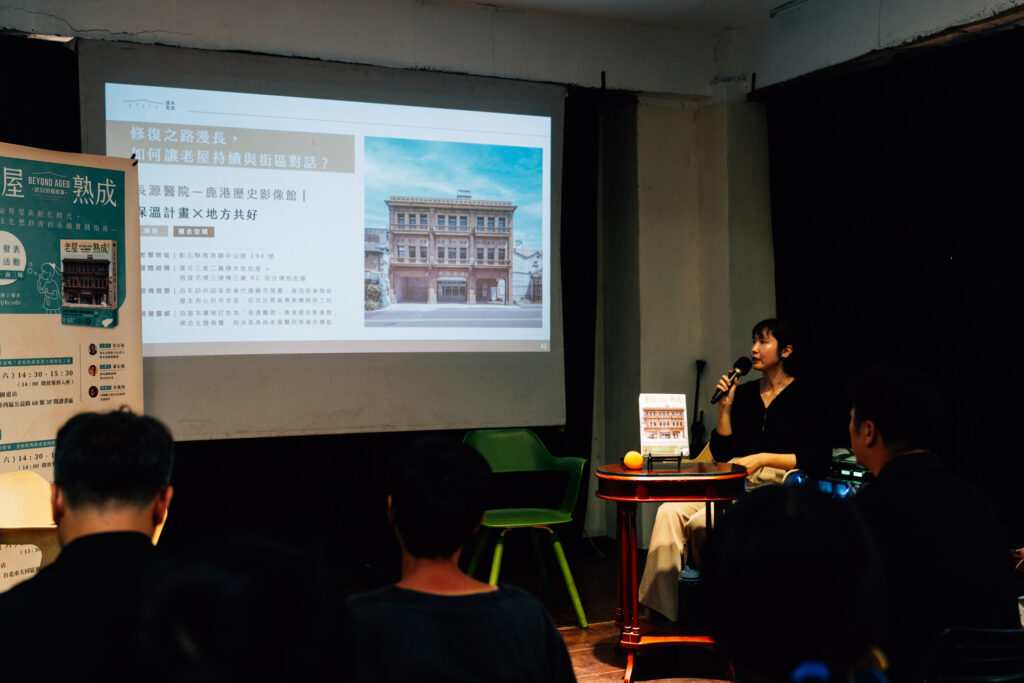
The speaker shifted her gaze from Kaohsiung back to Lukang, using Chang-Yuan Hospital Lukang Historical Image Museum to respond to the initial question: How can the stories of old houses connect with contemporary life? Surrounding the local memories left by Dr. Hsu Tu and the works of photographer Hsu Tsang-tse, the curatorial team uses narrative strategies and digital technology to transform them into an immersive spatial experience for visitors. The bedroom where photographer Hsu Tsang-tse and Ms. Shih Hsiu-hsiang once lived now features projection mapping that displays the master photographer’s historical images and shadows. Meanwhile, the clinic remembered by local residents has been recreated through displays of original medical instruments and medicine cabinets, reproducing the scene of Dr. Hsu Tu’s medical practice.
Even before the complete restoration of the entire Chang-Yuan Hospital building, a series of ‘Warmth Project’ events had already placed the old house back into Lukang’s daily life. Now, the old house’s influence as a local cultural center continues to spread outward, connecting with local youth creative brands (such as the Skinny Cafe co-branded pop-up event), collaborating with cultural and historical workers to organize neighborhood walks, and even participating in Taiwan Design Exhibition and planning photography-themed activities. The private residence that originally carried family history has gradually been transformed into a cultural public asset, continuing to dialogue with the neighborhood and accumulate contemporary memories.
From Memory Anchor to Urban Regeneration Imagination
In the discussion following the case sharing, Professor Li Chao-hsiang, with his long-standing focus on international cultural heritage, pointed out the uniqueness of ‘Beyond Aged’—this book talks not only about old houses but also about people’s attitudes toward cities and spaces. It is the people living in them who give old houses the energy and foundation needed for maturation. This perspective also led to a series of questions: In these long and complex maturation processes described in the book, what kind of ‘magical moment’ made the actors determined to get involved? For the vast majority of readers beyond homeowners, what kind of inspiration does the team hope to provide?
In response, speaker Chung Chia-ling explained that stories originate from people. When homeowners have a strong desire to preserve their legacy, the momentum for regeneration truly begins. The role of restorers and operators is to use their professional expertise to transform this willingness into a sustainable model. As for what this book can bring to readers, she believes that ‘Beyond Aged’ provides a possibility for ‘perspective-taking,’ inviting readers to view both old houses and new homes as organisms with life cycles, to imagine what they will look like in 10 or 20 years, and thus to contemplate their own way of living within them, establishing a longer-term relationship between people and spaces.
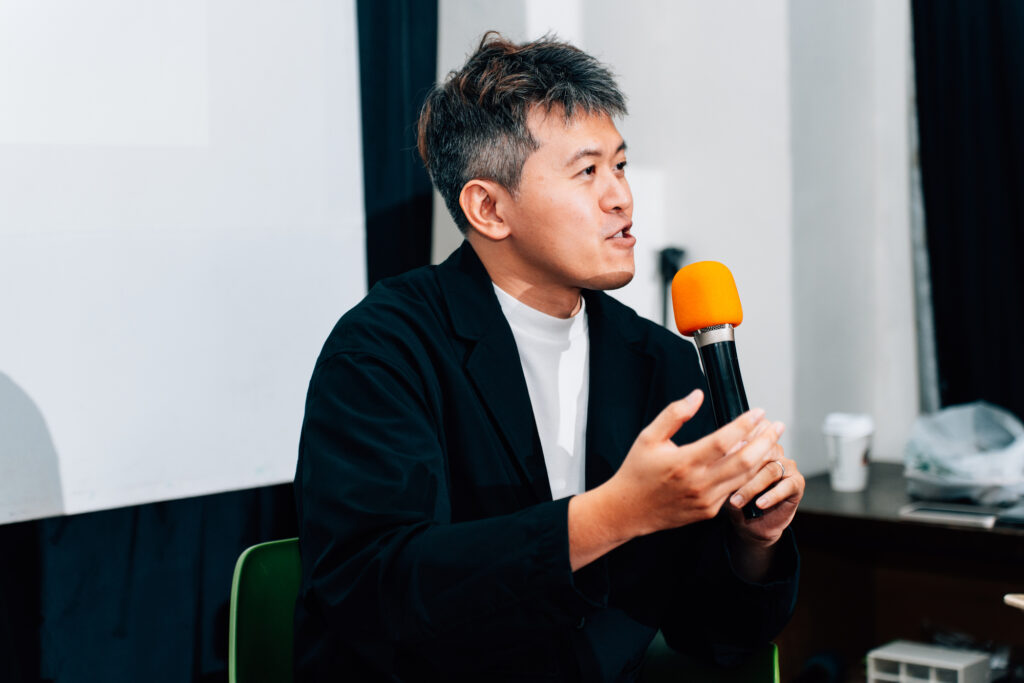
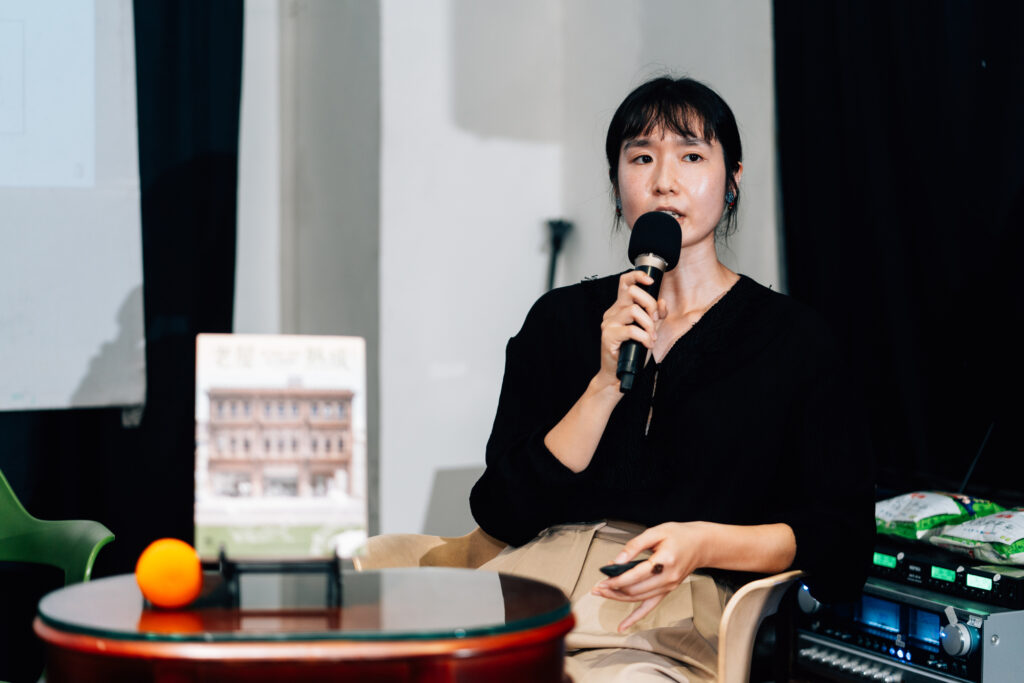
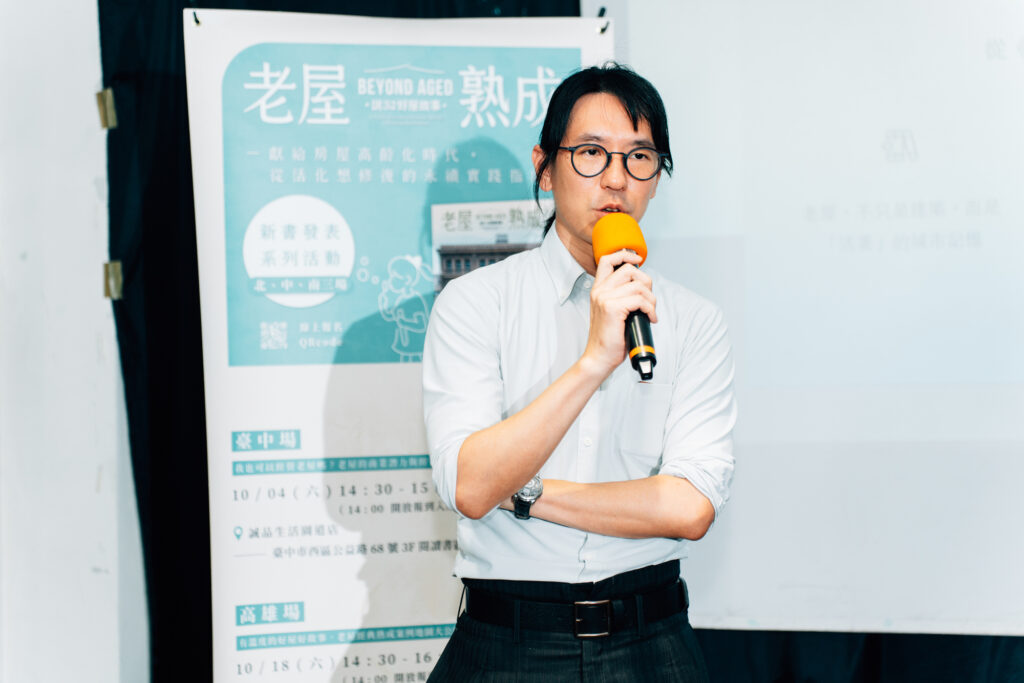
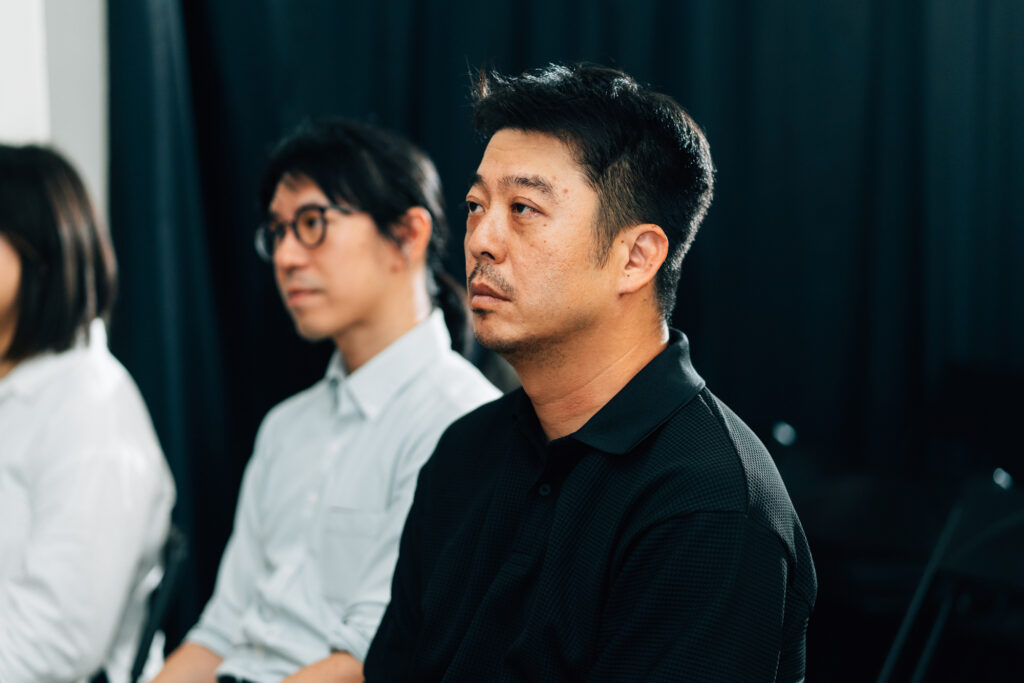
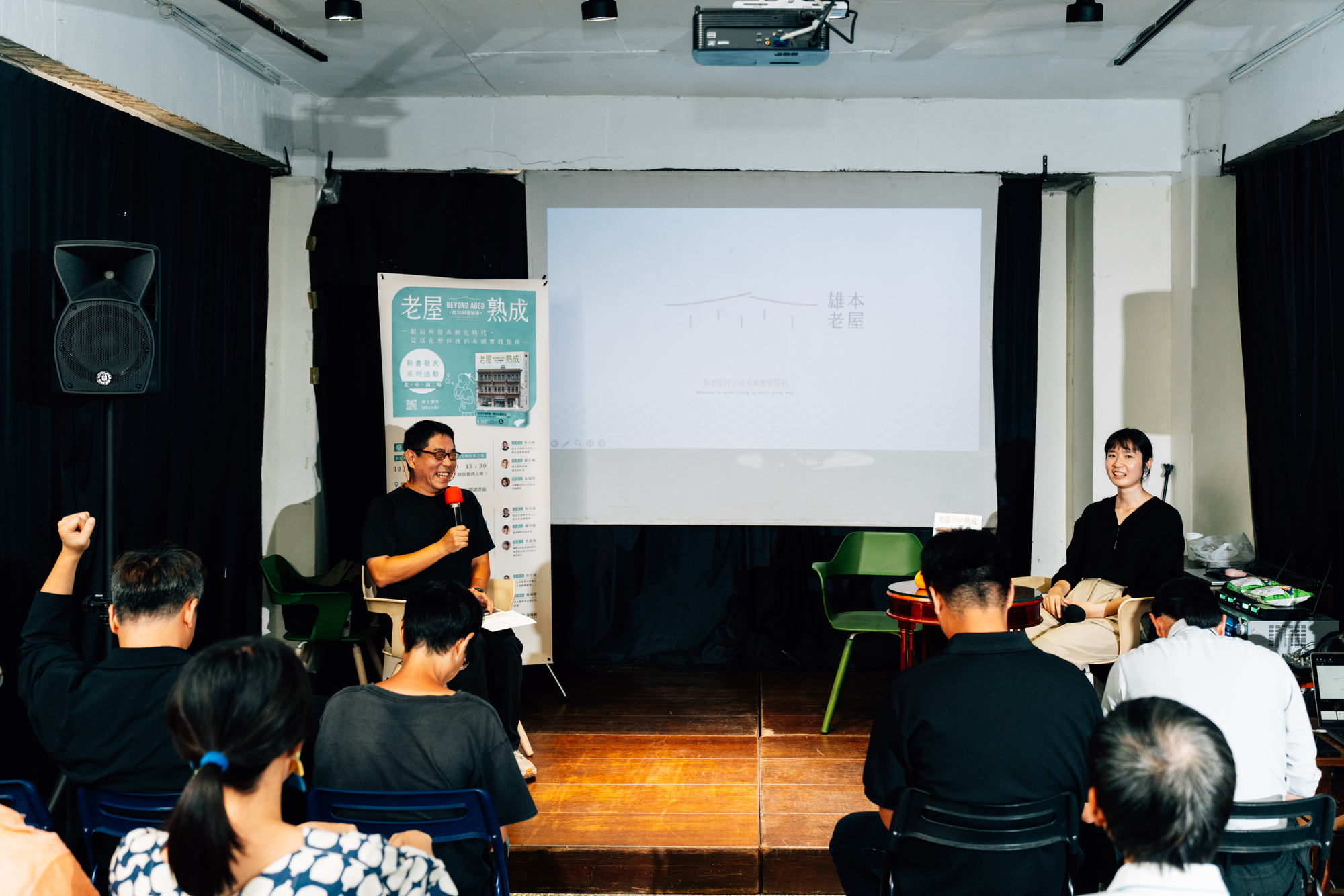
Figures 1 & 2 / ‘Beyond Aged’ book launch event discussion in Kaohsiung. (Image source / Gather Feather Studio – Photography by Chang Chia-wei)
Figure 3 / X-Basic team director Hsiao Ting-hsiung explaining the core of the book. (Image source / Gather Feather Studio – Photography by Chang Chia-wei)
Figure 4 / X-Basic team deputy general manager Huang Chien-sen attending in support. (Image source / Gather Feather Studio – Photography by Chang Chia-wei)
X-Basic team associate director Hsiao Ting-hsiung added that this book collects current snapshots of old house stories from across the island, but the team is already looking toward a more distant future, hoping to engage in dialogue with urban and rural issues in different countries; at the same time, they will actively cooperate with public enterprises to inject new life into cultural heritage that carries collective memories, establishing Taiwan’s cultural identification and sense of identity. The revitalization of old houses is not limited to commercial operations; more importantly, it can respond to social issues such as housing justice, allowing old houses to become a gentle force for civil groups to promote social progress.
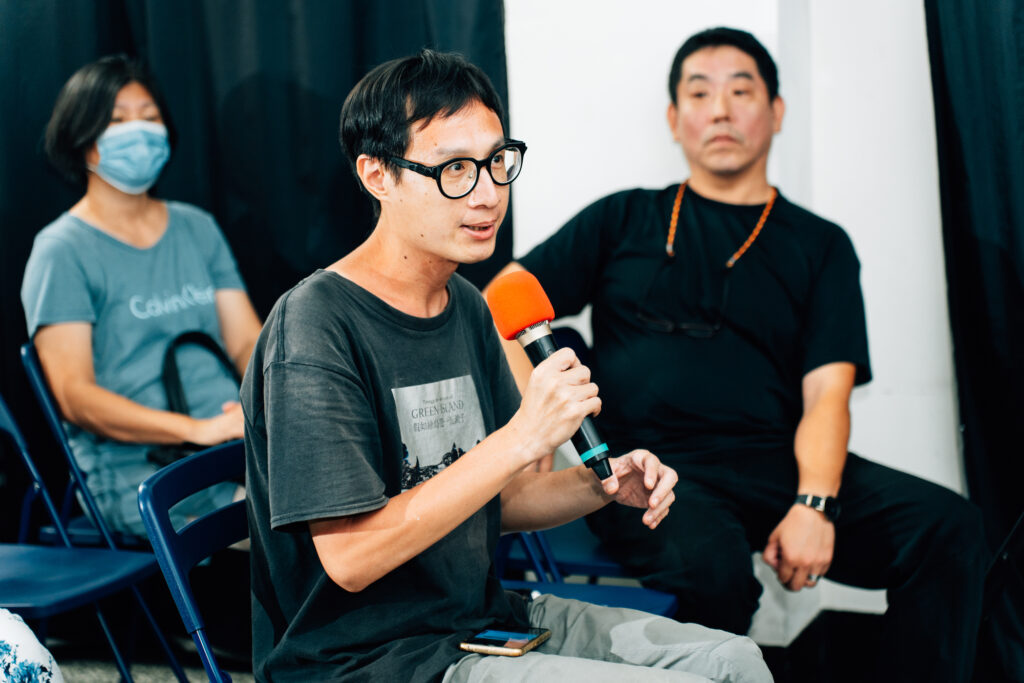
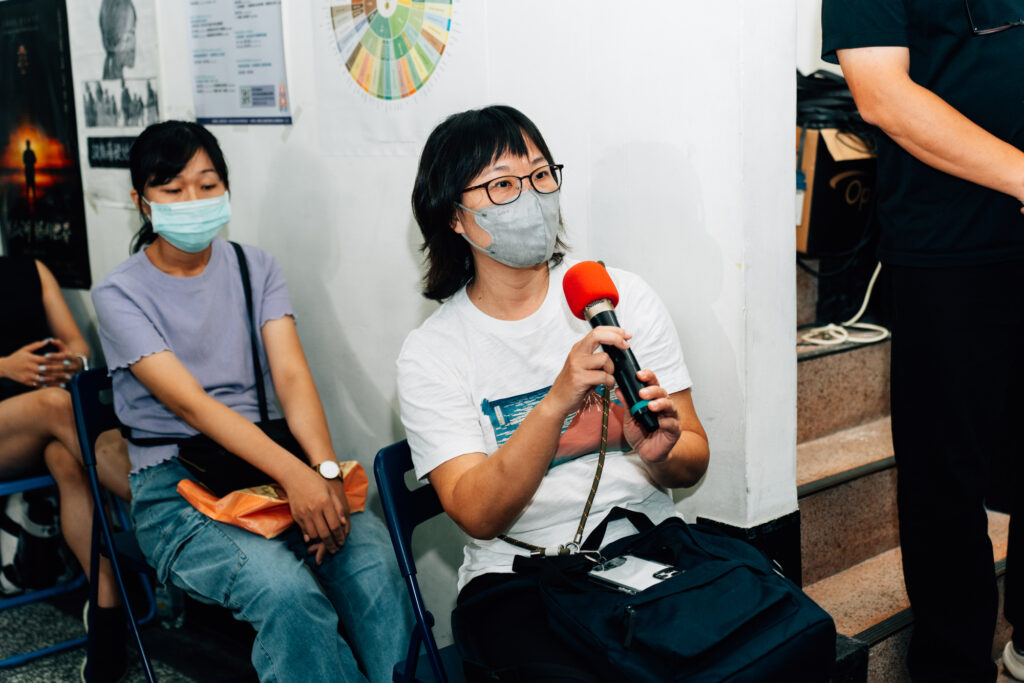
Figures 2, 3 / Readers posing questions at the event. (Image source / Gather Feather Studio – Photography by Chang Chia-wei)
Figure 4 / Candid photo from the ‘Beyond Aged’ book launch event in Kaohsiung. (Image source / Gather Feather Studio – Photography by Chang Chia-wei)
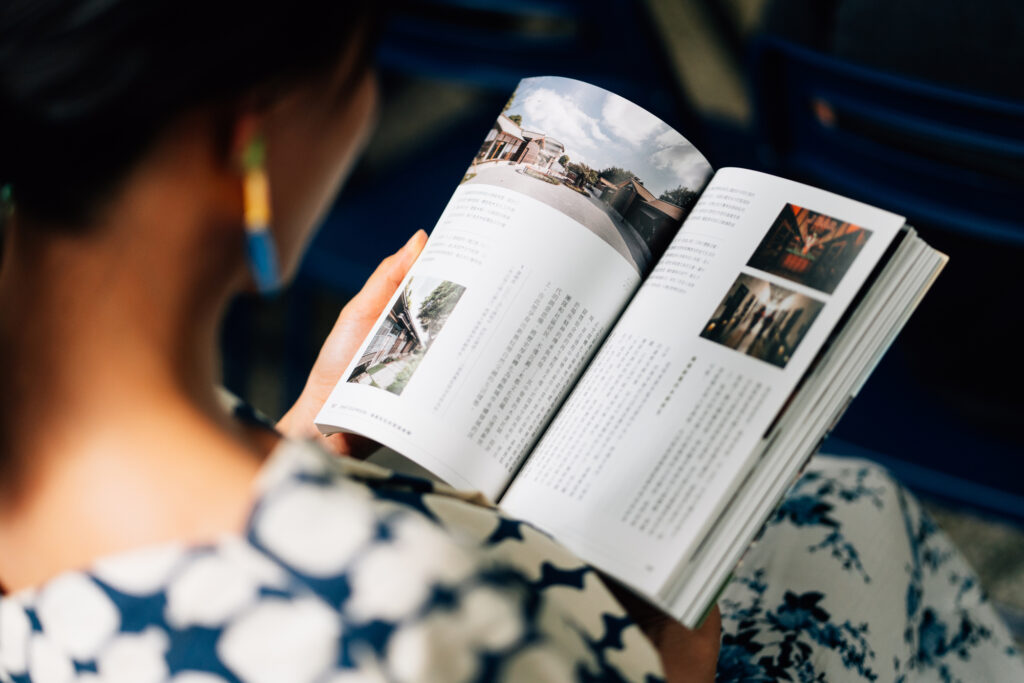
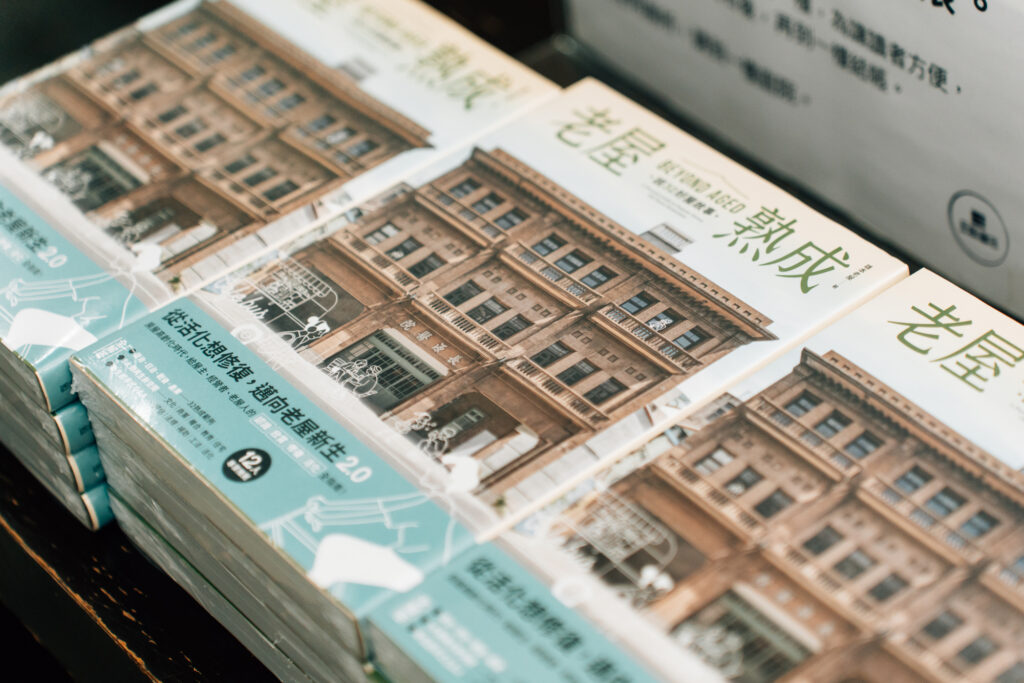
Figure 5 / Book display at the ‘Beyond Aged’ book launch in Kaohsiung. (Image source / Gather Feather Studio – Photography by Chang Chia-wei)
Figure 6 / Thanks go to the X-Basic Planning team colleagues for attending the book launch. (Image source / Gather Feather Studio – Photography by Chang Chia-wei)
“Beyond Aged” Purchase Information
❏ Online channels | Books.com / Eslite / Readmoo / Kingstone
❏ Book Price | NT$ 660
New Book Launch Series Events
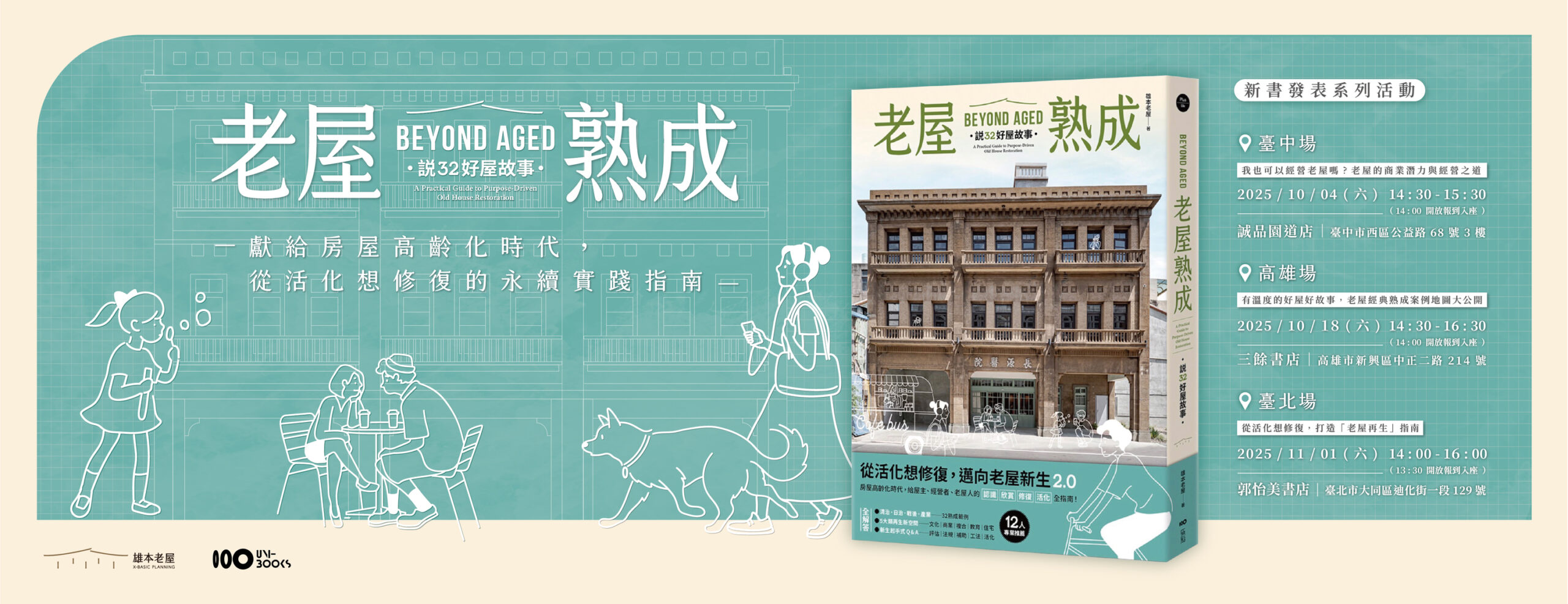
❏ 10/4 ꜱᴀᴛ. Taichung Event|Can I Operate an Old House Too? The Business Potential and Management of Old Houses
❏ 10/18 ꜱᴀᴛ. Kaohsiung Event|Warm Houses with Great Stories: Grand Reveal of Classic Old House Renovation Case Study Map
❏ 11/1 ꜱᴀᴛ. Taipei Event|From Revitalization to Restoration: Creating a Guide for ‘Old House Regeneration’