
EN
ZH
JA
Copyright © 2025 X-Basic PLANNING Ltd.
archive

CDIB Capital Regional Revitalization Action Implementation Plan

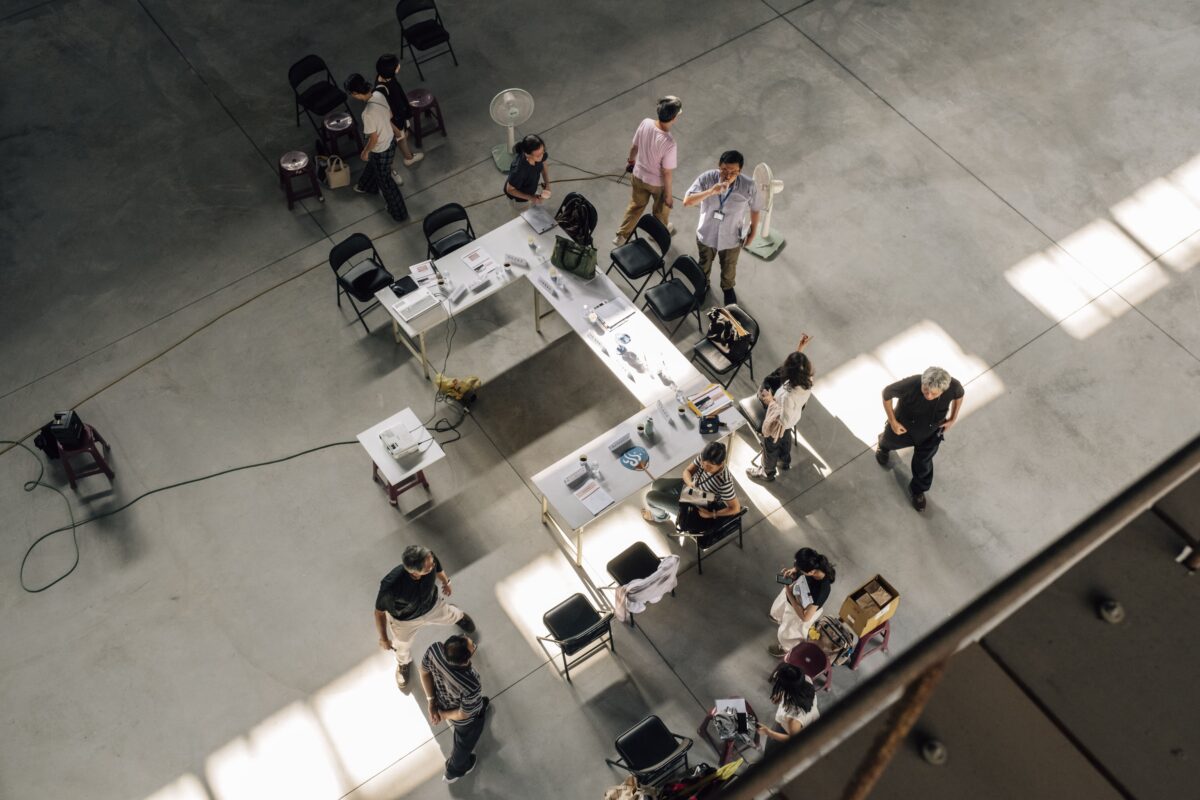
Since the launch of the CDIB Capital Regional Revitalization Action Implementation Plan in 2023, X-Basic Planning has been commissioned by CDIB Capital and HAYASHI office to implement this project for two consecutive sessions. We are honored to work with the project director, Professor Lin Cheng-i, to promote the concept of local revitalization. We accompany local teams from all corners of Taiwan to gradually realize their visions, and developing innovative and sustainable business approaches derived from local cultural contexts.

For X-Basic Planning, a building is not merely an inorganic structure of bricks and tiles, but an organism carrying urban culture, constructing the spatial characteristics of each neighborhood as they evolve through the ages. However, imbalance and changes in urban and rural development are causing many landscapes to quietly disappear, with complex factors such as changes in the industrial environment and weakening sense of identity playing key roles—therefore, we view old houses as carriers of local potential, believing that their ‘rebirth’ should be closely integrated with local contexts, thereby forming a mutually beneficial cycle.

This year, we continue to prioritize the spirit of “Not finished yet, standing together. Being there, going the extra mile.” Through planning workshops, reading clubs, market activities, and site visits, we incorporate the experience accumulated by our team in promoting regional revitalization, aiming to reconnect places, people, and spaces, and together rediscover the abundant vitality of the land.
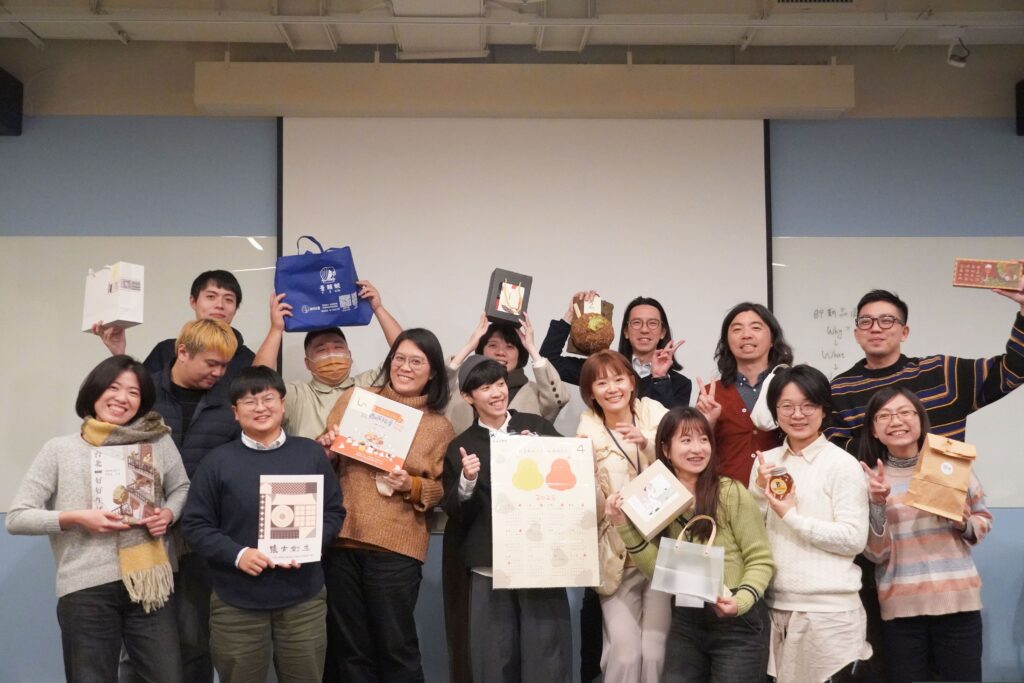
The project team with HAYASHI office CEO Lin Cheng-i (second from right, back row) and X-Basic Planning Director Hsiao Ting-hsiung (third from right, back row) at the mid-term workshop.
This session’s consensus meeting was planned by Tsai Yu-Hsuan, Team Leader of X-Basic Planning’s Interdisciplinary Planning Department.

This year’s project teams focus on diverse issues, including local food culture promotion, beehive design, traditional craft transformation and revival, and reuse of fishing industry waste. During the implementation period of over five months, the X-Basic team has consistently provided assistance as ‘companions,’ inviting experts from various fields as mentors, building capacity through site visits, empowerment courses and workshops, and developing new approaches through brainstorming processes.

Although most teams initially adopted an independent implementation model, this time, beyond the existing workshops and charity days, the reading club specially arranged by Professor Lin Cheng-i unexpectedly facilitated actual exchanges and subsequent collaboration between teams. In addition, we invited the previous participating team Pan Tun International to share their implementation experience, passing on the sustainable spirit and practical knowledge of the project to this year’s partners.

Beyond organizational empowerment and local networking, the ‘social impact’ that the Local Revitalization Action Implementation Plan can bestow upon teams is also a major focus. For this purpose, KGI Financial Group has held charity markets for two consecutive years, with X-Basic Planning helping to invite teams, allowing products developed with everyone’s dedication to be showcased. This year’s charity day market with the theme of ‘Local Revitalization’ similarly launched on the last Friday before Christmas, with various teams transforming their passion for the land into creative products and cultural experiences, conveying the uniqueness and beauty of various parts of Taiwan through concrete actions.

We sincerely thank CDIB Capital Group and HAYASHI office for their invitation, allowing X-Basic Planning not only to care for urban and rural issues with our professional expertise but also to actually participate and work alongside local teams. Although we faced many challenges during this period—such as coordinating the schedules of CDIB Capital staff, mentors, project partners, and the X-Basic team, which was a major undertaking, with the effort spent on communication and coordination often exceeding expectations—it was precisely through these solid interactions that we were able to witness up close the difficulties of local regeneration, thereby conserving the precious momentum of the participating teams.

Among these, Tong Li Seafood proposed a recycling project for abandoned clam shells, which left a deep impression on Tsai Yu-hsuan, the Team Leader of Cross-disciplinary Planning Department who was responsible for implementing this project at X-Basic. The sisters who run the business maintained their original intention throughout the project period, simply based on the spirit of environmental sustainability, repurposing waste from aquaculture into products such as diffuser stones, coasters, and eco-friendly cat litter, rather than viewing it as a means to pursue commercial interests. Their attitude of maintaining passion for their core business is admirable.
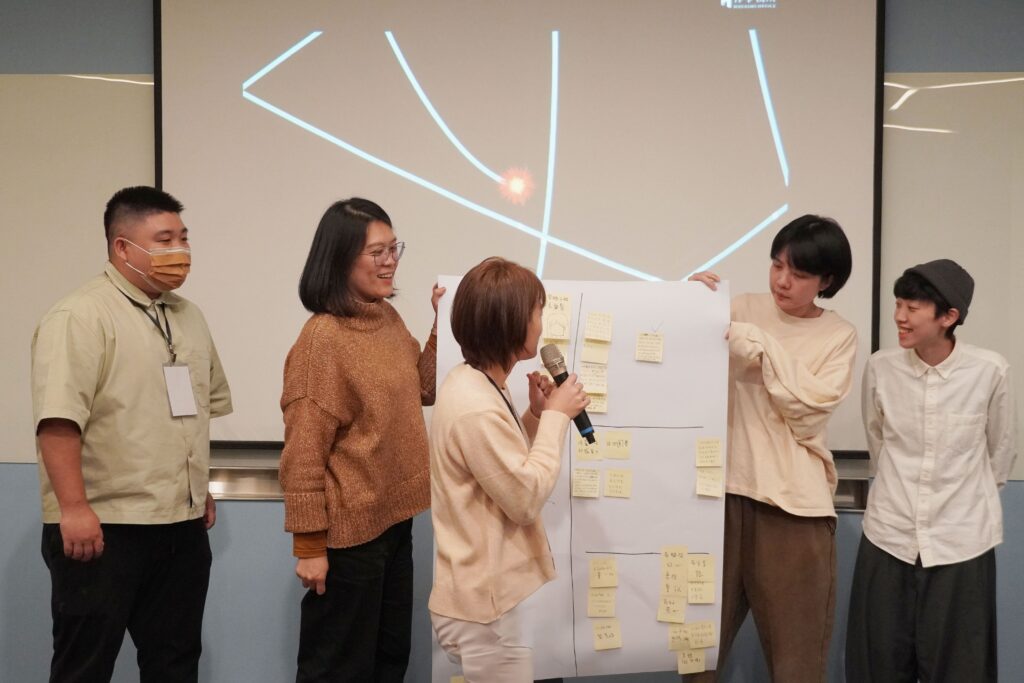
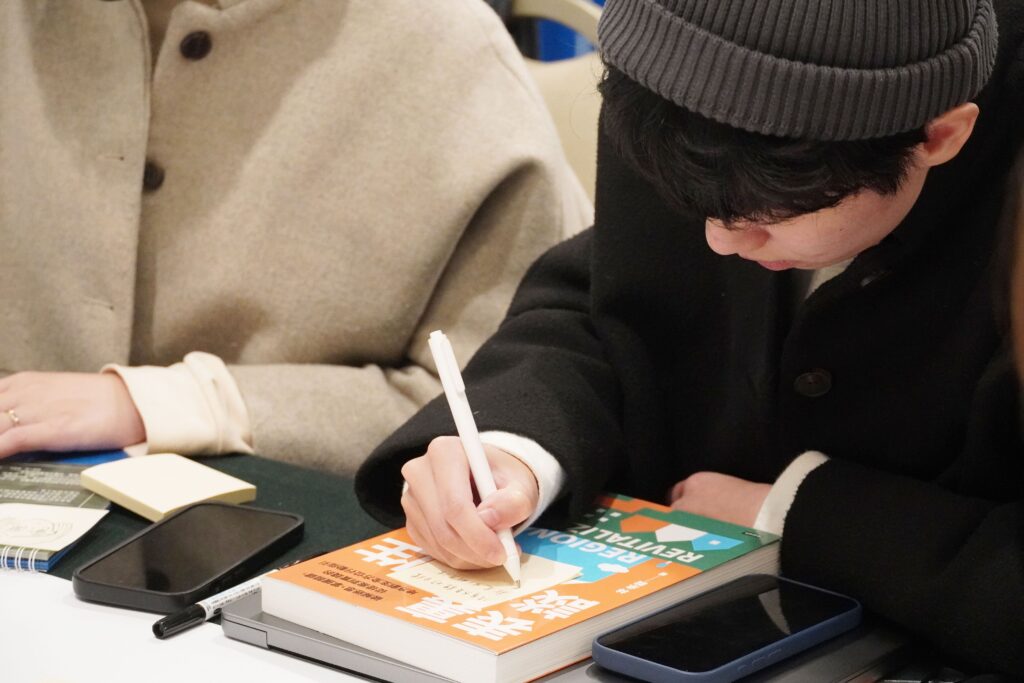
Project teams brainstorming during the workshop.

Reflecting on the experience of implementing two sessions of the project, X-Basic Planning has always focused on its role as a connector and facilitator. Through actual participation, X-Basic has begun to consider the possibility of deeper involvement in planning in the future. That all the effort and cultivation ultimately received recognition from CDIB Capital executives is the most direct encouragement and support for X-Basic colleagues, making all challenges particularly meaningful.

The dedication of ten project teams has injected endless regenerative energy into various parts of the island, allowing the public to see how place names and memories about to be forgotten beneath the rapidly changing faces of cities, countryside, rivers, and forests can find their footing in contemporary society. The CDIB Capital Local Revitalization Action Implementation Plan is not a phase-based task, but a long-term journey toward cultural and environmental sustainability. We look forward to witnessing more creative seeds rooted in the land sprouting and thriving in the future, becoming an ecological network that shelters the local environment and supports the coexistence of all living things.
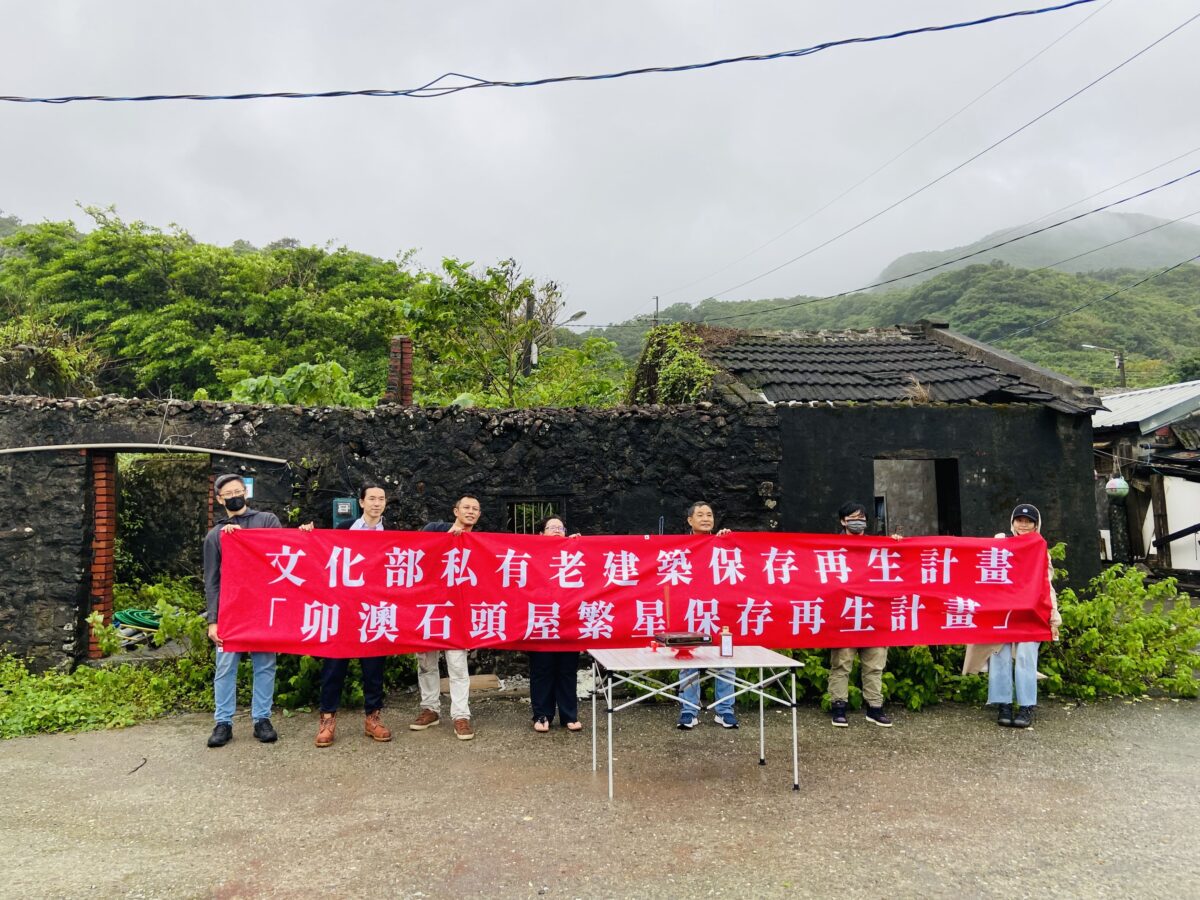
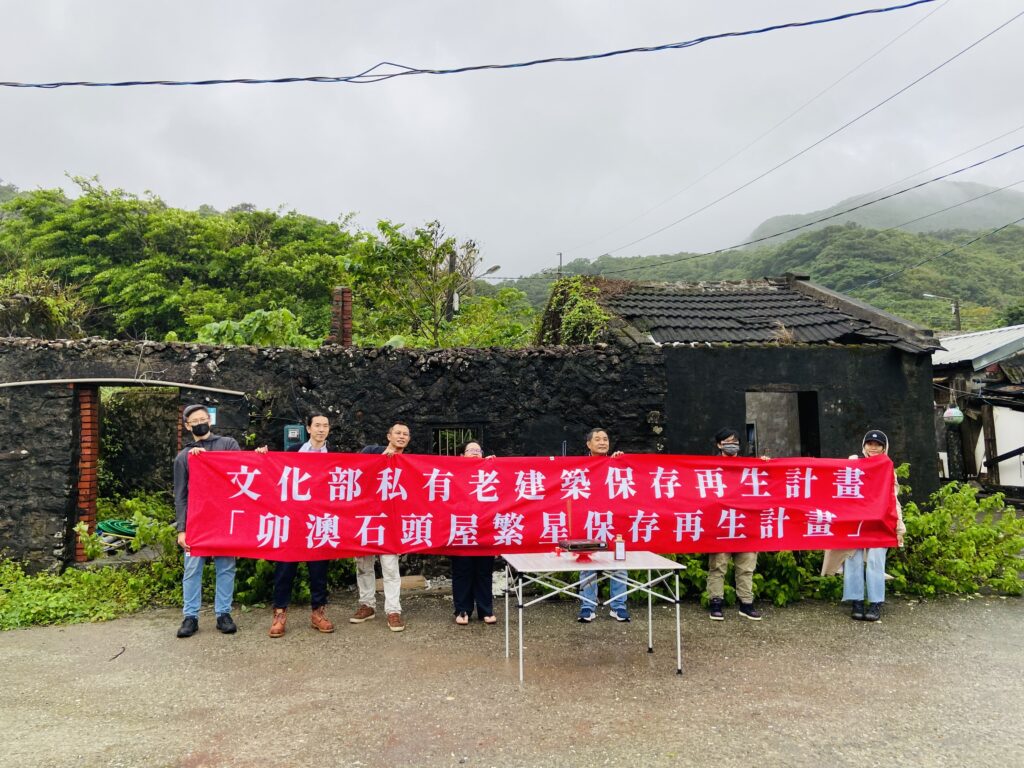
Maoao Stone House Preservation and Regeneration Project

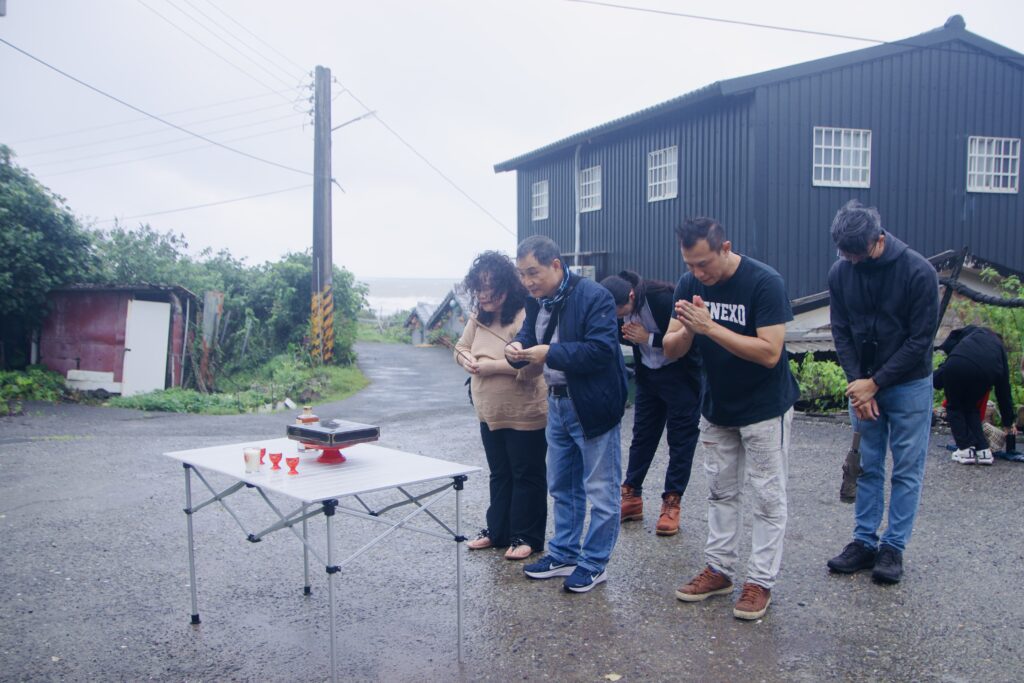
In October 2022, the X-Basic team and the local Maoao team Sandiao Cape Cultural Development Association jointly assisted Mr. Chiang Ming-Hsien, the owner of Maoao stone houses at 28 Fulian Street and 15 Fuxing Street, in obtaining the Maoao Stone House Preservation and Regeneration Star Project. On October 17th, under the accompanied effect of a typhoon, a groundbreaking ceremony for the stone house restoration project was held in the wind and rain. During the preparation for the ceremony, the X-Basic team members warded off wind and rain in order to light the incense in the northeast monsoon. We also worked together to hold up the groundbreaking banner, sincerely praying for the safety and smoothness of the upcoming project.

Stone houses are fishing village settlements in Taiwan’s northeast coast, built with local stone materials to adapt to the natural environment. Key features to preserve include the withstanding the northeast monsoon and ocean surf, the artistic quality reflecting the local environmental colors, and the cultural significance containing the fishing village’s developmental history. Although the environment of the fishing village was harsh in the past, neighbors would always help each other. From the construction of stone houses, daily fishing and harvesting, to the procession activities of the local Liyang Temple, life in the stone house settlement was always carried out together.

For the X-Basic team, accompanying the stone houses from field investigation and project application to groundbreaking has been the same. We have experienced Maoao’s extreme heat and cold winters together with the local team and the homeowners, never missing the story of any stone or tile. On the day of the groundbreaking ceremony, the timely northeast monsoon allowed everyone to experience something of the daily life of local residents, while also evidencing the resilience of the stone houses, which remain standing in the wind and rain even with only one wall left.

In the future restoration project, the X-Basic team will transform this wall that has withstood wind and rain into stronger stone houses. This will create new spaces for local residents but also, through innovative planning and use, allow the features and stories of the stone houses to continue to be built upon, just like the stones that have been piled up generation after generation.

BackerHouse – Private Historic Building Preservation and Regeneration Project

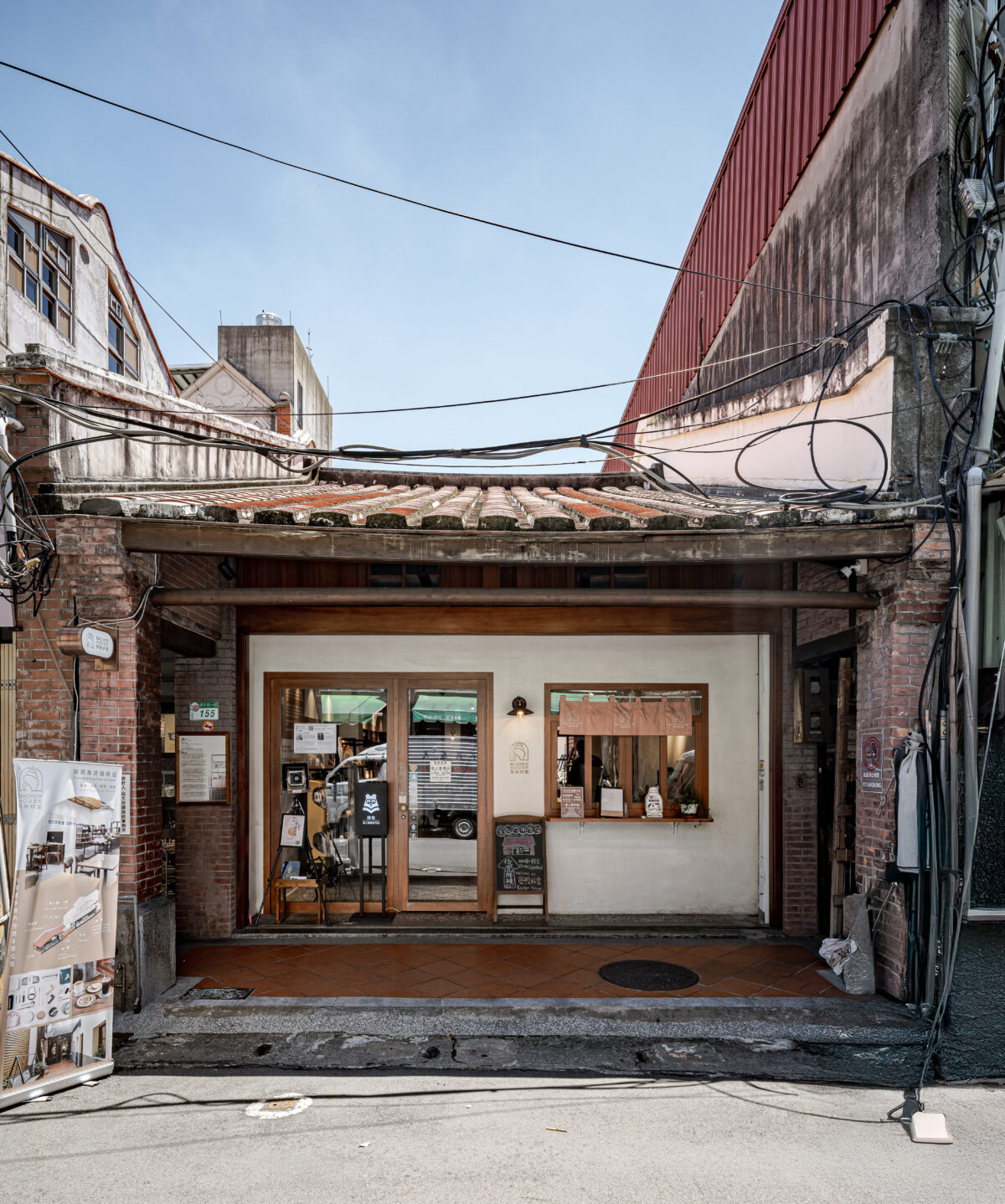
Dadaocheng is the area with the highest concentration of cultural assets in Taipei City and has long been known for its thriving commerce. Reflecting the Qing rule, Japanese rule, and the post-war era, various forms and styles of commercial street houses stand side by side, shaping Dadaocheng’s unique neighborhood character. The building at No. 155, Section 1, Dihua Street, now operated by BackerHouse, is a three-story Minnan-style shophouse built during the Qing Rule Period with additions made during the Japanese rule period and after the war. In 2005, it was designated as a historic building by the Department of Cultural Affairs, Taipei City Government.

From 2012 to 2019, No. 155, Section 1, Dihua Street served as the “Urban Regeneration Station (URS)” under the Taipei City Urban Regeneration Office. In 2020, after completion of its phase mission, it was transferred to the Department of Cultural Affairs, Taipei City Government, which promoted the Old House Cultural Movement Project. The initiative aimed to attract private organizations through a system where restoration costs could offset rent and management fees, creating a public-private partnership for revitalization.

The crowdfunding consultancy company Backer-Founder submitted a proposal to the Department of Cultural Affairs, Taipei City Government at this time, inviting the X-Basic Team and Huang Wei-cheng Architectural Firm to assist with local historical research, space renovation, interior decoration, and a series of operational planning recommendations. To accommodate future store operations, the team built upon the restoration work done by Lu Ta-chi Architectural Firm ten years earlier, proposing appropriate restoration and reuse plans for the future.

This Minnan-style shophouse with a “single-Bay, two-hall, two-corridor” layout suffered from efflorescence due to ground and roof water seepage, along with damaged doors, windows, and electrical interfaces. After conducting surveys and documenting current conditions, the team carried out restoration work on four major components: wall surfaces, floors, doors and windows, and wooden stairs. During the process, the team not only considered the compatibility of building materials with the architectural aesthetics but also followed reversible renovation techniques. While striving for thorough restoration, they strengthened the connection between new and old materials to facilitate future management and maintenance.

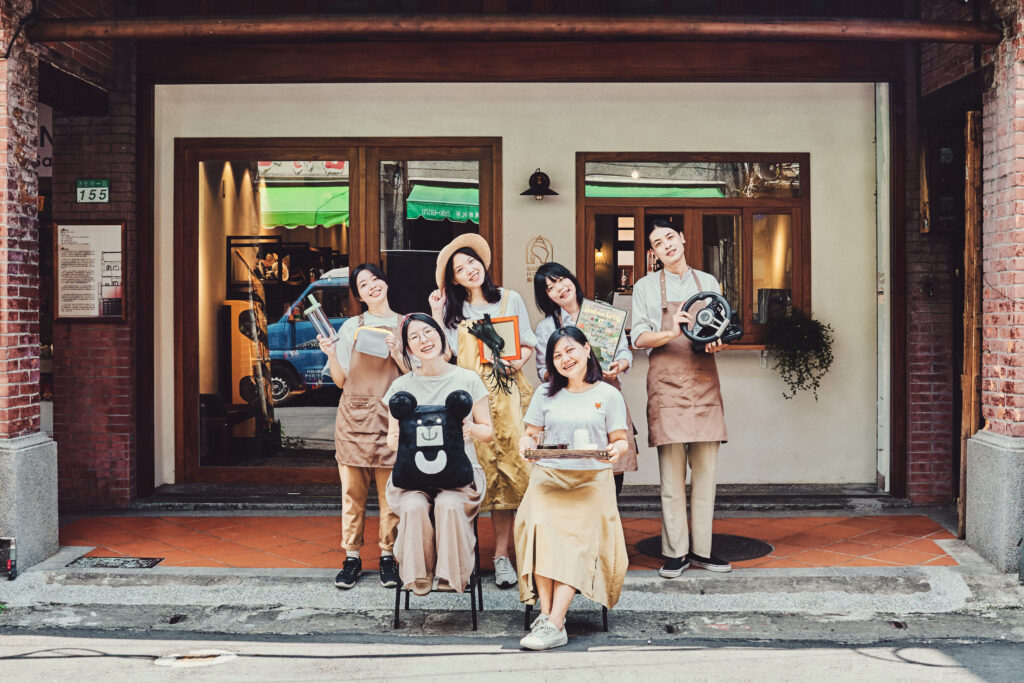
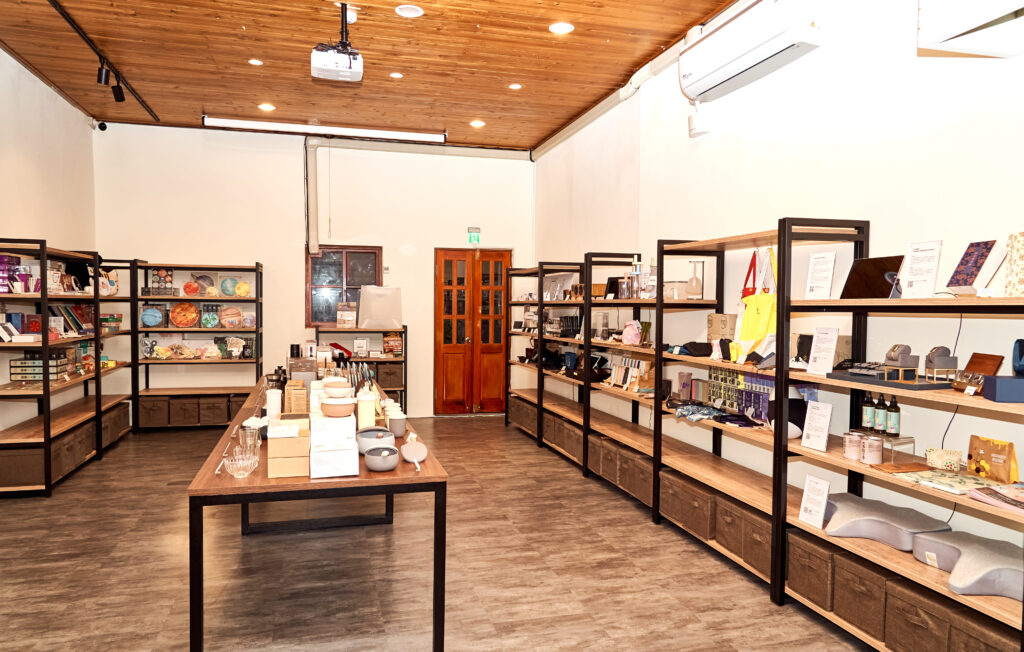
In 2022, Backer-Founder transformed Dihua Street No. 155 into an exhibition and sales space for crowdfunding brands and products, officially opening as BackerHouse, bringing new creative products, crowdfunding business energy, and fundraising events to revitalize No. 155 Dihua Street. Currently, the store showcases over 50 brands formed through crowdfunding, bringing new industrial exchanges to the historic district of Dadaocheng.

As part of the Old House Cultural Movement, revitalizing old houses through crowdfunded experiential spaces is quite a creative approach even in Taipei. Combined with Dadaocheng’s background as a once-thriving commercial district, this repurposing of old houses further extends the historical context of a neighborhood once filled with herbal medicine shops, tea merchants, general stores, and other vendors. It further establishes roots in Dadaocheng in both software and hardware aspects through a new-era business model. This is precisely the ideal old house regeneration envisioned by the X-Basic team, which focuses on practical everyday needs while addressing the importance of preserving historical memory. We are honored to have had the opportunity to participate in the BackerHouse proposal project, helping to connect the old house with contemporary times. We watch as No. 155 Dihua Street continues to flourish, accompanying this historic district, already famous for its commercial prosperity, as it strides confidently into the next era.

Taipei City Cultural Heritage Preservation and Maintenance Honor Award

The preservation and maintenance of cultural heritage is like a sword that takes ten years to sharpen. Whether it’s the careful restoration of each brick and tile, or heartfelt co-creation within the community, these achievements don’t happen overnight—the core driving force comes from the constant dedication of the operators, as well as the formulation and implementation of management and maintenance plans. In 2024, X-Basic Planning, which has long been devoted to cultural heritage preservation issues, was fortunate to put its philosophy into practice when invited by the Department of Cultural Affairs, Taipei City Government, to help organize the Third Taipei City Cultural Heritage Preservation and Maintenance Honor Award (hereafter referred to as the Honor Award). Through the planning of this award, we not only expressed affirmation for the many outstanding cultural heritage sites in the Taipei area, but also focused our attention on those who have made significant contributions to preservation, revitalization, and promotion, learning valuable preservation experiences and approaches from them.

After cultural heritage sites are completely restored and reopened to fanfare, it’s the seemingly routine and trivial daily operations are actually the key to extending the life cycle of the buildings. If X-Basic Planning’s assistance to the Bureau of Cultural Heritage in executing Heritage Revitalization Evaluation for two consecutive terms is a macroscopic examination of the current state of domestic cultural heritage preservation, then this Honor Award uses a more delicate, city scale to observe how cultural heritage brings positive changes to neighborhood landscapes and cultural life, and records every intriguing detail. From preliminary selection and on-site inspection to in-depth interviews and an award ceremony, we have witnessed the passion and perseverance of countless cultural heritage guardians, and hope to outline the profound meaning and complete profile of the Honor Award through this article.

The Cultural Heritage Protection Site

Professor Li Chien-lang (second from left) offers suggestions on the development and operational direction of the museum.

This Honor Award is divided into three categories: Preservation and Restoration, Management, Maintenance, and Promotion, and a Special Contribution award. These are awarded to those who have demonstrated excellence in space restoration, planning and design, and construction supervision; exceptional performance in management, maintenance, and operational promotion; and significant contributions to preservation and promotion. After the initial screening of participating cases by the Department of Cultural Affairs, we invited 11 experts in the field of cultural heritage to serve as evaluation committee members for the secondary review, on-site inspection, and final selection, ultimately selecting the winning and shortlisted units.

During the on-site inspection process, restoration teams, management units, and property owners provided on-site presentations and guided tours, allowing the evaluation committee to gain an in-depth understanding of the current status of the cultural heritage and conduct comprehensive assessments and exchanges. Subsequently, the committee members provided suggestions and scores based on their on-site observations and professional judgment. Through on-site questions and discussions, committee members and restoration teams or management units jointly explored practical issues encountered in cultural heritage preservation and maintenance, and proposed adjustment recommendations, future development visions, and concrete, feasible plans to address these challenges. This series of interactions and exchanges provided the participating teams with the most direct feedback and gains.

The Taipei Confucius Temple Governing Board led the evaluation committee members, Taipei City Government team, and X-Basic Planning on a site visit to the facility, explaining daily management and maintenance details as well as operational promotion features.

Documenting Guardianship Principles

During the implementation of the Honor Award, the X-Basic Planning team used photographs and videos to record every moment, from the secondary field inspection and case interviews to the award ceremony. Alongside, X-Basic Planning produced case achievement videos for this year’s award-winning units through interviews and filming, showcasing the beauty of these outstanding heritage buildings through these videos, while also hoping to record and pass on the precious preservation principles of these cultural heritage guardians.

Before interviewing the award-winning cases, X-Basic Planning always conducted detailed planning and extensive discussions, customizing interview outlines and shooting scripts for each case, and invited professional photography teams to conduct filming at various sites. During the filming process, we observed the dedication and attentiveness of many cultural heritage management units, who not only focused on video production but also remained mindful of the safety and experience of on-site visitors. These most ordinary and authentic interactions and responses, although not presented in the final video results, are precious details that we will never forget.

The Taiwan Literature Base, an award winner in the management, maintenance, and promotion category of this year’s Honor Award, consists of 7 Japanese-style dormitories located at Nos. 2, 4, 6, 8, 10 of Lane 53, Qidong Street and Nos. 25, 27 of Section 2, Jinan Road. The Taiwan Literature Base is dedicated to the inheritance of culture and literature and adheres to a high degree of professionalism and meticulous operation in daily management and maintenance.
The award-winning subject of this year’s Special Contribution Category – Li Lin-chiu’s House is currently undergoing interview filming. At the far right stands Mr. Li Hsiu-chien, son of renowned Taiwanese lyricist Li Lin-chiu, who has spared no effort in preserving the former residence and promoting Taiwanese folk songs, making Li Lin-chiu’s Former Residence not only restore history but also carry Taiwan’s values and selfless spirit, exemplifying the Special Contribution Category of the Honor Award.
This year’s Management and Promotion Category winner, Beitou Public Bathhouse, now the Beitou Hot Spring Museum, with Director Chung Chao-chia (far left) completing the day’s filming in a professional and efficient manner.

The X-Basic team also took this opportunity to further understand the challenges and difficulties these award-winning units experienced in the process of cultural heritage preservation. For example, the The “ReBar” long-span steel framework inside China Film Studio A was once a hot potato. How to keep the steel frame from deforming while preserving its original appearance and stability posed a long-standing challenge for the restoration architects, structural engineers, and construction team.

Besides restoration challenges, the unexpected encountered at restoration sites. During the restoration process of Taipei First Girls High School (Kuangfu Building), the restoration team originally planned to repaint the wooden wainscoting in the conference room. Later, through a small paint removal test, the construction team discovered that the original color and profile details of the wood panels were completely preserved at the bottom layer. After research and discussion between the architects and the construction team, they ultimately decided to strip all the paint from the wood, applying only a layer of protective varnish to preserve the most original style and details of the wood.

This year’s Preservation and Restoration Category winner, China Film Studio A and Recording Studio, with restoration team architect Hsu Yu-chien (far left) and Chang Sheng Construction manager Li Cheng-ping (second from left), who had numerous discussions about how to restore the large-span steel truss structure in the early stages of restoration. Architect Hsu Yu-chien recalled: “Fundamentally, implementing modern high-tech reinforcement methods in historic monument restoration presents a significant challenge for heritage restoration teams.”
K C Construction is the restoration team for this year’s Preservation and Restoration Category winner – Taipei First Girls High School. On the day of filming, Chairman Chang Chen-yu was invited to personally explain the journey of the restoration process for us. Chairman Chang believes that the spirit of cultural heritage is preservation, and as a construction company, their mission is to preserve its cultural value and gradually uncover its original appearance during the restoration process. He states: “The more buildings I restore, the more buildings I preserve.”

Polishing Past Glory Through Diverse Actions

After the second-round site inspection, final selection meeting, filming and interviews with winning organizations, this year’s Honor Award ceremony was held on November 11, 2024, at the Minglun Hall of Taipei Confucius Temple. The ceremony included an opening performance, award presentations, and video screenings that gave actual recognition to all winners and finalists and established exemplary models for those interested in cultural heritage preservation in the future.

Group photo of the 3rd Taipei Cultural Heritage Preservation and Maintenance Honor Award ceremony.
This year’s Honor Award featured an exquisite newspaper jointly designed and produced by X-Basic Planning and SYCH Design & Planning, introducing the award review process, trophy design, achievements of winning and shortlisted cases, and comments from evaluation committee members.
The souvenir Honor Award Pancake was designed with the concept of a “medal” as its inspiration.

In addition to the award ceremony, we also continued to promote the diversity of cultural heritage preservation and maintenance through multiple lectures and exhibitions. The exhibition opened on the day of the award ceremony, focusing on introducing this year’s Honor Award winners and finalists, with interactive installations and exhibits from various cases. As the Taipei Confucius Temple venue is a tourist attraction, X-Basic Planning also thoughtfully prepared English introductions for visitors to browse. Furthermore, we organized three series of lectures for this year’s Honor Award winners and related teams, with topics including the reuse and management of old houses, the journey of preserving one’s own residence, and experience sharing from historic site restoration companies, allowing the public interested in cultural heritage preservation and restoration, old house revitalization and reuse issues to gain a preliminary understanding of this professional field through these activities.

As the Taipei Cultural Heritage Preservation and Maintenance Honor Award enters its third year, X-Basic Planning is honored to serve as the executive team this time, participating in the second-round site inspections, video filming interviews, and award presentation processes alongside many seniors in the field. As mentioned at the beginning, the preservation and maintenance of cultural heritage can be described as a decade-long process of honing a sword. From restoration and reuse to subsequent management and maintenance, each link requires long-term accumulation and joint efforts from all sectors. We hope that through the Heritage Award, more people will recognize the work of heritage preservation activists and the special significance of old buildings in contemporary cities can be preserved.

The X-Basic Planning team at the 3rd Cultural Heritage Honor Awards.