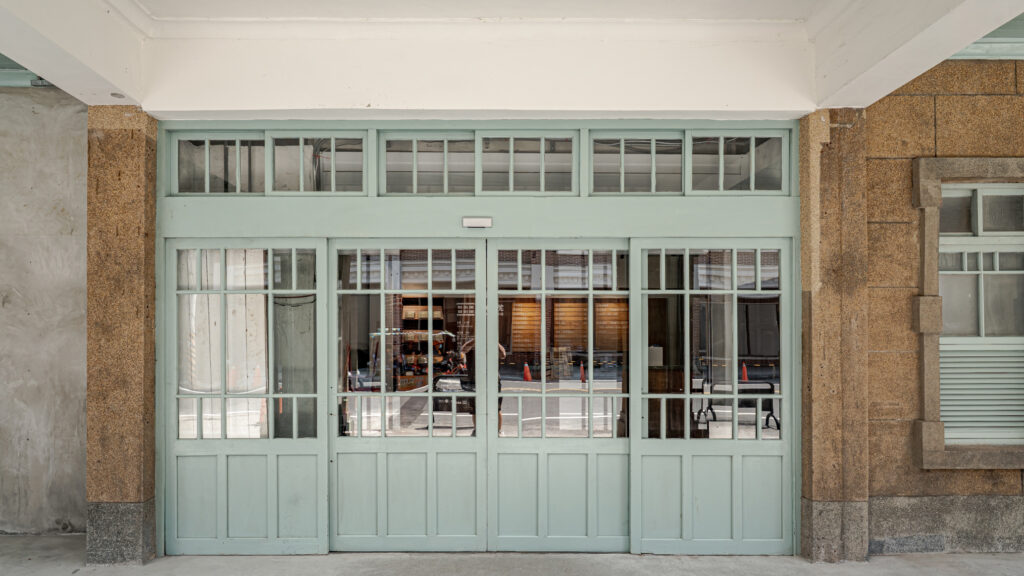
The Zhongyong Warehouse in Changbin Township was once a space for storing fertilizers for the farmers’ association. With the assistance of X-Basic Planning and Wei-Fong Construction, it has gained new life, transforming into a key node in the “cold chain logistics system.” This time, while working to ensure continual of its historical context as an agricultural storage space, the team has looked further ahead, focusing on the future development of local industries, creating possibilities for locally abundant fruits and vegetables to be processed into specialty products. We hope that in the future, the Zhongyong Warehouse will not only serve as a transit station for storage and transportation but also become a base for establishing Changbin’s local brand, allowing the old warehouse, with its transformed new persona, to continue creating local value and uniqueness.
Changbin Township is known throughout Taiwan for its rich agricultural products such as Baxian rice and roselle, but due to its remote geographical location and insufficient cold storage space, agricultural products suffer spoilage and losses during storage and transportation.
To solve this problem, at the end of 2023, X-Basic Planning and Wei-Fong Construction assisted the Changbin Township Farmers’ Association in transforming the Zhongyong Warehouse, which originally stored fertilizers and grains, into a “cold chain warehouse.”
Within just three months, this warehouse located at the border of Taitung and Hualien counties was given a new lease of life, with a completion ceremony held on January 8.
Photo: Deputy Minister of Agriculture Chen Tianshou (second from right), Director of the Eastern Branch of the Agriculture and Food Agency Xu Huifei (first from right), and General Manager of Changbin Township Farmers’ Association Hong Zhengxian (third from right)
The cold chain warehouse is equipped with RC-style cold storage that can extend the shelf life of local crops, which has helped strengthen the production and sales chain through e-commerce channels and online services for home delivery. It also features a circular baking system, pneumatic single tea bag filling system, grain vacuum packaging machine, and other processing equipment to enhance the market visibility and added economic value of agricultural products. Additionally, the farmers’ association has installed solar panels on the roof, which serve both power generation and heat insulation functions, sustainably and effectively reducing power consumption.
The machine in the image is the ‘Pneumatic Single Tea Bag Filling System,’ which transforms dried vegetables, fruits, and grains into brewing beverages, enhancing market competitiveness. The Taitung No. 3 roselle tea bag in the guest’s hand is made using this system, and is a renowned agricultural specialty product of Changbin Township. The ‘Circular Roasting System’ on the left can process soybeans, red quinoa, and millet into specialty products such as mixed grain tea and Jingang premium soy sauce.
After adding the cold chain system, Zhongyong Warehouse has not only acquired a refreshed exterior appearance but has also undergone a functional transformation, becoming a base for Changbin’s local brands.
Kaohsiung Lighthouse Revitalization Launch! X-Basic Planning and Siao Ben Aiyu team were commissioned by Kaohsiung Port Land Development Co., Ltd. to revitalize the century-old Kaohsiung Lighthouse. The Kaohsiung Lighthouse has long stood on Cihou Mountain, guiding vessels back and forth, and yet it has remained somewhat inaccessible for the public. How to revitalize this sensitive facility, integrate local characteristics, and transform the lighthouse into a local tourist attraction through a ‘regional revitalization’ mindset has been one of the challenging issues the team contemplates continuously.
The team carefully examined Cijin’s local DNA, constantly engaging in dialogue and communication with local youth, teams, and public and private sectors, exchanging ideas with each other. Our vision for the Kaohsiung Lighthouse, an important cultural heritage of Cijin, is not just to redevelop it as a tourist and leisure attraction, but to preserve it as an important base that carries local characteristics and drives local energy.
Current view of the Kaohsiung Lighthouse. (Image source/Yuanjiang Image Studio – Photography by Zhu Yiwen)
Shoreline Coffee has moved into the Kaohsiung Lighthouse park area. (Image source: Yuanjiang Image Studio – Photography by Zhu Yiwen)
Various resources in Cijin District are relatively insufficient due to transportation issues, leading to outbound migration of youth and low willingness to return home for employment and living. Therefore, connecting regional revitalization energy has become one of our important considerations. For this, we found a Cijin native youth – A-Qin, who is the principal of the local brand Shoreline Coffee & Roaster, where both coffee and light meals carry the atmosphere of a port city.
For this project, Coastline Coffee has moved into Kaohsiung Lighthouse. Our small team and Ah Qin discussed every detail, from developing lighthouse-exclusive products to planning the café seating, all with the hope that visitors can enjoy views of the harbor city while savoring ocean-inspired cuisine. Leveraging the advantages of Kaohsiung Lighthouse to energize the local community.
The Cijin Peninsula, located between Gushan in Kaohsiung and the open sea, has been used as a place for ships to dock and cross since ancient times. The Cihou Lighthouse at the northern end of the sandbar has watched over the harbor islands for over a hundred years, while the nearby ferry station connects with the Kaohsiung Port area, transporting crowds with frequent sailings.
In 2024, our small team assisted the Kaohsiung City Ferry Company in implementing the ‘Drumming to the Ferry – Gushan-Cijin Ferry Service Local Revitalization Project.’ With a community-oriented outlook, we redesigned and renovated the interior space of the Cijin Ferry Station, inviting local businesses such as ‘Dusinia Coffee,’ a local self-roasting coffee shop, and ‘Dagang School CC,’ a local organization empowerment unit, to move in and operate. On May 1 (Wednesday), we held the opening ceremony for Dusinia Coffee’s second store and the ‘Aged Mangsi Market’ illustration exhibition to celebrate the reopening of the ferry station.
We are delighted to witness the Cijin Transportation Station, through the collaboration of numerous teams, integrate multiple functions including a youth innovation base, arts and cultural exhibitions, and food services, serving as both a starting point for in-depth travel in Cijin and fertile ground for returning youth to find their roots again.
The Cijin area was once the core of Kaohsiung’s development, nurturing generations of residents through shipbuilding, fishing, and aquaculture. After economic transformation, its tourism industry was fully developed; however, the concentration of tourist hotspots in the Cijin commercial district has led to relatively slower economic development in the Zhongzhou area.
Therefore, when planning the operation of the Cijin Ferry Station, our team envisioned this space as a future base for youth business development for Zhongzhou and surrounding areas, aiming to connect local artisan brands with tourism resources to drive the regeneration and creation of local value.
Associate Director Hsiao Ting-hsiung of X-Basic Planning explains the project team’s concepts and implementation process.
Professor Li Yi-zhi, the host of the Dagang School CC project, delivers a speech outlining the team’s vision.
Collaboration with the local empowerment organization Dagang School CC has enabled the X-Basic Planning team to connect with youth organizations deeply rooted in the community, using the ferry station as a base to jointly promote Cijin’s local culture.
Dusinia Coffee, established by returning young locals, has set up its second shop at the Cijin Ferry Station.
Through our public benefit rental model, we have invited local businesses and organizations to move in, including ‘Dusinia Coffee,’ a local self-roasting coffee shop, and ‘Dagang School CC,’ which focuses on empowering local youth organizations. Their enthusiasm and creativity will continue to breathe vitality into the Cijin Ferry Station.
The ferry station opening tea party also served as a celebration ceremony for the opening of Dusinia Coffee’s second shop. The carefully prepared beverages and refreshments from the shop were the highlight of the event, and will continue to welcome travelers from around the world to the Cijin Peninsula with the rich aroma of coffee.
The first art exhibition at the Cijin Ferry Station was curated by the Dagang School CC team, featuring local artist ‘Chen Nian Wang Shi’ who creates illustrations interpreting Cijin’s landscape through colorful frames.
In addition to food services and art exhibitions, the ‘I-Center Cijin In-depth Travel Center’ operated with assistance from the Dagang School CC team will combine travel information with a map of local youth communities, providing in-depth travel guides for visitors. Furthermore, the creative products by local artisans sold at the travel center also showcase the cultural foundation of the Cijin area.
We hope that the I-Center Cijin In-depth Travel Center will become the starting point for cultural tourism in Cijin.
During Japanese Rule, under the development of the Takao Harbor construction plan, an area once underwater was filled to create new land, and the widespread salt lakes and marshes were transformed into orderly city blocks after urban correction. The port districts of Hamasen and Yancheng boomed with the arrival of modern infrastructure—wharves, railways, and a flood of businesses and capital. In the 1920s, Yancheng served as the entertainment district for the commercial port, boasting theaters, restaurants, cafés, and department stores that catered to every leisure need. This flourishing scene continued until after the war, and declined only gradually declined the eastward shift of Kaohsiung’s political and economic center in the 1970s.
Although Yancheng is no longer the bustling ‘sakariba’ (vibrant commercial and entertainment center) it once was, the old houses and streets still retain shadows of the golden years. With restoration and refurbishment, the spirit of the district can be revived. Based on this concept, this year X-Basic Planning and the collaborative team Heben Construction participated in the ‘Old Street House Regeneration Movement’ launched by the Cultural Affairs Bureau of Kaohsiung City Government, implementing facade improvement projects for 22 buildings that are over half a century old in Yancheng and surrounding areas. We restore building facades by removing non-original materials, relocating utilities like wiring and AC units, improving weather resistance of the old house, and adding accent lighting. We hope to outline the historical context of the port city’s development between the old and new urban districts through the continuation and restoration of spatial narratives.
The bustling streets of Yancheng in the early 1970s. (Image source/Photographer Zhong Qingxi, taken in 1973)
Revitalizing Old Houses from the Outside In
The 60-year-old house on Lainan Street is the first completed location in the ‘Old Street House Revitalization Movement.’ (Image source: Kaohsiung City Bureau of Cultural Affairs, filmed by ARZ FILMS)
In the early stages of the ‘Old Street House Regeneration Movement’, a team led by President Chen Qiren of Kaohsiung University contacted numerous homeowners, ultimately selecting demonstration sites including the old house on Seinan Street, two connected buildings on Xinle Street, eight connected buildings on Zhongshan First Road, and the International Shopping Mall (formerly known as Kaohsiung Ginza). These old buildings, used as residences, shops, or vacant houses, carry the past stories of the Yancheng area, but have lost their luster over the years and face difficulties in repair and maintenance due to the traditional methods used in their construction and material acquisition issues. This project began with exterior renovation to illuminate several forgotten corners of the old city district.
Like the 2023 ‘Balcony Renovation’ project held by X-Basic Planning in Taipei, this old house regeneration action uses subtle urban design interventions—small-scale facade improvements—to help communities rediscover the charm of their old houses. To minimize disruption to homeowners’ daily lives, the renovation team must complete the facade improvement work within a limited timeframe, yet they spare no effort in refining details and removing dust, striving to restore the original material textures and decorative vocabulary of the buildings.
Take the first completed ‘Seinan Street Old House’ as an example. This home that carries many important memories for the owner Mr. Li and has witnessed the couple’s daily life, has gradually developed various symptoms of building aging over its 60 years: inevitable damage to the mosaic wall tiles, peeling paint on the wrought iron railings, and the delicate small-grid wooden windows that were replaced with modern aluminum windows for functional considerations. During the construction period, while cleaning, repairing, and waterproofing the exterior walls, team members also visited the site multiple times to carefully compare the dimensions and color codes of the cleaned walls and railings, in order to select the most suitable facing tiles and paint. They also followed the original wooden window’s partition design to custom-make dark brown aluminum airtight windows for this project.
The renovated house on Street old still harmoniously coexists with surrounding buildings. The striking contrast between the warm-colored facing tiles and the sky-blue wrought iron railings makes this old apartment the most eye-catching building in the neighborhood at first glance. Although the North-South Goods Trading Company that settled here 20 years ago is no longer in operation, and family members who once lived together on Lainan Street have gone their separate ways, the dust-free old house has revived past memories vividly, leaving a footnote for the area’s vibrant commercial history.
The team frequently brings catalogs and color samples to the site to identify the most suitable decorative materials for the old house.
Iron flower railings being suspended during installation, with the restoration team reinforcing the ironwork with paint. (Image source: Kaohsiung City Government Cultural Bureau, photographed by ARZ FILMS)
Similarly, the ‘Xinle Street Double Building,’ which was once used as a shop, was the original home of a well-known duck meat restaurant in Kaohsiung. After subsequent generations moved away, it became a warehouse and food preparation space. The signboard frame and canvas awning installed in front of the house concealed its original elegant character, while the terrazzo columns in the arcade were buried under layers of paint. The team removed the added facade structures, replaced the existing iron windows with weather-resistant wooden windows, and carefully preserved the window pattern craftsmanship on one side. Additionally, they referenced the original pebbledash texture and, after removing the paint, selected stones with similar color and grain size along with mixed paint to redefine the arcade space based on the original contour lines.
The carefully cleaned and repaired red brick wall reveals several conspicuous damages under the wall-washing lights at night. According to the family memories passed down by the owner, Mr. Wu, these indentations are very likely damage caused by bomb fragments left from American bombing during World War II. For this reason, the renovation team deliberately preserved the uneven wall surface, allowing the architectural space to record the tumultuous history this land has experienced.
The restored wooden window frames add layers of historical texture to the neighborhood landscape framed within. In the image, Kuo Yi-no (far left), Senior Manager of Design Department II at Xiaoben Team, and Liu Liang-yu, Specialist of the Old House Planning Department, along with other team members are conducting the final inspection.
Restoring the City Block, Reviving Its Former Glory
The eight connected buildings on Zhongshan First Road before restoration, featuring diverse facade styles. (Image source: Kaohsiung City Government Cultural Bureau, photographed by ARZ FILMS)
The ‘Eight Connected Buildings on Zhongshan First Road,’ located in front of Kaohsiung Station, capture the eyes of travelers from north and south, shaping people’s first impression of the city. This year, seven apartments joined the “Old Street House Revival,” ranging from residences to a motorcycle rental shop, a hair salon, and vacant units—each façade reflecting over half a century of distinct character. Following the removal of signage and utility reorganization, cultural heritage cleaning specialists were brought in to restore the facade’s clay decorative carvings using paint removal techniques. To meet contemporary needs, the renovation project also installed new signboards, replaced air conditioners, relocated outdoor units beneath the arcade, and applied galvanized expanded metal to maintain overall visual aesthetics.
The old street house revitalization movement restored the neat facade of this row of old apartments while preserving the unique characteristics each household accumulated over time.
Interestingly, considering that the hair salon in the old apartment primarily serves migrant worker communities, the team reached a consensus with the owner during the signage update to redesign it in languages commonly used by the customers. The eight connected buildings, which demonstrate the living trajectories of generations, are a concrete representation of local development. After the facade improvement, they will continue to reflect the port city’s inclusive spirit where the new and old coexist harmoniously.
Design Department II colleague Yu Pin-jun is preparing color-matched mixed paint for the pebble-dash wall surface.
During the old street house revitalization movement, the team adorned the eight connected buildings on Zhongshan First Road with newly designed signage.
Besides row houses and apartment-style old buildings, ‘Kaohsiung Ginza,’ built in 1936 with Tokyo’s Ginza shopping district as its blueprint, is also one of the improvement cases in this project. This area, Kaohsiung’s original department store street, was once a hub for imported goods and trendy venues like bars and cafes. After suffering severe damage in WWII, the building regained its commercial life in the 1950s thanks to the Korean War and the arrival of US troops. Now called ‘International Plaza,’ it prospered and expanded in 1963 in response to the growing trend of arcade streets, adopting the era’s popular arcade-style design. With the shift in urban development, however, the International Plaza’s modern sheen faded, leaving behind an empty atrium and connecting corridors as the sole testament to its vibrant past.
Historical image of Kaohsiung Ginza preserved in the form of a picture postcard during the Japanese colonial period.
Accompanying Yancheng District through the hustle and quiet times of the International Market. (Image source: Kaohsiung City Government Bureau of Cultural Affairs, filmed by ARZ FILMS)
Like most old buildings that have gone from prosperity to dereliction, Kaohsiung Ginza faces issues such as complicated property rights and vacant houses. The team therefore chose to intervene with a small yet significant ‘lighting plan,’ attempting to awaken public memory of this commercial street by literally illuminating its entrances and passageways. The team added new spotlights while keeping the old fluorescent lights, creating a conscious contrast between eras for visitors. Specially designed lampshades ensure the new additions don’t disrupt the facade, maintaining the space’s historic ambiance.
The ongoing ‘Old Street and Old House Revitalization Movement’ is gradually renewing the face of Yancheng, one subtle facade and interior adjustment at a time. As the planning, design, and implementation team for this project, we hope to realize our long-held vision for the regeneration of old buildings through a series of practical actions. When city blocks can embrace diverse architectural styles and showcase the aesthetic trends of each era, local development patterns will naturally integrate into contemporary life, becoming fertile ground that nourishes cultural foundations.
The old street house revitalization movement has illuminated the passage spaces of Kaohsiung’s Ginza.